To get amazing vinyl sound, look for speakers that are detailed and balanced, especially bookshelf or floorstanding models. Powered speakers offer simplicity, while passive ones give more flexibility. Avoid overly bass-heavy or harsh speakers to truly hear your records shine!
Hey there, fellow music lovers! Ever spun a record and felt like something was just… missing? That magic, that warmth, that oomph that vinyl is famous for? It’s a real bummer when your favorite albums don’t sound as good as they should. Picking the right speakers can feel like navigating a maze, with all sorts of confusing techy terms.
But don’t you worry! I’m here to help make it super simple. Think of me as your friendly guide through the world of hi-fi sound. We’re going to figure out exactly what kind of speakers will make your vinyl collection sing. We’ll keep it fun, easy, and totally jargon-free.
So, get ready to unlock the true potential of your turntable. Let’s dive in and discover how to get that amazing, room-filling sound you’ve been dreaming of!
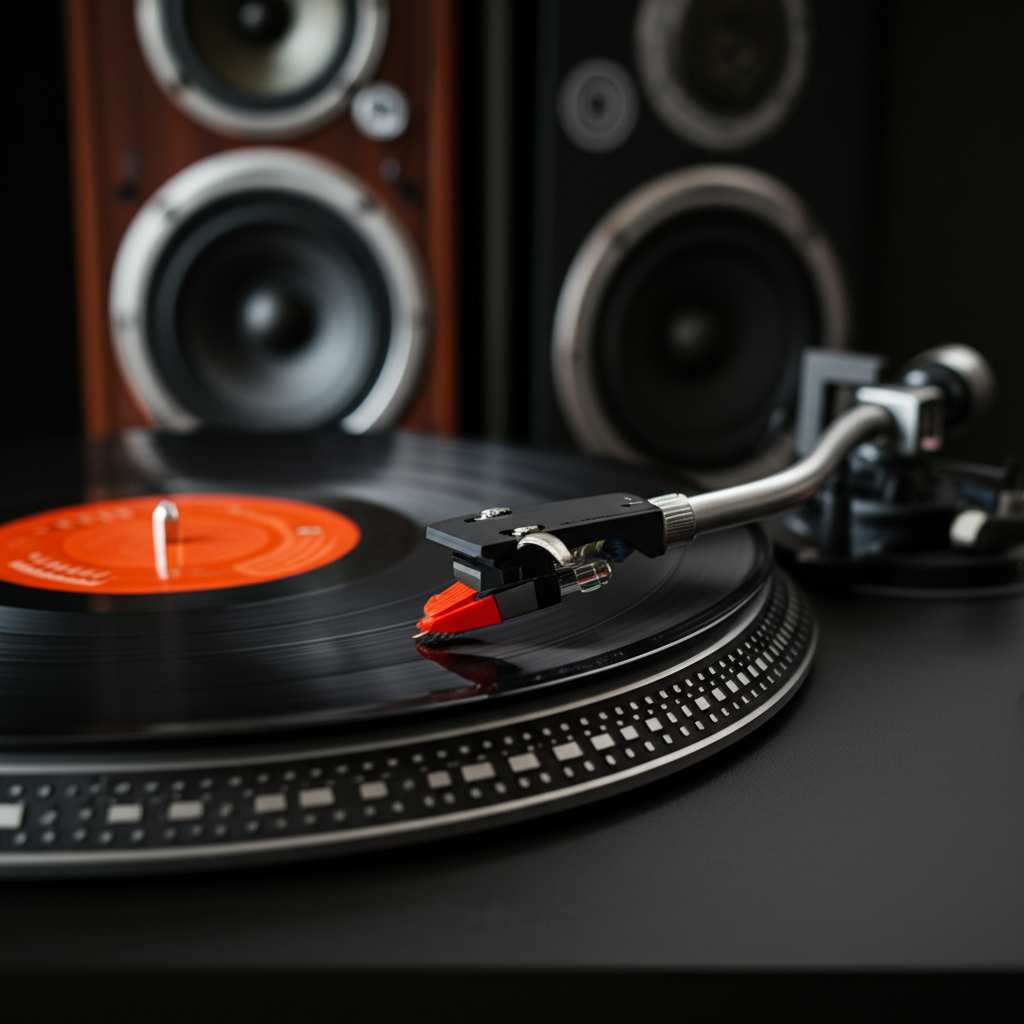
Why Speakers Matter So Much for Vinyl
You know, vinyl records have this special way of sounding warm and full. It’s like the music has a bit more life to it. This is because vinyl captures sound in a really analog way. It’s a physical groove, not just digital bits.
To really hear that analog magic, your speakers need to be able to play it back faithfully. If your speakers aren’t up to par, you might miss out on all the subtle details and rich tones. It’s like having a gourmet meal but serving it on a paper plate – you lose some of the experience.
This is where choosing the right speakers becomes a big deal. We want speakers that can handle all the nuances of your vinyl. They should bring out the best in your records, not cover it up. Let’s make sure your music sounds as good as it looks on that spinning black disc.
Let’s Talk About Sound: What Vinyl Loves
When we talk about what speakers work best with vinyl, we’re really talking about sound reproduction. Vinyl is known for its warmth, its natural tonality, and its ability to present instruments and vocals with a sense of realism. We want speakers that can highlight these qualities.
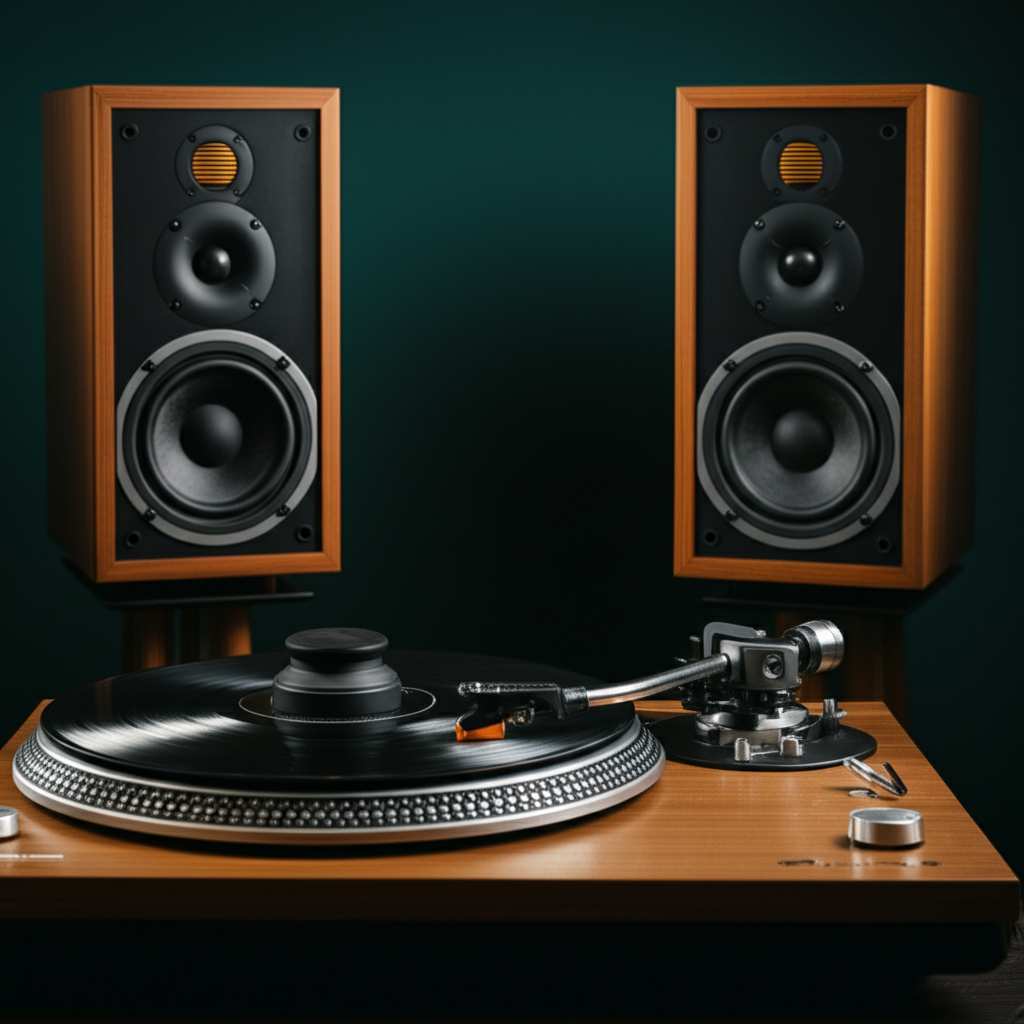
The ideal speaker for vinyl is often described as having a “balanced” or “neutral” sound. This means it doesn’t artificially boost any particular part of the sound spectrum. It won’t make the bass boomy or the treble screechy. It just presents the music as it was recorded.
Think of it like this: if your turntable and cartridge are the chef preparing a delicious meal, your speakers are the plate and the presentation. You want a plate that shows off the food beautifully, not one that distracts from it.
The Sweet Spot: Balanced and Detailed Sound
So, what does “balanced and detailed” really mean for your ears? It means you can hear every instrument clearly. You can pick out the gentle strum of an acoustic guitar, the breath of a singer, or the subtle decay of a cymbal. It’s about clarity and precision.
A balanced speaker system means no single frequency range overpowers the others. You get a nice, even spread of sound. The bass is present and impactful but not muddy. The mids (where vocals and most instruments live) are clear and forward. The highs are crisp and airy, but not sharp or fatiguing.
This kind of sound is fantastic for vinyl because it respects the recording. It allows the natural character of the vinyl medium to shine through. You get that sought-after “analogue warmth” without sacrificing detail or clarity.
Types of Speakers: Finding Your Perfect Match
When you start looking for speakers, you’ll notice there are a few main types. Each has its own pros and cons, especially when paired with a turntable. We’ll break down the most common ones to help you decide.
The biggest distinction is between powered speakers and passive speakers. This is a good place to start our speaker journey.
Powered Speakers (Active Speakers)
Powered speakers are super convenient. They have the amplifier built right into the speaker cabinet itself. This means you don’t need a separate stereo receiver or amplifier to power them. You can often connect your turntable directly to them (if they have a phono input) or via a phono preamp.
These are great for simplicity. You plug them into the wall, connect your turntable, and you’re pretty much good to go. Many powered speakers also have Bluetooth, so you can stream music from your phone too.
Pros:
All-in-one solution, less clutter.
Easy to set up and use.
Great for smaller spaces or minimalist setups.
Often offer good value for money.
Cons:
Less flexibility to upgrade components separately.
Can sometimes be more expensive for equivalent sound quality compared to passive systems.
May lack the sheer power or depth of some passive setups.
Passive Speakers
Passive speakers, on the other hand, need an external amplifier or receiver to drive them. This is the more traditional hi-fi setup. Your turntable connects to a phono preamp, which then connects to an amplifier, and the amplifier connects to your passive speakers.
This setup offers a lot more flexibility. You can mix and match different components to fine-tune your sound. If you want to upgrade your amplifier later, you can do so without changing your speakers.
Pros:
Greater flexibility to customize your sound system.
Can often achieve higher levels of performance and power.
More upgrade paths available.
Cons:
Requires more components (amplifier/receiver, cables).
Can lead to more clutter.
Setup is more complex for beginners.
Speaker Form Factors: Size and Style Matter
Beyond powered vs. passive, the physical design of the speaker also plays a role. The two most common types you’ll encounter for home audio are bookshelf speakers and floorstanding speakers.
Bookshelf Speakers
Bookshelf speakers, also called “standmount” speakers, are designed to sit on a shelf, a desk, or dedicated speaker stands. They are generally smaller and more compact than floorstanding speakers. Despite their size, many bookshelf speakers can produce surprisingly full and rich sound.
For vinyl setups, especially in smaller to medium-sized rooms, bookshelf speakers are often an excellent choice. They can be positioned easily to create an ideal listening triangle with your turntable. Their size also means they can be more aesthetically pleasing in a living space.
Pros:
Compact and space-saving.
Easier to position for optimal sound.
Often more affordable than floorstanding models.
Can still offer excellent sound quality.
Cons:
May lack the deep bass response of larger floorstanding speakers.
Can sometimes be outperformed by larger speakers in bigger rooms.
Floorstanding Speakers (Tower Speakers)
Floorstanding speakers are the larger, more imposing speakers that sit directly on the floor. They typically have multiple drivers (the individual speaker units) and larger cabinets, allowing them to move more air and produce a more expansive soundstage.
If you have a larger room or crave a truly immersive sound experience with deep, resonant bass, floorstanding speakers can be a fantastic option. They can fill a room with sound and offer a powerful presentation that’s great for music.
Pros:
Can produce deeper, more impactful bass.
Offer a larger, more immersive soundstage.
Ideal for larger rooms.
Often have a commanding aesthetic presence.
Cons:
Require more space.
Can be more expensive.
Positioning can be more critical for optimal performance.
May overpower smaller rooms.
Key Features to Look For in Vinyl Speakers
Now that we know the basic types, let’s get into the nitty-gritty of what makes a speaker sound good with vinyl. Here are some features and characteristics to keep an eye on.
Frequency Response
Frequency response tells you the range of sounds a speaker can reproduce, from the lowest bass notes to the highest treble notes. It’s usually measured in Hertz (Hz). A wider frequency response generally means a more full-bodied sound.
For vinyl, a speaker with a good, broad frequency response is ideal. You want to hear those deep bass lines and the subtle shimmer of cymbals. Look for speakers that list a wide range, like 40Hz to 20kHz (kilohertz).
A speaker with a flat frequency response curve within its advertised range means it reproduces all these frequencies equally. This is what we mean by “balanced.” Some speakers might have a “smiley face” curve (boosted bass and treble), which can sound exciting but might not be ideal for pure vinyl reproduction.
Sensitivity (dB)
Sensitivity is a measure of how loud a speaker can get with a certain amount of power. It’s usually expressed in decibels (dB) per watt per meter. A higher sensitivity rating means the speaker is more efficient and requires less power from your amplifier to reach a given volume.
For example, a speaker with 90dB sensitivity will play louder than a speaker with 85dB sensitivity when driven by the same amplifier. This is important if you have a lower-powered amplifier or just want your speakers to be able to get loud without distortion.
If you’re using powered speakers, sensitivity is less of a concern because the amplifier is built-in and matched to the speaker. But for passive speakers, it’s a key spec to consider alongside your amplifier’s power output.
Impedance (Ohms)
Impedance is the electrical resistance a speaker presents to your amplifier. It’s measured in Ohms (Ω). Most speakers are rated at 8 Ohms, but some can be 6 Ohms or even 4 Ohms.
It’s crucial to match your speaker’s impedance to your amplifier’s capabilities. Amplifiers are designed to work with a certain range of impedance. If you connect speakers with too low an impedance, you can overload and potentially damage your amplifier.
Most amplifiers are designed to safely handle 8 Ohm speakers.
Many can also handle 6 Ohm speakers.
Fewer can safely drive 4 Ohm speakers.
Always check your amplifier’s manual for its supported impedance range. If you’re unsure, sticking with 8 Ohm speakers is generally the safest bet for beginners.
Driver Materials and Design
The “drivers” are the actual cones or domes within the speaker that produce sound. The material and design of these drivers can significantly impact the sound quality.
Woofers: These are for low frequencies (bass). Materials like paper, treated paper, polypropylene, or even Kevlar are common. Paper is often praised for its natural sound, while polypropylene can offer good durability and tight bass.
Midrange Drivers: These handle the middle frequencies, where vocals and most instruments reside. Materials can be similar to woofers, but often lighter and stiffer for better detail.
Tweeters: These are for high frequencies (treble). Common materials include silk, fabric, titanium, or aluminum. Silk and fabric tweeters are often favored for their smooth, non-fatiguing sound, which is great for long listening sessions with vinyl. Metal tweeters can offer more detail but can sometimes sound a bit harsh if not implemented well.
For vinyl, tweeters made of softer materials like silk tend to pair very well, as they can reproduce those delicate high frequencies without sounding shrill.
Powered vs. Passive: A Deeper Dive for Vinyl
Let’s look closer at which type might be your best friend for spinning records.
Powered Speakers for Vinyl
Powered speakers are becoming incredibly popular, and for good reason. Many come with a built-in phono preamplifier. This is a huge win because it means you can connect your turntable directly to the speakers without needing any extra boxes. You just need to make sure your turntable has a good quality phono cable.
If your turntable doesn’t have a built-in phono preamp, and your powered speakers don’t have one either, you’ll need an external phono preamp. This little box takes the tiny signal from your turntable and boosts it to a level your amplifier (or powered speakers) can understand. It also applies “RIAA equalization,” which is essential for proper vinyl playback.
Examples of Powered Speakers Great for Vinyl:
Kanto YU6: These are popular for their built-in phono preamp, multiple inputs, and balanced sound. They offer a great all-in-one solution.
Audioengine A5+: Known for their warm, rich sound and robust build. They deliver a full-bodied audio experience that vinyl lovers appreciate.
Edifier R1280DBs: A more budget-friendly option that still provides excellent sound quality and features like Bluetooth and a phono input.
Passive Speakers for Vinyl
If you’re aiming for the ultimate in sound quality and flexibility, passive speakers are the way to go. This is where the traditional hi-fi enthusiast often lives. You get to curate every part of your system.
The advantage here is that you can choose an amplifier that perfectly complements your turntable and your chosen passive speakers. Some audiophiles swear by tube amplifiers for vinyl, as they can add a certain “musicality” and warmth that many find enchanting. Solid-state amplifiers offer power and precision.
When choosing passive speakers for vinyl, look for models known for their clarity and detail. Brands that focus on natural sound reproduction will likely serve you well.
Brands Known for Great Passive Speakers:
KEF: Their Q Series and LS Series offer exceptional clarity and balanced sound.
Wharfedale: Known for their warm, musical sound, especially their Diamond series.
Monitor Audio: Offer detailed and dynamic sound, with their Bronze and Silver series being popular choices.
Bowers & Wilkins (B&W): High-end speakers that provide incredible detail and refinement.
Placement is Key: Making Your Speakers Sound Their Best
No matter how great your speakers are, if you don’t place them correctly, you won’t get the best sound. This is super important for vinyl!
The Listening Triangle
The ideal setup is often called the “listening triangle.” Your two speakers and your listening position (where you’ll be sitting) should form an equilateral triangle. This means the distance between your speakers should be roughly the same as the distance from each speaker to your ears.
This setup helps create a focused soundstage, where instruments are placed precisely in the space between the speakers. It makes the music sound more three-dimensional.
Speaker Height and Angle
Height: Ideally, the tweeters of your speakers should be at ear level when you’re in your listening position. This is why speaker stands are so popular for bookshelf speakers.
Angle (Toe-in): You’ll often want to angle your speakers slightly inwards, towards your listening position. This is called “toe-in.” Experiment with this! Sometimes pointing them directly at you is best, other times a slight toe-in or even pointing them straight ahead (parallel to the wall behind them) works wonders.
Small adjustments here can make a huge difference in how clear and impactful your music sounds.
Brands and Models to Consider (Beginner Friendly)
It can be overwhelming to know where to start. Here are a few popular and well-regarded options that are often recommended for vinyl enthusiasts. These are generally good starting points, offering a balance of sound quality, features, and price.
Here’s a quick comparison table:
| Speaker Type | Brand/Model Example | Key Features for Vinyl | Price Range (Approx.) |
| :—————– | :—————— | :———————————————————————————- | :——————– |
| Powered Bookshelf | Kanto YU6 | Built-in phono preamp, Bluetooth, good detail, easy setup. | $$ (Mid-range) |
| Powered Bookshelf | Audioengine A5+ | Warm and rich sound, robust build, excellent for music, requires external preamp. | $$$ (Upper mid-range) |
| Powered Bookshelf | Edifier R1280DBs | Affordable, Bluetooth, phono input, decent sound for the price. | $ (Budget-friendly) |
| Passive Bookshelf | Wharfedale Diamond 12.2 | Natural, musical sound, great detail, needs an amplifier. | $$ (Mid-range) |
| Passive Bookshelf | KEF Q350 | Excellent clarity, wide soundstage, needs an amplifier. | $$$ (Upper mid-range) |
| Passive Floorstand | Klipsch RP-6000F | Dynamic, detailed sound, can be sensitive to room acoustics, needs an amplifier. | $$$ (Upper mid-range) |
Note: Price ranges are general estimates and can vary based on sales, retailers, and region.
When looking at these, remember that “best” is subjective. What sounds amazing to one person might be different for another. The goal is to find what sounds best to you and your music.
Common Questions About Vinyl Speakers
Let’s tackle some of the questions you might be having as you explore this topic.
Q1: Do I need a special amplifier for vinyl?
Not necessarily a “special” one, but you do need an amplifier that can connect to your turntable. Most turntables require a phono preamp to boost their signal and apply RIAA equalization. Some amplifiers have a dedicated “Phono” input, which means they have a built-in phono preamp. If your amplifier doesn’t have a phono input, you’ll need an external phono preamp.
Q2: Can I use my existing home stereo speakers with my turntable?
Most likely, yes! If your current speakers are part of a stereo system that includes an amplifier or receiver with a phono input (or if you have a separate phono preamp), you can probably connect your turntable to them. The key is ensuring the signal path is correct.
Q3: Are more expensive speakers always better for vinyl?
Not always. While higher-end speakers often offer more detail, clarity, and better build quality, an expensive speaker isn’t automatically better. Sometimes, a more moderately priced speaker with a balanced, neutral sound signature can be a perfect match for vinyl, especially if your budget is a consideration. It’s about finding the right type of sound for your preference.
Q4: What is a “phono preamp” and why do I need it?
A phono preamp is a crucial component for playing vinyl. The signal from your turntable’s cartridge is very weak and needs to be amplified significantly. The phono preamp boosts this signal to “line level,” which is what standard audio equipment (like amplifiers or powered speakers) can use. It also applies RIAA equalization, a standard curve that flattens the frequency response of the record, making it sound correct.
Q5: Should I get powered speakers or passive speakers for my first vinyl setup?
For beginners, powered speakers are often the easiest and most convenient choice. Many come with a built-in phono preamp, meaning you can connect your turntable directly and start listening with minimal fuss. If you’re looking for a simpler, less cluttered setup, powered speakers are fantastic. Passive speakers offer more flexibility for future upgrades but require more components.
Q6: How important is the room size for speaker choice?
Room size is quite important! Smaller rooms often benefit from smaller bookshelf speakers. These speakers are designed to work well in closer proximity and won’t overwhelm the space. Larger rooms can handle bigger floorstanding speakers, which can fill the space with sound and provide a more immersive experience. Placing a large speaker in a tiny room can lead to boomy, unbalanced sound.
Q7: What about subwoofers with vinyl?
A subwoofer adds extra low-end bass to your system. While they can enhance certain music genres or movie soundtracks, they aren’t always necessary for a great vinyl experience. Many audiophiles prefer to rely on the bass capabilities of their main speakers for a more integrated sound. If you do add a subwoofer, ensure it’s high-quality and properly integrated so it doesn’t muddy the overall sound.
Wrapping It Up: Your Vinyl Sound Journey Begins!
So, there you have it! We’ve journeyed through the wonderful world of speakers and how they relate to your precious vinyl collection. You’ve learned that a balanced, detailed sound is key, and that both powered and passive speakers have their strengths. Whether you’re leaning towards the simplicity of powered bookshelf speakers or the flexibility of a passive hi-fi setup, you’re now equipped with the knowledge to make a great choice.
Remember, the best speaker is the one that makes you happy when you’re listening to your favorite albums. Don’t be afraid to experiment a little, and always trust your ears. This is all about enjoying your music to the fullest.
Now go forth, explore, and get ready to hear your vinyl collection like never before! Your turntable is ready to sing, and the right speakers will make sure everyone hears its beautiful voice.
Happy listening!