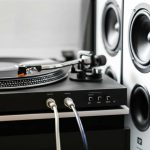
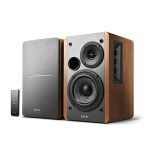
Connecting speakers to your record player is super easy! This guide will show you exactly how to get your vinyl sounding awesome with simple steps. Let’s get your music playing loud and clear!
Hey there, fellow music lovers! So, you’ve got that classic record player, right? That’s awesome! There’s something truly special about the warm, rich sound of vinyl. But sometimes, you want that sound to fill your whole room, not just come out of tiny built-in speakers. Or maybe your record player doesn’t have any speakers at all!
It can feel a little confusing at first, looking at all those ports and wires. You might wonder, “How do I actually get these speakers to sing with my turntable?” Don’t worry, I’ve been there, and it’s not as complicated as it looks. We’re going to break it all down together, nice and easy.
Think of it like this: your record player is the artist, and the speakers are the concert hall. We just need to make sure they’re properly introduced so the music can flow beautifully. I’ll walk you through every single step, so by the end, you’ll be a pro at connecting your speakers. Let’s make your vinyl collection shine!

We’ll start by understanding the different types of connections you might see. Then, we’ll dive into the actual hooking-up process. Get ready to boost your listening experience!
Let’s Talk About Sound: Why Connecting Speakers Matters
You’ve probably picked up a record player because you love that authentic sound. It’s a whole vibe, isn’t it? But let’s be real, the sound quality from a record player’s built-in speakers (if it has any) can be a bit… lacking. They’re often small and not designed for booming bass or crystal-clear highs.
Adding external speakers is like upgrading from a tiny coffee shop gig to a full stadium concert. You get to experience the full depth and richness of your favorite albums. Whether you’re listening to jazz, rock, or anything in between, better speakers make a huge difference. It’s all about immersing yourself in the music.
Understanding Your Record Player: What to Look For
Before we connect anything, let’s get friendly with your record player. Most modern turntables have a few key connection points on the back or bottom. Knowing what these are will make the whole process much smoother.

The most common outputs you’ll find are RCA jacks. These are usually a pair of round connectors, one red and one white (or sometimes black). The red one is for the right channel, and the white or black one is for the left channel. This is the most standard way to send your audio signal out.
Some record players might also have a headphone jack. While you can plug headphones directly into this, it’s not what we’ll use for speakers. You might also see a ground screw, which is important for reducing hum, but we won’t be connecting speakers to that directly.
Types of Speakers: What Are Your Options?
When it comes to connecting speakers, you have a few main choices. Each one has its own pros and cons, and the best one for you depends on your setup and budget.
Powered Speakers: These are super convenient! Powered speakers, also called active speakers, have a built-in amplifier. This means they don’t need a separate stereo receiver or amplifier to work. You just plug them into the wall, connect them to your record player, and you’re good to go. They’re perfect for simplicity and saving space.
Passive Speakers: These are the more traditional kind. Passive speakers don’t have their own amplifier. They need to be connected to a separate stereo receiver or amplifier, which then powers them. This setup gives you more flexibility to choose your amplifier and speakers independently, often leading to higher sound quality if you invest in good components.
Soundbars: While more common for TVs, some soundbars can work with record players, especially if they have analog RCA inputs. They offer a compact, all-in-one solution, though the soundstage might not be as wide as with separate stereo speakers.
Connecting to Powered Speakers: The Easy Way
This is often the simplest setup for most people. Powered speakers are designed to be user-friendly. If your record player has RCA outputs, this is usually your best bet for a quick and great-sounding connection.
First, make sure your powered speakers are plugged into a power outlet and turned on. You might need to adjust their volume settings to a moderate level to start. You don’t want them blasting right away!
Now, let’s grab a special cable. You’ll need an RCA to RCA cable (if your speakers have RCA inputs) or an RCA to 3.5mm auxiliary cable (if your speakers have a 3.5mm aux input). These cables are readily available at most electronics stores or online.
Step-by-Step: Connecting to Powered Speakers
- Locate Outputs: Find the RCA output jacks on the back of your record player. They’ll likely be red and white (or black).
- Connect Cable to Turntable: Plug one end of your RCA cable into these output jacks. Match red to red and white to white. If you’re using an RCA to 3.5mm cable, plug the RCA ends into the turntable and get ready for the next step.
- Connect Cable to Speakers: Now, take the other end of the RCA cable and plug it into the corresponding input jacks on your powered speakers. If you’re using an RCA to 3.5mm cable, plug the 3.5mm end into the aux input on your speakers.
- Power On and Adjust: Turn on your record player and your powered speakers. Start with the volume on both at a low setting.
- Play and Fine-Tune: Put on a record and slowly increase the volume on your speakers and the record player (if it has a volume control) until you reach your desired listening level.
It’s that simple! You’ve just connected your record player to powered speakers. This setup is fantastic for beginners because it requires minimal extra gear. You’re ready to enjoy richer sound!
Connecting to Passive Speakers: The Traditional Method
If you have passive speakers, you’ll need a bit more equipment. Passive speakers require an external amplifier or a stereo receiver to power them. This is how a lot of classic hi-fi systems work.
You’ll need an amplifier or receiver that has either RCA inputs or a phono input. A phono input is specifically designed for turntables and often includes the necessary equalization. If your turntable has a built-in pre-amp, you can use any line-level input on your amplifier (like AUX or CD).
This method gives you a lot of control over your sound. You can mix and match speakers and amplifiers to get the exact sound profile you’re after. It’s a bit more involved, but the results can be incredibly rewarding for audiophiles.
Step-by-Step: Connecting to Passive Speakers (with Amplifier/Receiver)
- Check Your Amplifier/Receiver: Ensure your amplifier or receiver has the right inputs. Look for RCA inputs (often labeled AUX, CD, TAPE) or a dedicated PHONO input. You’ll also need speaker outputs, usually spring clips or binding posts.
- Connect Turntable to Amplifier:
- If your turntable has a built-in pre-amp: Use an RCA to RCA cable to connect the RCA outputs on your record player to any line-level input (like AUX) on your amplifier/receiver.
- If your turntable does NOT have a built-in pre-amp: You MUST use the PHONO input on your amplifier/receiver. Connect the RCA cables from your turntable to the PHONO RCA inputs on the amplifier. Also, connect the ground wire from your turntable to the ground screw on the amplifier. This is crucial for preventing a loud hum.
- Connect Speakers to Amplifier: Use standard speaker wire. Connect one end of the speaker wire to the speaker outputs on your amplifier (again, red for positive, black for negative). Then, connect the other end to the corresponding terminals on your passive speakers, making sure to match positive to positive and negative to negative.
- Power On and Test: Turn on your amplifier/receiver and then your record player. Start all volumes at their lowest setting.
- Play and Adjust: Put on a record. Slowly increase the volume on your amplifier/receiver. You should hear sound coming from your passive speakers. Adjust the volume to your liking.
This setup involves a few more steps, but it’s the classic way to get high-quality sound from your vinyl. The extra components allow for more power and control over your audio experience.
What About Wireless Speakers?
Ah, wireless speakers! They’re super popular for their convenience. But here’s the thing: most record players don’t have built-in Bluetooth transmitters. This means you can’t just pair them directly with your wireless speakers like you would with a phone.
So, how can you make it work? You’ll need a little helper! You can get a Bluetooth transmitter that connects to your record player’s audio output (usually RCA or headphone jack) and then beams the sound to your Bluetooth-enabled speakers.
It’s a great solution if you love the idea of wireless freedom but want to stick with your record player. Just make sure the transmitter and your speakers are compatible. Some transmitters also have a low latency feature, which is great for audio to avoid any annoying delays.
Getting Wireless: The Bluetooth Transmitter Route
- Choose a Bluetooth Transmitter: Look for one that has RCA inputs or a 3.5mm input, matching your record player’s output.
- Connect Transmitter to Turntable: Use an RCA cable or a 3.5mm cable to connect the transmitter to your record player’s audio output.
- Pair Transmitter to Speakers: Follow the transmitter’s instructions to put it into pairing mode. Then, put your wireless speakers into pairing mode. They should find each other and connect.
- Power On and Play: Make sure everything is powered on. Put on a record, and the sound should now stream wirelessly to your speakers!
This method adds an extra gadget, but it opens up a world of possibilities for your vinyl setup. It’s a fantastic compromise for those who want both classic sound and modern convenience.
Phono Pre-Amps: The Unsung Hero
We briefly touched on this, but it’s worth diving a little deeper. A phono pre-amplifier, or phono stage, is crucial if your record player doesn’t have a built-in one and your amplifier/receiver doesn’t have a dedicated PHONO input.
Why? Because the signal coming directly from a turntable cartridge is very weak and uses a specific equalization curve (RIAA). A phono pre-amp boosts this signal to a standard “line level” that other audio equipment can understand. Without it, you’ll get very quiet, tinny sound, or no sound at all!
Many modern turntables come with a built-in phono pre-amp. You can usually tell because they’ll have standard RCA outputs (not just a PHONO specific output) and a switch on the back that says “PHONO / LINE.” If you see this, you can often connect directly to powered speakers or any line-level input on an amplifier.
How to tell if you need a Phono Pre-Amp:
- Does your record player have a switch for PHONO/LINE? If you set it to LINE, it has a built-in pre-amp.
- Does your amplifier/receiver have a PHONO input? If yes, and your turntable doesn’t have a built-in pre-amp, connect your turntable’s RCA outputs and ground wire to this PHONO input.
- If neither of the above is true, you will need an external phono pre-amp. Connect your turntable to the phono pre-amp, and then connect the phono pre-amp to a line-level input (like AUX) on your amplifier or powered speakers.
It might seem technical, but this little box makes a world of difference for getting proper sound from your vinyl. Think of it as translating the record player’s language so everything else can understand it!
Choosing the Right Speakers for Your Turntable
Now that you know how to connect, let’s talk about choosing the speakers themselves. It’s not just about the wires; it’s about the sound!
Consider your space: Are you setting up in a small dorm room or a large living area? Bigger rooms might need more powerful speakers to fill the space. Smaller spaces can be overwhelmed by huge speakers.
Sound signature: Do you like a warm, bass-heavy sound, or something more neutral and detailed? Reading reviews can give you an idea of how different speakers sound. TechRadar and CNET often have great reviews that break down the sound profiles.
Budget: Speakers can range from under $100 to thousands of dollars. Decide how much you want to spend. Remember, you can always start with a good pair of powered speakers and upgrade your turntable later, or vice-versa.
Connectivity: Double-check the input options on the speakers. Do they match what your record player can output, or what your amplifier has available? This is key to a smooth connection.
Quick Tips for Better Sound
Connecting is just the first step! Here are a few extra tips to make your vinyl listening experience even better:
- Speaker Placement: Don’t just shove your speakers in a corner. Try placing them at ear level and an equal distance from you, forming a triangle. This “stereo imaging” makes a big difference.
- Keep it Clean: Dust on your stylus (needle) or records can cause pops and skips. Clean them regularly!
- Reduce Vibrations: Place your record player on a stable, level surface away from the speakers. Vibrations can travel through the floor and affect playback.
- Grounding is Key: If you experience a persistent hum, double-check that your ground wire is properly connected (if applicable).
- Experiment with Volume: Sometimes, music sounds best at a moderate listening level. See what works for different albums.
Understanding Different Connections at a Glance
To make things super clear, here’s a quick rundown of common connection types you’ll encounter.
| Connection Type | Description | What You Need | Best For |
|---|---|---|---|
| RCA (Red & White/Black) | Analog audio signal split into left and right channels. | RCA to RCA cable, or RCA to 3.5mm cable. | Connecting turntables to powered speakers or amplifiers. |
| 3.5mm Auxiliary (AUX) | Stereo audio connection, common on headphones and portable devices. | 3.5mm to 3.5mm cable, or RCA to 3.5mm cable. | Connecting turntables (with headphone jack or line-out) to powered speakers or Bluetooth transmitters. |
| Bluetooth | Wireless audio transmission. | Bluetooth transmitter (for turntable) and Bluetooth speakers. | Wireless convenience when direct connection isn’t possible. |
| Speaker Wire | Connects passive speakers to an amplifier. | Standard speaker wire (e.g., 16-gauge or 14-gauge). | Connecting passive speakers to a stereo receiver or amplifier. |
This table should help you quickly identify what you’re working with. When in doubt, check your record player and speaker manuals!
Comparing Popular Speaker Options
Thinking about what kind of speakers to get? Here’s a look at a couple of popular categories. This is a general comparison, and specific models will vary greatly.
| Speaker Type | Pros | Cons | Typical Price Range (USD) | Ease of Setup |
|---|---|---|---|---|
| Powered Bookshelf Speakers | All-in-one, no extra amp needed, great sound for size, easy to connect. | Can be pricier than passive speakers alone, limited upgrade path for amp. | $150 – $600+ | Very Easy |
| Passive Bookshelf Speakers + Entry-Level Receiver | More control over sound, potential for higher fidelity, upgradeable components. | Requires separate amplifier/receiver, more wires, more complex setup. | $100 – $300 (speakers) + $200 – $500+ (receiver) | Moderate |
| Portable Bluetooth Speakers (with transmitter) | Wireless convenience, portable, can be used for other devices. | Requires Bluetooth transmitter, potential for latency, sound quality can vary greatly. | $50 – $300+ (speaker) + $30 – $100 (transmitter) | Easy to Moderate |
As you can see, powered bookshelf speakers often hit a sweet spot for ease of use and sound quality for beginners. They simplify the process significantly. If you’re looking to build a more traditional hi-fi system, combining passive speakers with a receiver offers more customization.
Troubleshooting Common Connection Issues
Even with the best guides, sometimes things don’t work perfectly on the first try. Here are a few common hiccups and how to fix them:
- No Sound:
- Is everything plugged in and powered on? (Seriously, check this first!)
- Are the volume levels turned up on both the record player and speakers/amplifier?
- Are you using the correct input on your speakers or amplifier?
- If using passive speakers, are the speaker wires connected correctly (positive to positive, negative to negative)?
- If your turntable needs a phono pre-amp and you’re not using the PHONO input on your amp, is the external pre-amp connected correctly?
- Humming or Buzzing:
- This is almost always a grounding issue. Ensure your turntable’s ground wire is securely attached to the ground screw on your amplifier or phono pre-amp.
- Try moving your audio cables away from power cords to reduce interference.
- Ensure your turntable and speakers are not touching or vibrating against each other.
- Distorted Sound:
- Turn down the volume! You might be pushing the system too hard.
- Check if your stylus (needle) is worn or dirty.
- Ensure your speakers or amplifier are not overloaded or damaged.
Don’t get discouraged if you run into a small issue. Most of the time, it’s a simple fix like a loose cable or a forgotten switch. Patience is your best friend here!
Frequently Asked Questions (FAQ)
Q1: Can I connect any speakers to my record player?
A1: Generally, yes, but you need to make sure the connections match! Most record players output an analog audio signal. You’ll need speakers or an amplifier that can accept this signal, usually via RCA cables or a 3.5mm aux input. Passive speakers will always need an amplifier in between.
Q2: My record player has a headphone jack. Can I use that to connect speakers?
A2: Yes, you can! If your record player has a headphone jack and no RCA outputs, you can use a 3.5mm to RCA cable or a 3.5mm to 3.5mm cable to connect it to powered speakers or an amplifier’s aux input. Just make sure to turn the volume on the record player down to a low setting before playing, as the headphone jack often outputs a stronger signal.
Q3: Do I need a special cable to connect my record player to speakers?
A3: You usually need an RCA to RCA cable or an RCA to 3.5mm aux cable, depending on the inputs available on your speakers or amplifier. If you’re connecting passive speakers to an amplifier, you’ll need standard speaker wire.
Q4: What’s the difference between a built-in pre-amp and an external one?
A4: A built-in pre-amp is inside your record player, making it simpler to connect to powered speakers or line-level inputs. An external phono pre-amp is a separate box you connect between your turntable and your amplifier/powered speakers if your turntable or amp lacks the necessary phono stage.
Q5: How do I connect my turntable to a soundbar?
A5: This depends entirely on the soundbar and your turntable. If your turntable has RCA outputs and your soundbar has RCA inputs (less common) or a 3.5mm aux input, you can use the appropriate cable. If not, you might need a Bluetooth transmitter for both the turntable and the soundbar, or an adapter to convert the RCA signal to an optical signal if your soundbar has an optical input.
Q6: Will my old stereo receiver work with a new record player?
A6: Very likely! If your old receiver has RCA inputs (like AUX, CD, TAPE) and you’re using a turntable with a built-in pre-amp, you can connect them with an RCA cable. If your turntable doesn’t have a built-in pre-amp, you’ll need to use the PHONO input on your receiver and connect the ground wire.
Q7: How do I get the best sound quality from my speakers with my record player?
A7: Proper connections are a start! But also consider speaker placement, keeping your stylus and records clean, using a good quality cable, and ensuring your turntable is properly grounded to avoid hum. If you have passive speakers, investing in a decent amplifier will also significantly impact sound quality.
Conclusion: Your Vinyl, Your Sound, Amplified!
There you have it! Connecting speakers to your record player doesn’t have to be a mystery. We’ve covered the different types of connections, the various speaker options, and even a few troubleshooting tips.
Whether you chose the simplicity of powered speakers, the classic setup with passive speakers and an amplifier, or the modern convenience of Bluetooth, you’re now equipped to get the best sound out of your vinyl collection. Remember, the goal is to enjoy your music to the fullest!
So go ahead, experiment with your setup. Try different speaker placements, clean your records, and most importantly, crank up your favorite albums. Now you can truly hear the magic of vinyl filling your space. Enjoy that amazing, warm sound!