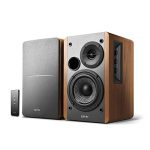
Finding the best speaker for your record player is all about getting that rich, warm vinyl sound to fill your room. We’ll guide you to speakers that make your records sing, turning your listening sessions into pure joy. Let’s dive in!
Hey there, tech adventurer! So, you’ve got a record player, and you’re ready to experience music the way it was meant to be heard – with that awesome, warm vinyl sound. But wait, is your current speaker doing your records justice? Sometimes, the speakers you use can make a huge difference. It’s like having a super-fancy chef but serving their amazing food on a paper plate – it just doesn’t feel right!
I know, picking out new speakers can feel like navigating a maze. There are so many technical terms, brands, and types, it’s enough to make anyone’s head spin. But don’t worry, that’s exactly why I’m here! Think of me as your friendly guide through the wonderful world of audio. We’re going to break down what makes a speaker great for your record player, and by the end, you’ll feel super confident choosing the perfect match.
We’ll cover everything from what to look for to some awesome options that will make your vinyl collection sound absolutely amazing. Ready to transform your listening experience? Let’s make this easy and fun!
Why Your Record Player Needs Special Speakers
You might be wondering, “Can’t I just use any speaker?” That’s a fair question! While a basic speaker will produce sound, it might not capture the full magic of vinyl. Record players produce a unique audio signal that benefits from speakers designed to reproduce that warmth and depth.
Vinyl has this incredible way of sounding “alive.” It’s not just about loudness; it’s about richness, detail, and that cozy, analog feel. The right speakers can bring out every subtle nuance, from the crackle of the vinyl to the deepest bass notes and the clearest highs. It’s a whole experience!
Think of it like this: a great record player and a fantastic vinyl pressing are like a gourmet meal. The speakers are the plate and presentation – they can either elevate that meal or let it down. We want to elevate, right?
Understanding the Sound: What Makes it “Good” for Vinyl?
When we talk about “good sound” for a record player, we’re usually looking for a few key things. It’s not just about volume; it’s about clarity, warmth, and balance. Let’s break down what that really means so you know what to listen for.
One of the most talked-about qualities is “warmth.” This refers to a pleasant, rich sound, often in the mid-range frequencies. It makes vocals and instruments sound full and natural. Too much brightness can sound harsh, while too little can make things sound muddy. We want that sweet spot!
Another important aspect is “detail” or “clarity.” This is about hearing all the little things – the pluck of a guitar string, the breath of a singer, the subtle reverb in a recording studio. Good speakers reveal these details without making the sound feel sharp or fatiguing. It’s like going from a blurry photo to a crisp, high-definition image.
Active vs. Passive Speakers: What’s the Difference?
When you start looking at speakers for your record player, you’ll quickly notice two main types: active and passive. They sound different, and they work differently, too. Understanding this is key to picking the right setup for you.
Active speakers have the amplifier built right inside them. This means they have everything they need to produce sound straight out of the box. You just plug them into the wall and connect your record player. It’s super convenient and often offers a great balance of sound quality and simplicity.
Passive speakers, on the other hand, need a separate amplifier or receiver to power them. You’ll connect your record player to the amp, and then the amp to your passive speakers. This gives you more flexibility to customize your sound system, but it also means more components and a bit more complexity.
Active Speakers: The Plug-and-Play Powerhouses
Active speakers are often the go-to choice for record player enthusiasts because they’re so user-friendly. Since the amplifier is inside, you don’t need to buy a separate one. This saves space and simplifies your setup significantly. Many active speakers also have Bluetooth built-in, which is a neat bonus for streaming music from your phone!
The sound quality from active speakers can be fantastic. Manufacturers can fine-tune the internal amplifier to perfectly match the speaker drivers, leading to a cohesive and well-balanced sound. You get a powerful punch without needing a whole stereo rack. Plus, they often come with handy features like volume knobs right on the speaker itself.
Passive Speakers: For the Sound Connoisseurs
If you enjoy tweaking and customizing your audio gear, passive speakers might be more your style. They offer incredible flexibility. You can pair them with different amplifiers to experiment with various sound signatures until you find your perfect match. This is where true audiophiles often spend their time!
The downside? You need to invest in a good amplifier or receiver. This adds to the cost and takes up more space. You also need to make sure the amplifier you choose is powerful enough to drive your passive speakers effectively. It’s a bit more of a commitment, but the reward can be a truly personalized and superior sound experience.
Key Features to Look For in Record Player Speakers
Now that we know the types, let’s talk about what really matters when you’re choosing speakers for your turntable. These are the features that will make your music pop and your listening sessions a joy. Don’t get bogged down by jargon; we’ll keep it simple!
One of the most important things is the speaker’s frequency response. This tells you the range of sounds the speaker can produce, from the lowest bass notes to the highest treble. For vinyl, you want speakers that have a good balance across the spectrum, with a bit of emphasis on the mid-range for that characteristic warmth.
Another feature to consider is the speaker’s sensitivity. This measures how loud a speaker can get with a given amount of power. Higher sensitivity means the speaker will play louder with less power, which can be great if you’re using a less powerful amplifier or just want more volume without distortion. We’ll cover this more later!
Phono Preamp: Does it Matter for Your Speakers?
This is a big one, and it trips up a lot of beginners! A phono preamp is a crucial component for your record player. Turntables output a very weak signal called an “RIAA-equalized signal.” This signal needs to be amplified and adjusted by a phono preamp before it can be properly processed by a regular amplifier or powered speakers.
Some record players have a built-in phono preamp. Others don’t. Similarly, some powered speakers or amplifiers have a phono input, meaning they include a preamp. If your record player doesn’t have a built-in preamp, and your speakers or amp don’t have a phono input, you’ll need to buy a separate phono preamp. It’s essential for getting any sound at all!
Here’s a quick way to check:
- Look at the back of your record player. Do you see “PHONO” and “LINE OUT” outputs? If you only see “LINE OUT,” it likely has a built-in preamp. If you see both, you can usually switch between them.
- Look at the back of your speakers or the input connections on your amplifier. Do you see an input labeled “PHONO”? If yes, it has a built-in preamp.
If neither your player nor your speakers/amp have a phono preamp, you’ll need an external one. These are relatively inexpensive and easy to connect between your record player and your speakers/amp.
Connectivity: How Will You Hook Them Up?
How you connect your record player to your speakers is super important. For active speakers, you’ll typically use RCA cables. These are the common red and white (or black) cables that you see on audio equipment. Make sure the speakers you choose have the right kind of inputs for your record player or external phono preamp.
If you’re going with passive speakers, you’ll need speaker wire. This is a different type of cable that connects your amplifier to the speakers. The type of connection on the speaker (like binding posts or spring clips) will determine the type of connectors you need on your speaker wire. Most modern speakers use binding posts, which are very secure.
Bluetooth is also becoming more common, especially in active speakers. While convenient for streaming, it’s generally not the best option for connecting your record player directly, as it can introduce latency (a slight delay) and sometimes compress the audio quality. It’s great for other devices, but for your turntable, a wired connection is usually best.
Size and Placement: Where Will They Live?
The physical size of your speakers matters, especially if you have limited space. Bookshelf speakers are compact and great for desks or smaller shelves. Floorstanding speakers are larger and can produce deeper bass, but they require more room. Think about where you’ll place them and how much space you have.
Placement is also crucial for sound quality. Ideally, your speakers should be at ear level and form an equilateral triangle with your listening position. This setup, called the “stereo sweet spot,” gives you the most immersive and balanced sound. Avoid placing speakers too close to walls or corners, as this can boost bass frequencies unnaturally and muddy the sound.
A fun fact: Even small changes in speaker placement can dramatically alter the sound. Experimenting is key! Try moving them just a few inches this way or that to see how it affects the bass and imaging.
Top Speaker Types for Your Record Player
Let’s dive into some specific types of speakers that are popular and work wonderfully with record players. Each type has its own charm and benefits, so you can pick what best suits your lifestyle and sound preferences.
Powered Bookshelf Speakers are incredibly popular for a reason. They offer a great balance of size, performance, and convenience. Many come with built-in phono preamps, making them an all-in-one solution for your turntable. They deliver impressive sound without taking up too much space.
Traditional Bookshelf Speakers (Passive) paired with a good stereo receiver or integrated amplifier offer a more traditional hi-fi setup. This route gives you more control over your sound and can lead to exceptional audio fidelity. It’s a classic choice for a reason!
Studio Monitors are designed for accuracy and neutrality. While often used by music producers, they can be excellent for listening to vinyl because they reproduce sound faithfully, revealing all the details in your records. They typically come in active pairs.
Powered Bookshelf Speakers: The All-in-One Solution
These are my personal favorites for many people just starting out or looking for a simple, high-quality setup. Brands like Audioengine, Kanto, and Edifier make fantastic powered bookshelf speakers. Many include a phono input, so you can plug your turntable directly in, and they sound amazing right out of the box.
You get great sound quality, often with excellent clarity and a pleasant warmth that’s perfect for vinyl. Plus, you’re not fumbling with multiple boxes and wires. Just connect your turntable, plug them in, and you’re ready to spin some records. It’s the definition of easy audio bliss!
Passive Bookshelf Speakers with a Stereo Receiver
This is the classic route for a reason. You get a pair of passive bookshelf speakers (like those from Q Acoustics, ELAC, or Wharfedale) and a stereo receiver or integrated amplifier. The receiver powers the speakers and often provides inputs for various sources, including a dedicated phono input for your turntable.
This setup offers a bit more flexibility. You can swap out speakers or the receiver down the line to fine-tune your sound. It’s a more traditional hi-fi approach that can yield incredibly rewarding results. It’s like building your own custom sound machine!
Floorstanding Speakers: For the Immersive Experience
If you have the space and want to fill a larger room with rich, powerful sound, floorstanding speakers might be the ticket. These are larger speakers that sit directly on the floor. They can produce deeper, more impactful bass and a wider soundstage, making your music feel more enveloping.
Floorstanding speakers are almost always passive, meaning they require a separate amplifier or receiver. They are a bigger investment, both in terms of cost and space, but the payoff in terms of sonic immersion can be incredible. They really bring your music to life!
Choosing the Right Speakers: A Step-by-Step Guide
Ready to pick out your perfect audio companions? It’s not as daunting as it sounds! We’ll walk through it step-by-step, making sure you feel super confident with your choice. Let’s break down the process so you can make the best decision for your setup.
First, determine your budget. Speakers can range from under $100 to thousands of dollars. Having a price range in mind will help narrow down your options significantly. Remember, you don’t always need the most expensive option to get great sound!
Next, consider your space. How big is the room where you’ll be listening? Do you have a dedicated listening area, or will the speakers be part of a multi-purpose room? This will influence the size and type of speakers you should look for.
Step 1: Assess Your Current Setup and Budget
Before you even start looking at speakers, take a moment to check your existing gear. Do you already have an amplifier or receiver? Does your record player have a built-in phono preamp? Knowing what you have will prevent you from buying something you don’t need or missing a crucial component.
Then, set a realistic budget. Are you looking for an affordable upgrade, or are you ready to invest in a high-end system? This will guide your choices. You can find fantastic speakers at various price points, so don’t feel pressured to spend more than you’re comfortable with.
Step 2: Decide on Active or Passive
Based on your budget and desire for simplicity, decide if active or passive speakers are the right fit for you. If you want an easy, plug-and-play solution with fewer components, active speakers are likely your best bet. If you enjoy the idea of building a more customizable system and potentially achieving higher fidelity, passive speakers with a separate amplifier might be better.
Remember, active speakers include the amplifier, while passive speakers require one. This is the biggest difference and often the deciding factor for many people.
Step 3: Consider Your Space and Listening Habits
Think about the room size and acoustics. Small rooms benefit from smaller bookshelf speakers, while larger rooms can handle floorstanding speakers or more powerful bookshelf models. Where will the speakers be placed? This will impact the sound. Avoid tight corners if possible!
Also, consider your listening habits. Do you listen at low volumes while working, or do you prefer to crank it up for full-on listening sessions? Some speakers perform better at lower volumes, while others need more power to shine. Most good speakers will do well across a range, but it’s something to keep in mind.
Step 4: Check Connectivity and Features
Ensure the speakers you’re interested in have the right inputs for your turntable setup. If you need a phono preamp, make sure either your turntable, your speakers, or your amplifier has one. If not, factor in the cost of an external phono preamp.
Look for features that matter to you, like Bluetooth connectivity for streaming from other devices, tone controls if you like to adjust the sound, or a remote control for convenience. For record players specifically, a dedicated phono input on the speaker or amplifier is a huge plus.
Step 5: Read Reviews and, If Possible, Listen!
Once you have a few options in mind, do some research! Read reviews from reputable tech sites like CNET or TechRadar. Pay attention to what reviewers say about the sound quality, build, and ease of use, especially concerning vinyl playback. Look for reviews that mention warmth, clarity, and detail.
If you can, go to a local audio store and listen to the speakers with a record player. Hearing them in person is the best way to know if you like the sound. Bring your favorite records to test them out!
A Quick Comparison: Speaker Options at Different Price Points
To give you a clearer picture, here’s a look at some popular speaker types and what you might expect. Prices can vary a lot, but this gives you a general idea of where to start your search. Remember, these are just examples, and there are many other great brands out there!
| Speaker Type | Typical Price Range (Pair) | Best For | Key Features |
|---|---|---|---|
| Entry-Level Powered Bookshelf | $150 – $300 | Beginners, small spaces, simplicity | Built-in amp, often phono input, easy setup |
| Mid-Range Powered Bookshelf | $300 – $700 | Enhanced sound, versatile use, good value | Better drivers, more connectivity (Bluetooth, optical), refined sound |
| Entry-Level Passive Bookshelf | $200 – $400 (speakers only) + Amp | Traditional hi-fi, customization | Requires separate amplifier, versatile pairing |
| Mid-Range Passive Bookshelf | $400 – $800 (speakers only) + Amp | Serious listeners, upgrade potential | Higher quality components, superior detail and imaging |
| Entry-Level Floorstanding | $500 – $1000 (pair) + Amp | Larger rooms, powerful bass, immersive sound | Requires separate amplifier, significant presence |
What this table means for you: If you’re on a tight budget and want simplicity, entry-level powered bookshelf speakers are a fantastic starting point. They often include the phono input you need, making them a complete solution. As you move up in price, you’ll find speakers with more refined sound, better build quality, and more features. For passive speakers, remember to factor in the cost of an amplifier, which can add a significant amount to your total budget. Floorstanding speakers are a bigger commitment but can provide a truly room-filling experience.
Popular Speaker Brands for Record Players
There are so many great brands out there that make speakers perfect for your record player. Some focus on pure audio fidelity, while others offer a blend of performance and modern features. Here are a few brands that consistently get high marks from reviewers and users alike:
- Audioengine: Known for their stylish and great-sounding powered speakers, many with built-in phono preamps. They are a top choice for convenience and quality.
- Kanto: Offers a range of powered and passive speakers that are well-designed and perform excellently. Their powered models are particularly popular for turntables.
- Edifier: Provides excellent value with a wide variety of powered speakers that deliver impressive sound for their price point.
- Klipsch: Famous for their dynamic and powerful sound, Klipsch speakers can really make your music come alive. They offer both passive and some powered options.
- Q Acoustics: A UK-based brand renowned for its exceptional passive bookshelf speakers that offer incredible detail and musicality.
- ELAC: Known for their innovative designs and high-performance speakers, ELAC offers fantastic options for both passive and active setups.
These brands are a great place to start your research. Many of them have specific models that are often recommended for use with turntables. A quick search for “[Brand Name] speakers for turntable” will often lead you to excellent choices.
Tips for Getting the Best Sound from Your Speakers
Once you’ve got your new speakers, there are a few simple tricks to make sure you’re getting the absolute best sound possible. It’s all about the little things that add up to a big difference in your listening experience.
First, make sure your connections are solid. Loose cables can cause all sorts of weird audio problems, from static to intermittent sound. Give all your RCA or speaker wire connections a good check to ensure they are snug and secure. It’s a quick fix that can solve many issues.
Also, don’t underestimate the power of speaker placement. As we mentioned before, getting them positioned correctly in your room can make a dramatic difference. Experiment with pulling them out from the wall or adjusting their angle towards your listening position. You might be surprised at what you hear!
Cable Quality: Does it Really Matter?
This is a question that sparks a lot of debate in the audio world! For most beginners and even many experienced listeners, the difference between a decent quality cable and an ultra-expensive “audiophile” cable is often negligible, especially with passive speakers. What matters most is that the cable is well-made, has good shielding to prevent interference, and makes a secure connection.
For RCA cables connecting your turntable to a phono preamp or powered speakers, look for cables with good shielding. For speaker wire connecting passive speakers to an amplifier, ensure you’re using an appropriate gauge (thickness) for the length of the run and the power of your amplifier. Generally, thicker wire is better for longer runs or more powerful systems.
Don’t feel like you need to spend a fortune on cables. A reputable brand like Monoprice or AmazonBasics offers excellent value for reliable cables that will serve you very well. Focus your budget on the speakers and amplifier first!
Speaker Break-In: Give Them Time to Shine
Have you ever heard of “breaking in” speakers? It’s a real thing! New speakers, especially the drivers (the cones and surrounds that produce sound), are stiff when they’re brand new. Playing music through them for a period of time helps to loosen them up.
This process can take anywhere from 20 to 100 hours of playback. You don’t need to do anything special; just play your music as you normally would. You might notice the sound becoming a bit more open, dynamic, and less “tight” as they break in. It’s like breaking in a new pair of shoes – they get more comfortable and sound better with use!
EQ and Tone Controls: Fine-Tuning Your Sound
Many amplifiers and some powered speakers come with tone controls, often labeled as “Bass” and “Treble.” These allow you to adjust the sound to your liking. If your vinyl sounds a bit too bright, you can slightly reduce the treble. If it sounds a bit thin, you can boost the bass.
Use these controls sparingly. Small adjustments can make a big difference. Overdoing it can make the sound unnatural. Many audiophiles prefer to bypass tone controls for a pure signal, but for everyday listening, they can be a great tool to tailor the sound to your room and your preferences. Experiment to see what sounds best to you!
Frequently Asked Questions (FAQ)
Q1: Do I need a special record player for these speakers?
A: Not necessarily! Most modern speakers can work with most record players, as long as you have the correct connections and a phono preamp. Some record players are all-in-one units with built-in speakers, but for external speakers, you’ll connect your turntable to either the speakers directly (if they have a phono input) or to an amplifier/receiver that has a phono input.
Q2: What is a phono preamp, and do I need one?
A: Yes, you almost always need a phono preamp! A phono preamp amplifies the very weak signal from your turntable’s cartridge and applies RIAA equalization. This prepares the signal so your amplifier or powered speakers can reproduce it correctly. Check if your record player, your amplifier, or your powered speakers have a built-in phono input. If not, you’ll need an external phono preamp.
Q3: Can I use my existing Bluetooth speakers with my record player?
A: You can, but it’s usually not the best option for sound quality or latency. Most Bluetooth speakers are designed for streaming from phones or computers. To connect a record player, you’ll typically need a phono preamp and then a way to output that signal to your Bluetooth speaker (often via an adapter or a separate transmitter). A wired connection is generally preferred for turntables.
Q4: How close should my speakers be to the wall?
A: This depends on the speaker and your room, but generally, keeping speakers a few inches (or even a foot or two for larger ones) away from the wall behind them improves sound quality. Walls can reflect sound, which can sometimes make bass sound boomy or indistinct. Experimenting with placement is key!
Q5: How do I know if my speakers are powerful enough?
A: For passive speakers, you need to match them with an amplifier that has enough power (measured in watts). Check the speaker’s recommended amplifier power range. For powered speakers, they have a built-in amplifier, so you don’t need to worry about matching. If your speakers sound distorted at higher volumes, they might be struggling, or the amp might be underpowered.
Q6: Do I need a subwoofer with my record player speakers?
A: Not usually for a standard setup. Most good bookshelf or floorstanding speakers are designed to produce a full range of sound, including bass. A subwoofer is an optional addition if you want to enhance the very low bass frequencies even further, but it’s not a requirement for enjoying vinyl.
Conclusion: Enjoy Your Amazing Vinyl Sound!
So there you have it! We’ve journeyed through the world of speakers for your record player, from understanding the nuances of warm sound to picking out the right type and features for your setup. You’re now equipped with the knowledge to make a choice that will truly transform your music listening.
Remember, the “best” speaker is really the one that sounds amazing to you in your space. Whether you opt for the simplicity of powered bookshelf speakers or the customizable nature of a passive setup with an amplifier, the goal is to rediscover your vinyl collection with new ears. You’ve got this!
Now go forth, explore your options, and get ready to experience your favorite albums like never before. It’s time to fill your room with rich, detailed, and utterly captivating sound. Happy spinning!