Choosing the best speakers for your record player setup is easier than you think! Focus on matching sound quality to your space and budget, and you’ll be spinning vinyl with awesome audio in no time. Let’s find your perfect match!
Hey there, fellow music lover! So, you’ve got a record player, which is awesome. There’s just something special about the crackle and warmth of vinyl, right? But to truly enjoy those tunes, you need speakers that do them justice.
Picking the right speakers can feel like a puzzle sometimes. There are so many options, and all those techy terms can make your head spin. Don’t worry, though! I’m here to help you cut through the noise and find speakers that will make your music sound incredible.
Think of your speakers as the voice of your record player. The better the voice, the better the song. We’ll walk through everything you need to know, step-by-step, so you can make a choice you’ll be happy with.
Ready to dive in and make your listening experience amazing? Let’s break it down!
Why Your Record Player Needs Great Speakers
Your turntable is the heart of your vinyl setup, but speakers are its lungs. They’re what actually produce the sound you hear. A good pair of speakers can transform your favorite songs from background noise into an immersive experience.
Imagine listening to your favorite album and hearing every little detail – the subtle strum of a guitar, the breath of a singer, the thump of a bass drum. That’s the magic good speakers bring. It’s not just about loudness; it’s about clarity, depth, and richness.
If you’ve invested in a decent record player, pairing it with basic or low-quality speakers is like putting old tires on a sports car. You won’t get the performance you deserve. The right speakers will unlock the full potential of your vinyl collection.
Let’s Talk About Sound: What Makes Speakers Great?
Before we pick, let’s chat about what makes speakers sound good. It’s not just one thing; it’s a mix of how they are built and how they deliver sound. We’ll keep this super simple, no need for a science degree here!
Frequency Response: The Range of Sound
Think of frequency response as the speaker’s ability to play sounds from super low (bass) to super high (treble). It’s measured in Hertz (Hz). A wider range means the speaker can reproduce more of the music’s detail.
A good speaker will have a wide frequency range. This means it can handle deep bass notes without sounding muddy and crisp high notes without sounding harsh. You want a speaker that can play the full spectrum of sound.
For a record player setup, look for speakers that offer a balanced frequency response. This ensures you hear all the instruments and vocals as the artist intended. It’s like having a full orchestra in your room!
Sensitivity: How Loud They Get
Sensitivity tells you how loud a speaker can get with a certain amount of power. It’s measured in decibels (dB). Higher sensitivity means the speaker is more efficient and can get louder with less power.
If your amplifier or receiver isn’t super powerful, choosing high-sensitivity speakers is a smart move. They’ll sound louder and fuller without straining your equipment. This is especially helpful if you have a smaller listening space.
Generally, speakers with a sensitivity of 88 dB or higher are considered quite efficient. This means they can fill a room with sound without needing a massive amplifier. It’s a great way to get more bang for your buck and ensure great sound.
Impedance: How They Play With Your Amp
Impedance is like the speaker’s resistance to electrical current. It’s measured in Ohms (Ω). Most home audio speakers have an impedance of 4, 6, or 8 Ohms.
Your amplifier or receiver has a recommended impedance range it works best with. It’s super important to match your speakers’ impedance to your amplifier’s capabilities. Mismatching can damage your equipment or lead to poor sound.
Always check your amplifier’s manual for its supported impedance. If it says it works with 8 Ohm speakers, stick to 8 Ohm speakers for the safest and best performance. It’s a small detail that makes a big difference.
Types of Speakers for Your Record Player
Now that we know what makes speakers tick, let’s look at the different types you can get. Each has its own vibe and might be perfect for your setup.
Bookshelf Speakers: Compact Powerhouses
Bookshelf speakers are smaller and designed to sit on shelves, stands, or tables. They are super popular because they offer great sound quality without taking up too much space. They are a fantastic choice for most setups.
These speakers are known for their clarity and detail. They often provide a good balance of bass, mids, and treble. Plus, they are usually more affordable than their larger counterparts.
If you have a smaller room or don’t want giant speakers cluttering your space, bookshelf speakers are your best bet. They deliver big sound from a small package. You’ll be surprised at how good they can sound!
Floorstanding Speakers: The Big Guns
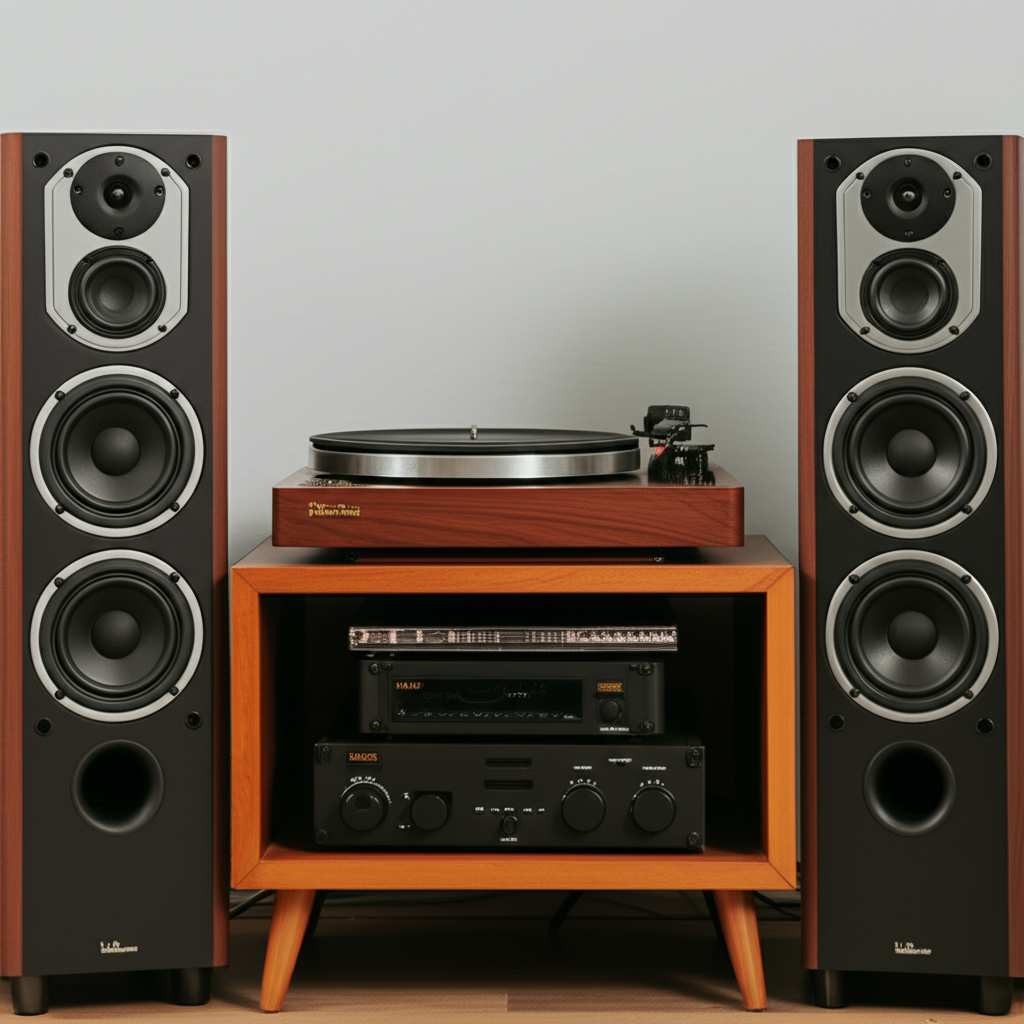
Floorstanding speakers, also called tower speakers, are the largest type. They stand on the floor and are designed to fill larger rooms with sound. If you want a truly epic listening experience, these are the ones.
These speakers usually have multiple drivers (the parts that make sound) for deeper bass and richer sound. They can create a more immersive and powerful soundstage. They truly make your music come alive.
Floorstanding speakers require more space and a good amplifier to drive them properly. If you have a dedicated listening room or a large living area, and you’re aiming for the ultimate audio immersion, consider these. They are an investment in sound.
Powered Speakers: Simplicity and Convenience
Powered speakers have a built-in amplifier. This means you don’t need a separate stereo receiver or amplifier to connect them to your record player. They are often called “active speakers.”
This simplifies your setup significantly. You just connect your record player (often via a phono preamp) directly to the powered speakers. It’s a plug-and-play solution for great sound.
Powered speakers are perfect if you want excellent audio quality with minimal fuss. They are great for smaller spaces or for those who prefer a streamlined setup. Many modern powered speakers also offer Bluetooth connectivity, which is a neat bonus.
Subwoofers: For That Extra Bass Punch
A subwoofer is a special speaker designed only to reproduce low-frequency sounds (bass). It adds a deep, rumbling foundation to your music. You’d typically pair a subwoofer with existing bookshelf or floorstanding speakers.
If you love feeling the bass in your chest or want to add more impact to movies and music, a subwoofer is the way to go. It can really fill out the sound spectrum.
Adding a subwoofer can take your audio experience to a whole new level. It’s especially great for genres like electronic music, hip-hop, or movie soundtracks where deep bass is crucial.
Key Features to Look For
Beyond the basic types, there are a few more things to consider. These features can really enhance your listening pleasure and make choosing easier.
Connectivity Options
How will you connect your speakers to your record player? Most record players need a phono preamp to boost the signal before it goes to speakers or an amplifier. Some record players have this built-in, others don’t.
RCA Inputs: This is a standard connection type. You’ll see red and white jacks. Many powered speakers and amplifiers have these.
Bluetooth: Some modern speakers have Bluetooth. This is convenient for streaming music from your phone, but for your record player, a wired connection usually offers better sound quality.
Auxiliary Input (3.5mm): A common input for connecting devices with a headphone jack.
Optical/Digital Inputs: Less common for direct record player hookup, but useful if you have other digital sources.
For a record player, you’ll likely need a way to connect it to either powered speakers or an amplifier. Make sure the speakers you choose have the right inputs, or that you have the necessary cables and a phono preamp.
Build Quality and Materials
The way speakers are built matters a lot. Look for sturdy cabinets (the box they are in) made of dense material like MDF (Medium-Density Fibreboard). This helps reduce vibrations that can color the sound.
The drivers (woofers for bass, tweeters for treble) should also be made from quality materials. This contributes to clearer sound and better durability. Good build quality often means better sound and a longer lifespan for your speakers.
Don’t be afraid to pick them up if you can, or look for reviews that mention build quality. A solid, well-constructed speaker is a good sign.
Aesthetics and Size
Let’s be real, speakers are part of your home décor! They come in all sorts of finishes, colors, and sizes. Pick something that fits your style and your room.
Measure the space where you plan to put your speakers. Make sure they won’t be too big or too small for the area. The look and feel of your speakers can definitely add to the enjoyment of your listening space.
Consider how they will integrate with your existing furniture and style. Some speakers are designed to be hidden away, while others are meant to be a statement piece.
How to Choose the Right Speakers for You: A Step-by-Step Guide
Okay, ready to put it all together? Here’s how to pick the perfect speakers for your record player.
Step 1: Know Your Budget
Speakers can range from under $100 to thousands of dollars. Set a realistic budget before you start looking. This will help narrow down your options considerably.
Remember that you might also need a phono preamp or an amplifier if your record player and speakers don’t have them built-in. Factor these costs into your total budget. Good sound is an investment, but you can find great options at many price points.
Step 2: Assess Your Listening Space
How big is the room where you’ll be listening?
Small Room (Bedroom, Office): Bookshelf speakers or powered speakers are usually ideal. They provide plenty of sound without being overwhelming.
Medium Room (Living Room): Bookshelf speakers on stands or smaller floorstanding speakers can work well.
Large Room (Open Plan, Dedicated Room): Floorstanding speakers or a powerful bookshelf speaker setup with a subwoofer will fill the space effectively.
The size of your room greatly influences how much power and how large your speakers need to be.
Step 3: Consider Your Record Player and Other Gear
Does your record player have a built-in phono preamp? If not, you’ll need one. Do you already have an amplifier or receiver? If so, make sure your new speakers are compatible with it (especially impedance).
If you’re starting from scratch, powered speakers offer a simpler solution as they have amplification built-in. If you have an amp, you’ll need passive speakers (ones without built-in amps).
This is crucial for a smooth setup and optimal sound. Check your manuals!
Step 4: Decide on Sound Preference
Do you like deep, thumping bass? Or do you prefer crystal-clear highs and detailed mids? Some speakers lean towards a warmer sound, while others are more neutral or analytical.
Read reviews and listen to speakers if possible. Reviews often describe a speaker’s “sound signature.” Think about the music genres you listen to most. Bass-heavy music might benefit from speakers with good low-end response or a subwoofer.
Step 5: Research and Read Reviews
Once you have an idea of what you need, start researching! Look for reputable brands known for quality audio equipment. Read reviews from trusted tech sites like CNET or TechRadar.
Pay attention to what reviewers say about sound quality, build, and value for money. User reviews can also offer practical insights.
Step 6: Listen if Possible
If you can, go to an audio store and listen to different speakers with a record player. Hearing them in person is the best way to know if you like the sound. Even if you plan to buy online, listening first can be very helpful.
Take a favorite record with you or ask the store to play something similar. Trust your ears!
Powered Speakers vs. Passive Speakers: What’s the Difference?
This is a big one for many beginners! Let’s break it down simply.
| Feature | Powered Speakers (Active) | Passive Speakers |
|—————-|———————————————————|———————————————————-|
| Amplifier | Built-in amplifier | Requires an external amplifier or receiver |
| Setup | Simpler: Connect source directly to speakers. | More complex: Connect source to amp, then amp to speakers. |
| Space | Takes up less space (no separate amp needed). | Takes up more space (needs amp/receiver). |
| Cost | Can be more cost-effective for a complete system. | Initial cost of speakers, plus amp/receiver cost. |
| Flexibility| Less flexible; amp is fixed. | More flexible; can swap amp/speakers independently. |
| Best For | Simplicity, smaller spaces, easy setup. | Enthusiasts, larger spaces, customizability. |
What does this mean for you?
If you want the easiest setup and don’t want to buy a separate amplifier, powered speakers are a fantastic choice. You connect your record player (with a phono preamp if needed) right into them, and you’re good to go!
If you already have a stereo receiver or amplifier, or you want the flexibility to upgrade components separately down the line, passive speakers are the way to go. You’ll need to ensure your amp is powerful enough for the passive speakers you choose.
Matching Speakers to Your Record Player Setup
Here are some common scenarios and speaker recommendations:
Scenario 1: Simple Plug-and-Play
Your Setup: A modern record player with a built-in phono preamp and Bluetooth, or a vintage turntable with an external phono preamp. You want minimal wires and easy use.
Recommended Speakers: Powered bookshelf speakers.
Why: They have amplification built-in. You just connect your turntable’s output to the speakers’ input. Many also have Bluetooth for convenience. Brands like Audioengine, Klipsch, and Edifier offer great options.
Scenario 2: The Classic Stereo System
Your Setup: A record player (external phono preamp needed), and you have a stereo receiver or amplifier.
Recommended Speakers: Passive bookshelf speakers or small floorstanding speakers.
Why: Your amplifier powers these speakers. You can choose speakers that offer a specific sound profile to complement your amp. Brands like Q Acoustics, ELAC, and Polk Audio are great here.
Scenario 3: Big Sound for a Big Room
Your Setup: A record player, a capable amplifier, and a large living area or dedicated listening room. You want to feel the music.
Recommended Speakers: Floorstanding speakers, possibly with a separate subwoofer.
Why: These speakers are designed to fill large spaces with rich, full-range sound. They create a powerful presence. Brands like Klipsch, SVS, and Bowers & Wilkins offer impressive floorstanders.
Scenario 4: Budget-Friendly Beginnings
Your Setup: You’re just starting out and want decent sound without breaking the bank.
Recommended Speakers: Affordable powered speakers or entry-level passive bookshelf speakers with an inexpensive used amplifier or a basic new one.
Why: You can get surprisingly good sound from budget-friendly options. Look for brands like Edifier, PreSonus (for powered studio monitors), or entry-level offerings from major brands. Used gear can also be a treasure trove!
Top Speaker Features for Record Players (Quick Guide)
Let’s recap some features that are especially important for vinyl playback.
Balanced Sound: You want speakers that reproduce highs, mids, and lows accurately. This is key for the warmth and detail of vinyl.
Good Bass Response: While you don’t want boomy bass, well-defined bass adds richness.
Clear Mid-Range: This is where vocals and most instruments sit. Clear mids make music engaging.
Detailed Treble: Crisp highs add sparkle and realism, but shouldn’t be harsh.
Sturdy Construction: Helps minimize unwanted resonance for a cleaner sound.
Appropriate Size for Room: Too big or too small can negatively impact sound.
Speaker Placement: It Matters More Than You Think!
Once you have your speakers, where you put them is crucial. It’s not just about looks! Good placement can make even average speakers sound amazing.
The “Stereo Triangle”: Imagine an equilateral triangle. Your two speakers form two points, and your main listening position is the third. The distance between the speakers should be roughly the same as the distance from each speaker to your ears.
Ear Level: Position tweeters (the small speaker drivers for high frequencies) at ear level. This ensures you hear the most detailed sound.
Distance from Walls: Keep speakers a little away from walls, especially the back wall. This helps prevent bass from building up too much and sounding boomy. Experiment with pulling them out a bit.
Avoid Corners: Placing speakers directly in corners can also exaggerate bass.
Stability: Ensure your speakers are on stable surfaces. Bookshelf speakers sound best on dedicated speaker stands or sturdy shelves.
Don’t underestimate the power of placement! A few small adjustments can make a huge difference in how your music sounds.
Caring for Your New Speakers
To keep your speakers sounding great for years to come, a little care goes a long way.
Dusting: Use a soft, dry cloth to gently dust the speaker cabinets and drivers. Avoid using harsh chemicals or abrasive materials.
Cleaning Grilles: If your speakers have removable grilles, you can often vacuum them on a low setting or use a lint roller to remove dust and pet hair.
Avoid Direct Sunlight and Moisture: Excessive heat, direct sunlight, and moisture can damage speaker materials over time. Keep them in a stable environment.
Handle with Care: When moving or repositioning speakers, handle them gently by the cabinet, not the drivers.
Following these simple tips will help preserve the sound quality and appearance of your speakers.
Frequently Asked Questions (FAQs)
Got more questions? We’ve got answers!
Q1: Do I need a phono preamp for my record player?
A: Most record players output a very weak signal that needs to be “pre-amplified” before it can be sent to your speakers or amplifier. This is the job of a phono preamp. Some modern turntables have one built-in, but many vintage and entry-level models do not. Check your record player’s manual! If it doesn’t have one, you’ll need an external phono preamp.
Q2: Can I connect my record player directly to any powered speakers?
A: Usually, yes, but you need to make sure your record player has a phono preamp. If your record player outputs a “phono” signal, you must use a phono preamp first. If your record player outputs a “line” or “aux” signal (meaning it has a built-in preamp), then you can connect it directly to the line-in or aux-in ports on most powered speakers.
Q3: Are more expensive speakers always better?
A: Not necessarily! While higher-end speakers often use better materials and technology for superior sound, you can find excellent speakers at various price points. It’s more important to find speakers that sound good to you and fit your specific setup and room. Value for money is key.
Q4: How important is the impedance match between my amplifier and speakers?
A: It’s very important for both sound quality and the safety of your equipment. Most amplifiers are designed to work with speakers within a certain Ohm range (e.g., 4-8 Ohms). Using speakers with an impedance that’s too low for your amp can cause it to overheat or even get damaged. Always check your amp’s manual and speaker specifications.
Q5: Do I need a subwoofer with bookshelf speakers?
A: It depends! Many bookshelf speakers provide satisfying bass for their size. However, if you listen to music genres that rely heavily on deep bass, or if you want a more powerful, room-filling sound, adding a subwoofer can significantly enhance the low-end frequencies. It’s an optional but often rewarding upgrade.
Q6: Can I use computer speakers with my record player?
A: Some powered computer speakers might work if they have suitable inputs and you have a phono preamp. However, dedicated bookshelf speakers or powered speakers designed for hi-fi audio will generally offer much better sound quality and a richer listening experience than typical computer speakers.
Q7: How do I know if my speakers are too big or too small for my room?
A: If speakers are too big for a small room, the bass can become overwhelming and muddy, and the sound can feel harsh. If speakers are too small for a large room, they might struggle to fill the space with sound, sounding thin or lacking impact. Placement also plays a huge role, but room size is a primary factor in speaker selection.
Conclusion: Get Ready to Spin and Enjoy!
Choosing the best speakers for your record player setup doesn’t have to be overwhelming. By understanding a few key concepts like sound quality, types of speakers, and your own listening needs, you can make a fantastic choice.
Remember to consider your budget, your room size, and your existing gear. Whether you go for compact powered speakers for simplicity or floorstanding giants for ultimate immersion, the goal is always the same: to enjoy your music to the fullest.
Don’t be afraid to do a little research, read reviews, and trust your ears. The perfect speaker setup is out there waiting for you!
Now go enjoy amazing sound and make every moment louder and better with your incredible vinyl setup! Happy listening!