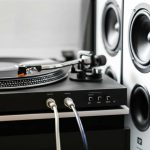
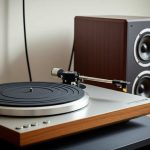
Connecting your record player to active speakers is super easy! Just grab the right cables, plug them in, and get ready to enjoy your vinyl with amazing sound quality. This guide makes it simple, no tech headaches required!
Hey there, tech adventurer! Ever felt that thrill of dropping the needle on a favorite vinyl record? It’s a special kind of magic, right? That warm, rich sound can transport you. But sometimes, you want that sound to fill your room, not just whisper from your turntable’s built-in speakers.
Maybe you’ve got a new set of awesome active speakers, or perhaps you’re just looking to get more out of your current setup. It can feel a bit confusing at first, with all the different ports and cables. You might wonder, “How do I actually get my record player talking to these fancy speakers?”
Well, you’re in the right place! I’m here to make this super simple. Think of me as your friendly guide, walking you through every little step. We’ll ditch the jargon and focus on getting your music playing loud and clear. Let’s break it down together!
So, What Exactly Are Active Speakers?
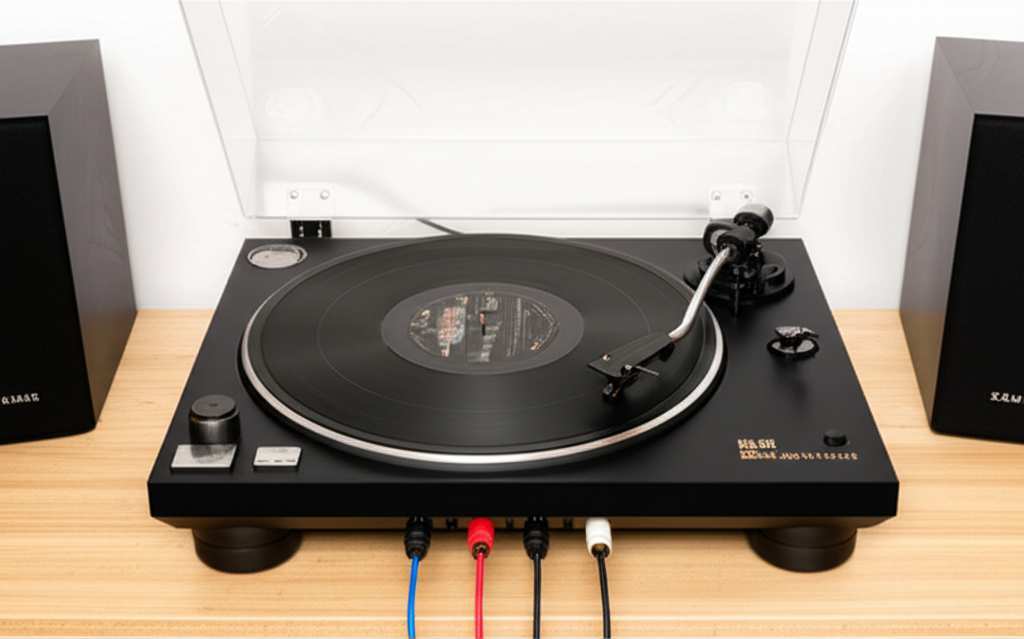
Before we start connecting things, let’s chat about what active speakers are. You might have heard them called powered speakers. The main thing to know is that they have their own built-in amplifier. This means they don’t need a separate stereo receiver or amp to make sound!
This makes them super convenient. You plug your music source directly into them, and bam! You’ve got sound. They’re popular for everything from computer setups to home theater systems. Because they have their own power, they can often deliver a really punchy and clear sound.
Why Connect Your Record Player to Active Speakers?
Connecting your record player to active speakers is a fantastic way to upgrade your listening experience. If your record player has a built-in preamp, you can often connect it directly. If not, we’ll figure out how to add one easily. The goal is to get that beautiful analog sound from your vinyl into speakers that can really make it shine!
Imagine hearing every detail of your favorite album, with a depth and clarity you haven’t experienced before. Active speakers can bring out the best in your records, offering a rich and immersive soundstage. It’s like giving your vinyl collection a brand-new voice.
Do You Need a Phono Preamp? Let’s Find Out!
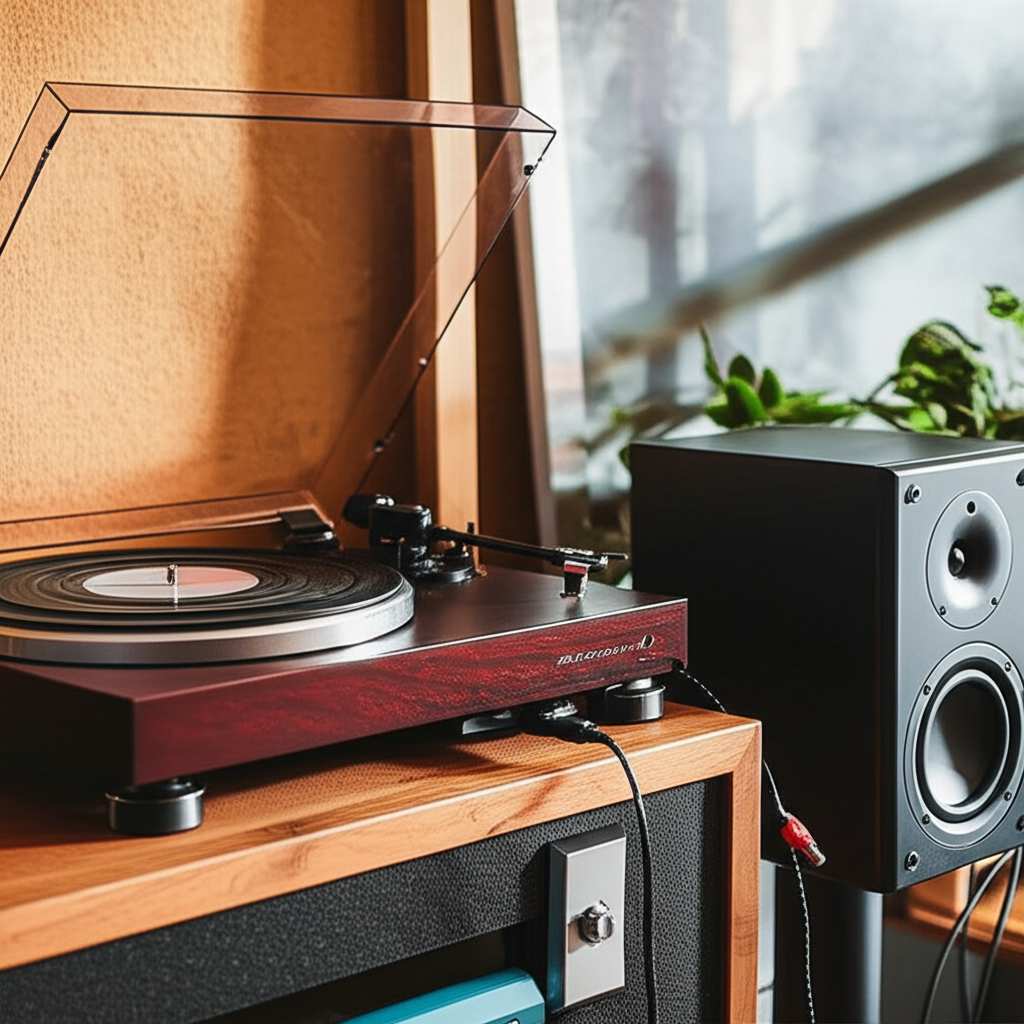
This is a super important question. Most record players output a very weak signal called a “phono signal.” This signal needs to be boosted and equalized before it can be played through regular audio equipment. That’s where a phono preamp comes in.
Some modern record players have a phono preamp built right into them. This is often called a “switchable output” or “switchable preamp.” If your record player has this feature, you can usually switch it between “Phono” and “Line” or “Aux.” If it’s set to “Line” or “Aux,” it means the preamp is active, and you can connect it directly to your active speakers!
However, many older or more basic record players only output the raw phono signal. In this case, you’ll need an external phono preamp. Don’t worry if this sounds complicated; external preamps are usually small boxes that are pretty straightforward to connect. We’ll cover that!
How to Check If Your Record Player Has a Built-in Preamp:
- Check the Back Panel: Look for RCA output jacks. You might see labels like “Phono,” “Line,” “Aux,” or “Output.”
- Look for a Switch: If you see a small switch near the RCA jacks, it’s a good sign. It will likely let you choose between “Phono” and “Line.”
- Consult Your Manual: The easiest way is to check the user manual that came with your record player. It will tell you exactly what kind of output it has.
- Search Online: If you know your record player’s model number, a quick online search can often reveal its specifications.
What Kind of Cables Do You Need?
This is where the magic happens! To connect your record player to active speakers, you’ll most likely need a set of RCA cables. These are the common red and white (or black) cables used for audio.
Your active speakers will have input jacks. These are usually RCA jacks as well, often labeled “Input,” “Aux,” or “Line In.” Your record player will have output jacks, which are also usually RCA.
If your record player has a built-in preamp and outputs a “Line” or “Aux” signal, you’ll need a standard RCA-to-RCA cable. This cable will have RCA connectors on both ends.
If your record player only outputs a “Phono” signal and you need an external preamp, the setup changes slightly. The record player will connect to the preamp using RCA cables, and then the preamp will connect to your active speakers, again usually with RCA cables. Some preamps might have different output connectors, but RCA is the most common.
Types of RCA Cables:
- RCA to RCA: This is your workhorse. It has RCA plugs on both ends and is used for connecting a “Line” or “Aux” output to an input.
- RCA to 3.5mm (1/8 inch): Less common for record players, but useful if your active speakers have a 3.5mm auxiliary input (like many computer speakers). This cable has RCA plugs on one end and a single 3.5mm stereo plug on the other.
Pro Tip: For the best sound quality, try to get decent quality RCA cables. They don’t have to be super expensive, but thinner, cheaper cables can sometimes introduce noise or signal loss. Look for cables with good shielding.
Connecting Your Record Player: Step-by-Step
Alright, let’s get down to business! Here’s how to make the physical connections. We’ll cover the two main scenarios: with a built-in preamp and with an external preamp.
Scenario 1: Your Record Player Has a Built-In Preamp (Switchable Output)
This is the simplest setup. You’re basically bypassing the need for a separate box.
- Turn Everything Off: Before you plug anything in, make sure both your record player and your active speakers are unplugged or switched off. Safety first!
- Set Your Record Player Output: If your record player has a switch, set it to “Line” or “Aux.” This tells the player to boost the signal.
- Connect the RCA Cable: Take your RCA-to-RCA cable. Plug one end into the “Output” jacks on your record player. These are usually colored red (right channel) and white or black (left channel).
- Connect to Speakers: Plug the other end of the RCA cable into the “Input” or “Aux” jacks on your active speakers. Make sure to match the colors: red to red, and white/black to white/black.
- Power On: Plug in and turn on your active speakers first. Then, turn on your record player.
- Select Input: On your active speakers, select the correct input source (usually labeled “Aux” or “Line”).
- Test It Out: Put on a record and see if you have sound! Adjust the volume on your speakers.
What happens here? By setting the switch to “Line,” your record player is doing the job of a preamp. It’s boosting the tiny phono signal into a stronger “line-level” signal that your active speakers can easily use. It’s like the record player is saying, “I’ve got this, speakers!”
Scenario 2: Your Record Player Needs an External Phono Preamp
This is for record players that only output a raw “Phono” signal. The external preamp acts as the middleman.
- Turn Everything Off: Again, power down and unplug your record player and speakers.
- Connect Record Player to Preamp: Take a set of RCA cables. Plug one end into the “Output” jacks of your record player (red to red, white/black to white/black). Plug the other end into the “Input” jacks of your external phono preamp. These are often labeled “Phono In.”
- Ground Wire (Important!): Many record players have a thin “ground wire” near the RCA cables. This helps prevent humming. Connect this wire to the ground screw (usually labeled “GND”) on your phono preamp. If you don’t have a ground wire or screw, don’t worry too much, but a hum might occur.
- Connect Preamp to Speakers: Now, take another set of RCA cables. Plug one end into the “Output” jacks of your phono preamp. These are usually labeled “Line Out” or “Output.” Plug the other end into the “Input” or “Aux” jacks on your active speakers (red to red, white/black to white/black).
- Power On: Plug in and switch on your active speakers. Then, power on your external phono preamp. Finally, power on your record player.
- Select Input: On your active speakers, choose the input source that corresponds to where you plugged in the preamp (e.g., “Aux” or “Line”).
- Test It Out: Play a record! You should hear sound from your speakers. Adjust the volume on the speakers.
Why the preamp? The phono signal from your turntable is super quiet and has a specific EQ curve (RIAA equalization). The phono preamp boosts this signal to line level and applies the correct EQ. Think of it as translating the record player’s language into something the speakers understand perfectly.
Understanding Your Connections: A Little Deeper Dive
Let’s look at the ports you’ll see. Knowing these will make connecting a breeze!
Common Ports on Record Players:
- RCA Output Jacks: These are the circular jacks, usually red and white (or black). They carry the audio signal.
- Ground Terminal: A small screw or post for the ground wire, often labeled “GND.”
- Power Input: Where the power cord connects.
- Switch (if applicable): For selecting “Phono” vs. “Line” output.
Common Ports on Active Speakers:
- RCA Input Jacks: Similar to the record player, these are where the audio signal comes in. They might be labeled “Aux,” “Line In,” “Input,” or specific to certain sources.
- Power Input: For the power cord.
- Volume Control: A knob or buttons to adjust the sound level.
- Other Inputs: Some speakers have Bluetooth, optical, or USB inputs too, but we’re focusing on the analog RCA for your record player.
What About Bluetooth Record Players?
Some modern record players come with built-in Bluetooth! This is a super convenient option if you want to connect wirelessly to your active speakers.
How it works:
- Turn on your record player’s Bluetooth.
- Put your active speakers in Bluetooth pairing mode.
- Select your speakers from the list on your record player (or vice versa, depending on the model).
- Once paired, play your record!
Note: While convenient, some audiophiles prefer wired connections for the absolute best sound quality, as Bluetooth can sometimes compress the audio signal. But for most listeners, Bluetooth is a fantastic, clutter-free option!
Table: Comparing Connection Methods
Here’s a quick look at the different ways you can connect, and what you might need.
| Connection Method | Record Player Type | Cables Needed | External Preamp Required? | Ease of Setup | Potential Sound Quality |
|---|---|---|---|---|---|
| Direct (Built-in Preamp) | Has “Line” or “Aux” output | 1 x RCA to RCA | No | Very Easy | Good to Very Good |
| External Preamp | Only “Phono” output | 2 x RCA to RCA (one for player-preamp, one for preamp-speaker) | Yes | Moderately Easy | Good to Excellent (depends on preamp quality) |
| Bluetooth | Has Bluetooth output | Power cables only (for wired speakers) | No (for wireless connection) | Easy | Good (can vary with Bluetooth version and compression) |
As you can see from the table, having a built-in preamp makes things super simple! If you don’t have one, getting an external phono preamp is your next best bet for great wired sound. Bluetooth offers ultimate convenience if your speakers support it.
Troubleshooting Common Issues
Even with the best guides, sometimes things don’t work perfectly the first time. Here are a few common hiccups and how to fix them.
Problem: No Sound at All
- Check Power: Are your speakers and record player (and preamp, if used) plugged in and turned on?
- Check Volume: Is the volume on your speakers turned up? Sometimes it’s set to zero by default.
- Check Input Selection: Did you select the correct input on your active speakers? “Aux” or “Line” is usually the one.
- Check Cables: Are the RCA cables securely plugged into both the record player and the speakers? Try unplugging and replugging them.
- Check Preamp Switch: If your record player has a switch, make sure it’s set to “Line” or “Aux.” If you’re using an external preamp, ensure the record player is connected to the “Phono In” and the preamp is connected to the “Line Out.”
Problem: Humming or Buzzing Noise
- Ground Wire: If you’re using an external preamp, is the ground wire from your record player connected to the “GND” terminal on the preamp? This is the most common fix for hum.
- Cable Interference: Are your audio cables running close to power cords? Try separating them.
- Different Cables: Sometimes, a faulty or unshielded RCA cable can cause noise. Try a different set.
- Preamp Quality: Lower-quality preamps can sometimes introduce a slight hiss.
Problem: Sound is Too Quiet
- Built-in Preamp: If your record player has a switch, ensure it’s set to “Line” or “Aux.” If it’s set to “Phono,” the signal will be too weak for your speakers.
- External Preamp: Make sure your record player is connected to the “Phono In” and the speakers are connected to the “Line Out” of the preamp.
- Volume Levels: Check the volume on both the record player (if it has a volume control) and the speakers.
Fun Fact: The RIAA equalization curve, which phono preamps correct for, was introduced in 1954. It helps reduce surface noise from vinyl and allows for longer playing times!
Choosing the Right Active Speakers for Your Record Player
When you’re picking out active speakers, think about what kind of sound you like and where you’ll be using them. Not all active speakers are created equal!
Key Features to Consider:
- Input Options: Make sure they have RCA inputs if you’re going wired. Bluetooth is great for convenience.
- Size and Power: Bigger speakers might fill a larger room better, but smaller ones are great for desks or shelves. Power (measured in watts) gives you an idea of how loud they can get.
- Sound Signature: Some speakers are “bright” (more treble), some are “warm” (more bass), and some are very “neutral.” Read reviews to see what fits your taste!
- Brand Reputation: Established audio brands often have a track record of quality.
A Quick Comparison Table:
| Speaker Type | Typical Use Case | Pros | Cons |
|---|---|---|---|
| Bookshelf Active Speakers | Desk, small to medium rooms | Great sound quality, compact, easy to place | Can be pricier, might need stands for optimal positioning |
| Studio Monitors (Active) | Music production, critical listening | Extremely accurate sound, flat frequency response | Can sound “clinical” for casual listening, often have XLR inputs |
| Computer Speakers (Active) | Desktop setups | Affordable, often small, simple setup | Sound quality can be basic, may lack RCA inputs |
| Soundbars (Active) | TV setups, sometimes music | Sleek design, easy setup for TV | Stereo separation can be limited, not ideal for dedicated vinyl listening |
For connecting a record player, bookshelf active speakers are often the sweet spot. They offer a great balance of sound quality, features, and size. Check out reviews on sites like CNET or TechRadar for recommendations. For instance, CNET often reviews various active speaker systems that could be a great fit!
Maintaining Your Setup for the Best Sound
Keeping your gear in good shape ensures your vinyl sounds amazing for years to come.
Quick Tips:
- Clean Your Records: Dust and grime are the enemies of good sound and can wear down your stylus.
- Keep Stylus Clean: A dirty stylus won’t track properly and can sound muffled. Use a stylus brush.
- Dust Your Speakers: Gently dust the speaker cones and cabinets to keep them clear.
- Check Connections: Occasionally, give your RCA cables a gentle push to ensure they’re seated firmly.
- Protect from Elements: Keep your record player and speakers away from direct sunlight, excessive heat, or moisture.
Taking a few moments for simple care can make a big difference in the longevity and performance of your audio setup.
Frequently Asked Questions (FAQ)
Q1: Can I connect my record player directly to any powered speakers?
A1: Yes, as long as your record player either has a built-in preamp set to “Line” output or you’re using an external phono preamp. If your record player only outputs a “Phono” signal and your speakers only have standard line-level inputs, you’ll need a preamp.
Q2: What’s the difference between a phono preamp and a line preamp?
A2: A phono preamp is specifically designed to boost the very weak “phono” signal from a turntable and apply RIAA equalization. A line preamp boosts a “line-level” signal (like from a CD player or your record player’s line output) to speaker level. For connecting a record player, you typically need a phono preamp or a record player with a built-in one.
Q3: Will my record player work with Bluetooth speakers?
A3: If your record player has built-in Bluetooth, yes! If it doesn’t, you can buy a Bluetooth transmitter that plugs into your record player’s audio output (or your external preamp’s output) and sends the signal wirelessly to your Bluetooth speakers.
Q4: How do I connect if my record player has a “Phono” output and my speakers only have a 3.5mm Aux input?
A4: You’ll need an external phono preamp. Connect your record player to the preamp’s “Phono In.” Then, connect the preamp’s “Line Out” to your speakers using an RCA to 3.5mm cable.
Q5: Is it okay to run my record player’s “Phono” output directly into my active speakers?
A5: No, you generally shouldn’t. The “Phono” signal is very weak and has a specific EQ curve. Sending it directly to speakers expecting a “Line” signal will result in very quiet, thin sound and won’t sound correct.
Q6: What does the ground wire do?
A6: The ground wire connects your turntable’s metal chassis to the preamp’s ground terminal. This creates a common ground for both components, which helps eliminate or reduce annoying humming or buzzing sounds caused by electrical interference.
Q7: Can I use any RCA cables?
A7: While you can use most RCA cables, using cables designed for audio with good shielding can help prevent interference and ensure a cleaner signal. For short runs, basic cables are often fine, but investing in decent ones can improve sound quality.
Conclusion: Your Vinyl, Your Sound, Amplified!
See? Connecting your record player to active speakers is totally doable, and it’s a fantastic way to get more enjoyment out of your vinyl collection. Whether you’re plugging straight in or using a handy external preamp, the steps are straightforward.
You’ve learned about active speakers, preamps, the cables you need, and how to put it all together. You’re now equipped to dive into a world of richer, more vibrant sound. It’s about bringing your music to life in a way that digital formats sometimes miss.
So go ahead, try out these steps. Explore the sound. Maybe even consider upgrading your speakers or preamp down the line if you feel inspired. The important thing is that you’re making your music sound its absolute best. Now go enjoy amazing sound and make every moment louder and better!