Quick Summary: Active speakers have amps built-in, making them plug-and-play with your turntable. Passive speakers need a separate amp or receiver to power them. For turntables, active speakers are often simpler, while passive offers more customization if you already have an amp.
Hey there, fellow music lover! So, you’ve got a turntable, that awesome machine that brings vinyl back to life. That’s fantastic! Now, you’re probably wondering about speakers, right? Because great sound is what it’s all about.
It can get a little confusing with all the tech talk. Terms like “passive” and “active” pop up, and suddenly you’re wondering what makes them different and which one is right for your precious vinyl. Don’t worry, I’ve got your back!
We’re going to dive into the world of speakers for turntables. Think of this as a friendly chat where I’ll break down all the jargon. You’ll understand exactly what passive and active speakers are and how they work with your turntable.
By the end of this, you’ll feel super confident choosing the perfect speakers to make your vinyl sound amazing. Ready to make some noise? Let’s get this party started!
So, What’s the Big Deal with Speakers?
Imagine your favorite song. You can hear the lyrics, the guitar solo, the subtle bass line. Speakers are the magical boxes that turn electrical signals into the sound waves that hit your ears. They are the final step in bringing your music to life.
When it comes to turntables, the sound signal starts with the needle dancing in the groove. This tiny signal then needs to be amplified and sent to speakers. The way this happens is where passive and active speakers come into play.
Understanding this difference is key to getting the best sound from your record player. It’s not about which is “better” overall, but which is “better” for you and your setup. Let’s explore how they work.
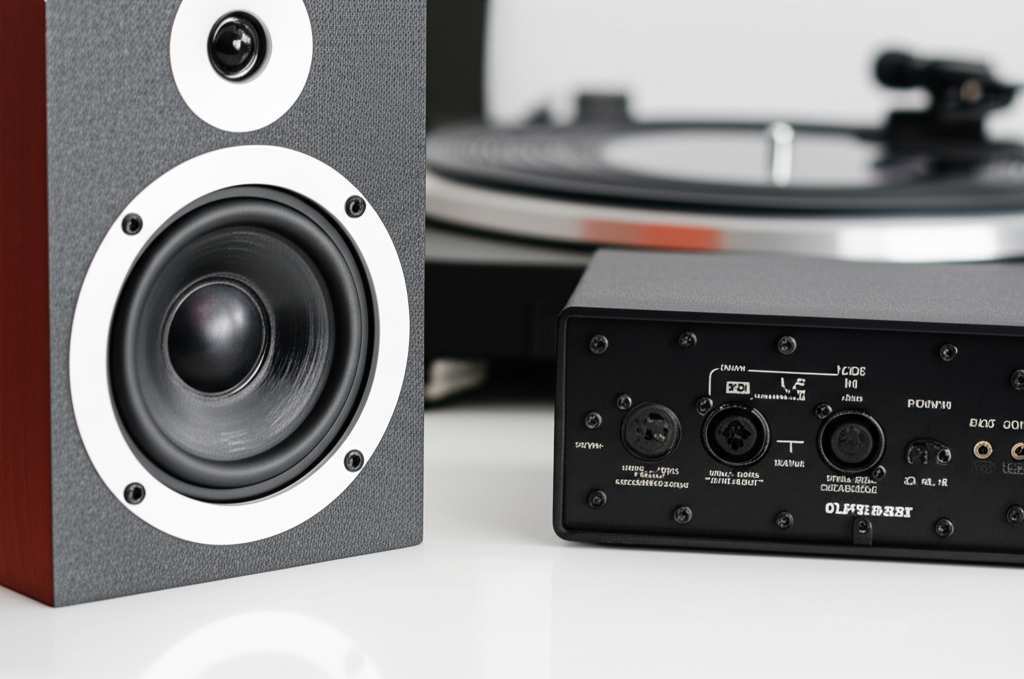
Let’s Talk About Sound: The Amp is Key
At its heart, the difference between passive and active speakers boils down to one thing: the amplifier. An amplifier is like the muscle of your sound system. It takes a weak audio signal and makes it strong enough to drive the speaker cones.
Think of it like this: a weak voice can’t fill a room, but with a microphone and a speaker system, that voice can be heard by thousands. The amplifier does that job for the audio signal from your turntable.
Without enough amplification, your speakers would just make quiet, weak sounds. The amplifier boosts the signal so the speaker can produce clear, powerful audio that you can enjoy.
Passive Speakers: The Classic Choice
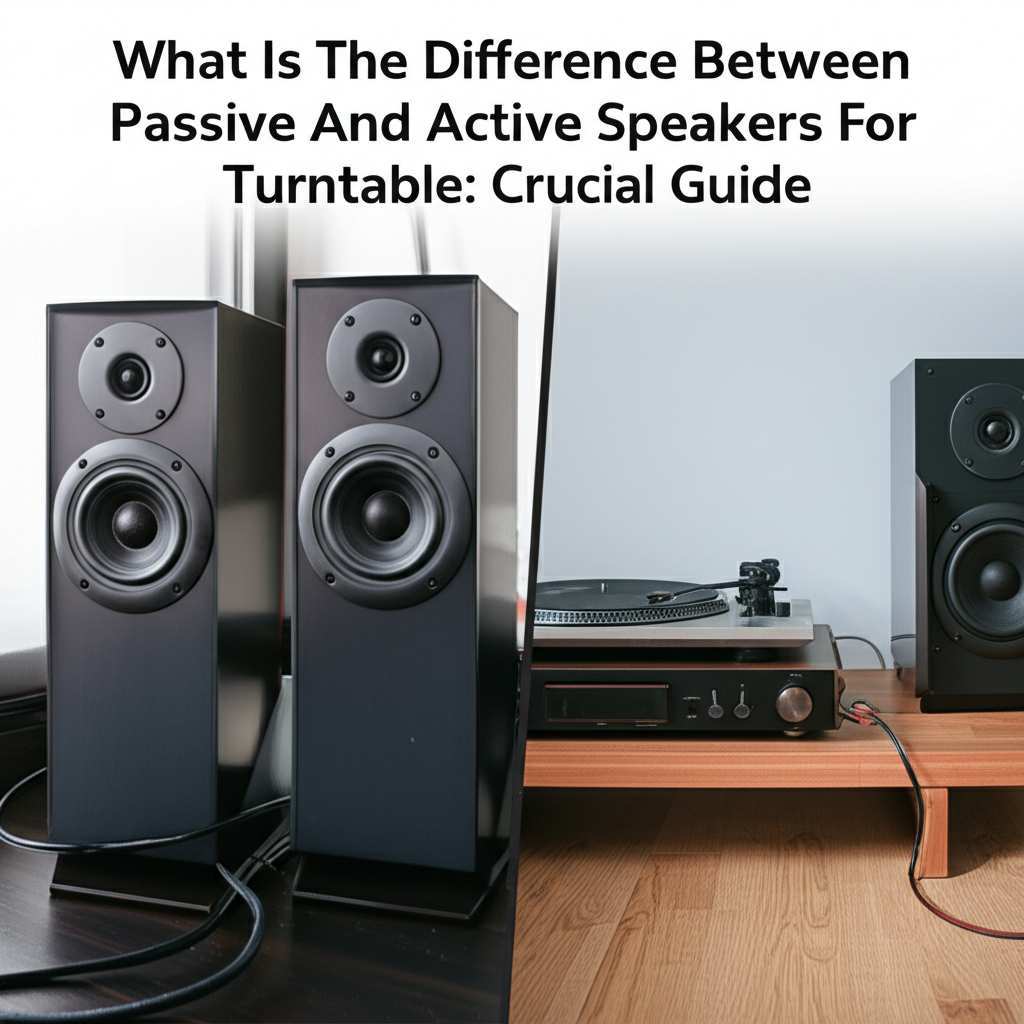
Passive speakers are the traditional type you’ve probably seen most often. They are like the “blank canvas” for sound. They don’t have any electronics inside to boost the signal themselves.
This means they rely on an external amplifier. You connect your turntable (or your turntable’s preamp) to an amplifier, and then you run speaker wires from the amplifier to your passive speakers. The amplifier does all the heavy lifting of making the sound loud and clear.
They are called “passive” because they don’t actively do anything to the audio signal besides let it pass through. They just react to the power they receive from the amplifier.
How Passive Speakers Work with a Turntable
Setting up passive speakers with a turntable usually involves a few more components. You’ll need your turntable, a phono preamp (many turntables have this built-in, but some don’t), an amplifier or AV receiver, and speaker wires.
Here’s a common setup flow:
- Turntable’s cartridge picks up the sound from the vinyl groove.
- The phono preamp boosts this tiny signal and equalizes it (this is important for vinyl!).
- The boosted signal goes from the preamp to an amplifier.
- The amplifier makes the signal much stronger.
- Speaker wires carry the amplified signal from the amplifier to the passive speakers.
- The passive speakers convert this amplified signal into sound waves.
This setup gives you a lot of flexibility. You can choose different amplifiers and speakers to create your own unique sound signature. If you love tweaking your system, passive speakers are a great way to go.
Pros and Cons of Passive Speakers
Like anything in tech, passive speakers have their good points and their not-so-good points. It’s all about what fits your needs and your listening space.
Pros:
- Flexibility: You can mix and match your amplifier and speakers. Want a warmer sound? Try a different amp!
- Scalability: You can upgrade your amplifier or speakers independently.
- Wider Selection: There’s a huge range of passive speakers and amplifiers available.
- Often More Affordable (Initially): Sometimes, buying separate components can be cheaper upfront if you find good deals.
Cons:
- More Components: You need an extra box (the amplifier/receiver), which takes up space.
- More Wires: More connections mean more cables to manage.
- Complexity: Setup can be a bit more involved for beginners.
- Potential for Mismatch: If your amplifier isn’t powerful enough or the right impedance for your speakers, you won’t get optimal sound.
Think of passive speakers like building with LEGOs. You get all the individual pieces and can put them together however you like. It’s fun, but you need to know how the pieces fit!
Active Speakers: The All-in-One Solution
Active speakers are like the modern, convenient option. The magic word here is “built-in.” They have an amplifier right inside the speaker cabinet. This means they are self-powered.
You plug them into the wall for power, connect your audio source directly, and you’re good to go! For turntables, this often means connecting your turntable’s audio output directly to the active speakers.
They are called “active” because they actively amplify the audio signal themselves. This simplifies the setup process considerably. It’s all about making things easy and efficient.
How Active Speakers Work with a Turntable
Setting up active speakers with a turntable is usually much simpler. The biggest advantage is that the amplifier is already matched to the speaker drivers. This means they are designed to work perfectly together.
Here’s a typical setup flow for active speakers with a turntable:
- Turntable’s cartridge picks up the sound from the vinyl groove.
- The phono preamp boosts and equalizes the signal. (Note: Some active speakers have a phono input built-in, meaning you can connect your turntable directly without a separate preamp!)
- The signal from the turntable (or its preamp) goes directly into the active speakers.
- The amplifier inside the active speaker boosts the signal.
- The speaker drivers produce the sound.
This all-in-one design means fewer boxes, fewer wires, and less confusion. It’s a streamlined approach to getting great sound.
Pros and Cons of Active Speakers
Active speakers are super popular for a reason, but they aren’t perfect for everyone. Let’s look at the good and the not-so-good.
Pros:
- Simplicity: Very easy to set up. Plug them in and connect your source.
- Space-Saving: No need for a separate amplifier or receiver.
- Optimized Sound: The amplifier and speaker are designed to work together for great sound quality.
- Convenience: Often include features like Bluetooth, multiple inputs, and remote controls.
- Built-in Phono Preamp: Many active speakers designed for turntables have a phono input, further simplifying setup.
Cons:
- Less Flexibility: You can’t easily swap out the amplifier. If you want a different sound, you often need new speakers.
- Potentially Higher Cost (for comparable quality): Since the amp is included, the upfront cost might seem higher.
- Single Point of Failure: If the internal amplifier fails, you might need to replace the whole speaker.
- Limited Upgrade Path: Upgrading means replacing the entire speaker unit.
Active speakers are like a pre-built, high-performance computer. Everything is already inside and optimized. It’s ready to go right out of the box!
Turntables and Speakers: What Works Best?
Now, the big question: which type of speaker is better for your turntable? The answer, as always in tech, is: it depends!
If you’re just starting out with vinyl and want a straightforward, high-quality listening experience without a lot of fuss, active speakers are often the way to go. Their plug-and-play nature is incredibly appealing.
Many active speakers designed for turntables come with a built-in phono preamp. This means you can connect your turntable directly to the speakers, and you’re done! It’s the simplest setup imaginable.
On the other hand, if you already have a great amplifier or receiver, or if you love the idea of building a custom audio system, passive speakers offer more control and customization. You can really dial in your sound by choosing specific components.
Think about your current setup and your future plans. Do you want the easiest path to good sound, or do you want to tinker and build your dream system over time?
Key Features to Look For
When you’re shopping for either passive or active speakers for your turntable, there are a few things that make a big difference. Let’s break them down.
1. Built-in Phono Preamp (Especially for Active Speakers)
As we talked about, turntables need a phono preamp. If you’re going with active speakers, look for models that have a phono input. This is a game-changer for simplicity. It means your turntable plugs directly into the speakers.
If the active speakers don’t have a phono input, you’ll need a separate phono preamp. You’d connect your turntable to the preamp, and then the preamp to the active speakers (using a line-level input).
2. Connectivity Options
How will you connect your turntable? Most turntables use standard RCA cables.
- Active Speakers: Look for RCA inputs. If you want to connect other devices too, check for auxiliary (AUX) inputs, optical, or even Bluetooth.
- Passive Speakers: Your amplifier will handle connectivity. Just make sure the amplifier has the right inputs for your turntable (or its phono preamp).
3. Power Handling and Sensitivity (Passive Speakers)
For passive speakers, these specs are important for matching them with your amplifier.
- Power Handling (Watts): This tells you how much power the speaker can take from an amplifier. You don’t want to overpower them, but you also want them to handle your amp’s output.
- Sensitivity (dB): This measures how loud the speaker gets with a given amount of power. Higher sensitivity means the speaker is more efficient and plays louder with less power.
Your amplifier’s wattage should ideally be within the recommended range for your passive speakers. A good rule of thumb is to have an amplifier that can provide about 75-150% of the speaker’s rated power for a good balance.
4. Sound Quality and Room Size
This is subjective, but generally, larger speakers can produce deeper bass. For smaller rooms, bookshelf speakers (either active or passive) are usually perfect. For larger spaces, you might consider floor-standing passive speakers or larger active monitors.
Don’t be afraid to read reviews or, if possible, listen to speakers in person. What sounds good to one person might not sound as good to another.
A Quick Comparison Table
To help you visualize the differences, here’s a handy table comparing active and passive speakers for turntables.
| Feature | Active Speakers | Passive Speakers |
|---|---|---|
| Amplifier | Built-in | External (Receiver/Amp) |
| Setup Complexity | Very Simple | More Complex |
| Number of Components | Fewer (Speakers + Source) | More (Speakers + Amp + Source) |
| Space Required | Less | More |
| Flexibility/Customization | Low | High |
| Built-in Phono Preamp Option | Common | No (Preamp needed for turntable) |
| Ideal for Beginners | Yes | Maybe, if they have an amp |
| Ideal for Audiophiles | Yes, high-end models | Yes, for custom builds |
This table shows that active speakers really shine when it comes to ease of use and saving space. Passive speakers, on the other hand, give you the reins to build a system exactly how you want it. Both can deliver amazing sound!
Example Setups
Let’s look at a couple of real-world scenarios to make this even clearer.
Scenario 1: The Simple Starter Setup
Meet Sarah. She just bought her first turntable and wants to listen to her vinyl collection without a lot of hassle. She doesn’t have any other audio equipment.
Turntable: A modern turntable with a built-in phono preamp.
Speakers: A pair of active bookshelf speakers with a built-in phono input.
Connections: Sarah simply connects her turntable’s RCA cables directly to the phono input on the active speakers. Then, she plugs the speakers into the wall.
Result: Sarah is enjoying her records in minutes with great sound and minimal wires. It’s clean, simple, and sounds fantastic for her setup.
Scenario 2: The Enthusiast’s Dream
Meet Mark. He’s been collecting records for years and already has a nice stereo receiver. He wants to upgrade his speakers for better sound.
Turntable: An older turntable without a built-in phono preamp.
Phono Preamp: A dedicated external phono preamp.
Amplifier: Mark’s existing stereo receiver.
Speakers: A pair of passive bookshelf speakers.
Connections: Mark connects his turntable to the phono preamp. Then, he connects the phono preamp’s output to one of the line-level inputs on his stereo receiver. Finally, he runs speaker wires from the receiver’s speaker terminals to his passive speakers.
Result: Mark has a more complex setup but has the flexibility to choose his exact amplifier and speakers, allowing him to fine-tune the sound to his liking.
See how different needs lead to different solutions? Both setups are great, but they cater to different priorities: simplicity versus customization.
Tips for Choosing Your Speakers
Ready to pick out your perfect sound companions? Here are some friendly tips to guide you.
- Know Your Turntable: Does it have a built-in phono preamp? This is the first question to answer. If yes, setup is easier for either active or passive speakers. If no, you’ll need a preamp regardless.
- Consider Your Space: A small bedroom calls for smaller speakers. A large living room might need more powerful speakers or even floor-standing ones.
- Budget Wisely: Active speakers often bundle amp and speaker cost. Passive systems let you spread costs but require investing in a separate amp.
- Read Reviews: Check out trusted sites like CNET or TechRadar for expert opinions. User reviews can also offer insights.
- Listen If You Can: Sound is subjective! If you have a local audio store, try to audition speakers before buying.
- Think About Other Devices: Do you want to connect your TV, phone, or other devices? Ensure your chosen speakers or amplifier have the necessary inputs.
Choosing speakers is an exciting part of building your audio system. Take your time, do a little research, and trust your ears!
Frequently Asked Questions (FAQs)
Got more questions? That’s totally normal! Here are some common ones beginners ask.
Q1: Can I connect my turntable directly to active speakers?
Yes, you absolutely can! If your active speakers have a built-in phono preamp (look for a “PHONO” input), you can connect your turntable directly. If they don’t have a phono input, you’ll need a separate phono preamp between your turntable and the speakers.
Q2: Do I need a phono preamp for passive speakers?
If your turntable doesn’t have a built-in phono preamp, then yes, you will need one. This preamp connects to your turntable, and its output then connects to the line-level input of your amplifier, which powers the passive speakers.
Q3: Are active speakers better for turntables than passive speakers?
Neither is definitively “better.” Active speakers offer unmatched simplicity and convenience, which is great for beginners. Passive speakers offer more flexibility for those who want to customize their sound system. Both can deliver fantastic audio quality.
Q4: How many watts do I need for speakers with my turntable?
For active speakers, the wattage is built-in and designed for the speaker, so you don’t usually worry about it. For passive speakers, the amplifier’s wattage is key. Generally, an amp providing 50-100 watts per channel is sufficient for most home listening with bookshelf or smaller floor-standing speakers.
Q5: Can I use computer speakers with my turntable?
Some computer speakers are active and have line-level inputs, so you might be able to. However, most turntables require a phono preamp, and computer speakers usually don’t have one. You would need a phono preamp between the turntable and the computer speakers. The sound quality might also be limited compared to dedicated hi-fi speakers.
Q6: What’s the difference between bookshelf and floor-standing speakers?
Bookshelf speakers are smaller, designed to sit on shelves, stands, or tables. Floor-standing speakers (or tower speakers) are larger and stand on the floor, often offering more powerful bass and filling larger rooms better. Both can be active or passive.
Q7: Do I need special speaker wires for turntables?
No, you don’t need “special” speaker wires specifically for turntables. Standard, good-quality speaker wire is used to connect amplifiers to passive speakers. For connecting a turntable to a preamp or active speakers, you’ll typically use standard RCA audio cables.
These FAQs cover some of the most common concerns. Remember, the “best” setup is the one that works for you and your listening habits!
Conclusion: Your Sound, Your Choice!
So there you have it! We’ve journeyed through the world of passive and active speakers, and hopefully, it all makes much more sense now. The key takeaway is that active speakers have the amp built-in for ultimate simplicity, while passive speakers require a separate amplifier, offering more customization.
Whether you choose the plug-and-play ease of active speakers, especially those with a built-in phono preamp, or the versatile, component-driven path of passive speakers paired with an amplifier, you’re on your way to a richer vinyl experience.
Don’t be afraid to experiment and find what sounds best to your ears and fits your lifestyle. The most important thing is to get those records spinning and enjoy the incredible sound quality that only vinyl can provide.
Now go enjoy amazing sound and make every moment louder and better! Happy listening!