Get amazing sound from your Bluetooth speakers! This guide shows you simple ways to set them up for the best audio quality in any room.
Hey there! Ever feel like your music just isn’t hitting the right notes, or that movie explosions sound a bit… flat? It’s a bummer when great sound gets lost in translation. You bought a cool Bluetooth speaker to make your life more awesome, right? We want that music to fill the room, those game sound effects to feel real, and movie dialogues to be crystal clear.
Sometimes, it’s not the speaker itself that’s the problem. It’s how we set it up! It can feel a little confusing with all the buttons and settings. But guess what? You don’t need to be a tech whiz to make your speakers sound incredible. We’re going to break it down, step by step, so you can enjoy the best possible sound without any headaches.
Think of it like finding the perfect spot for a plant – it needs the right light and water to thrive. Your Bluetooth speaker is the same! With a few easy tweaks, you can unlock its full potential and turn your listening experience from ‘meh’ to ‘WOW!’
Ready to make your tunes sing and your movies roar? Let’s dive in and make your Bluetooth speakers sound amazing!
Why Speaker Placement Matters More Than You Think
So, you’ve got a new Bluetooth speaker, and you’re excited to blast your favorite playlist. You plug it in, connect your phone, and hit play. But wait… why doesn’t it sound as good as you expected? This is where placement comes into play!
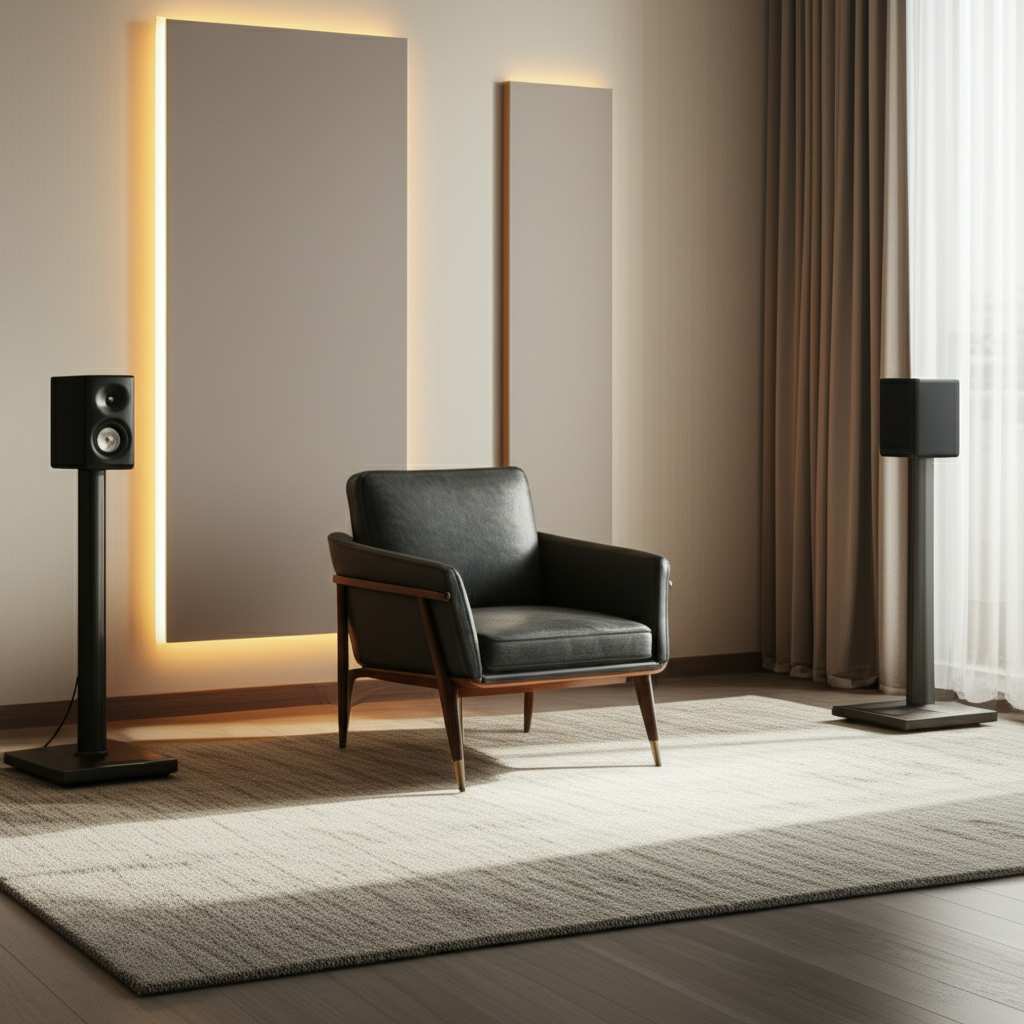
The spot where you put your speaker can actually change the sound quality a lot. It’s like how a whisper in a quiet room is different from a whisper in a noisy street. The environment around the speaker plays a big role in how you hear the music.
We’re not talking about super technical stuff here. Just a few simple tricks can make a world of difference. You’ll be surprised how easy it is to get that rich, full sound you’ve been craving. Let’s get your speaker positioned for sonic success!
Let’s Talk About Sound: Understanding the Basics
Before we start moving speakers around, let’s quickly chat about sound. Sound travels in waves, kind of like ripples in water. When these waves hit walls, furniture, or even the floor, they bounce around. This bouncing is called reflection.
Sometimes, reflections can be good! They can make a room feel more alive. But too many reflections, or reflections happening at the wrong time, can make the sound muddy or echoey. This is especially true for bass sounds, which are longer waves and more easily affected by your room.
Different speakers also sound different. Some are designed to spread sound widely, while others focus it. Knowing this helps us figure out the best spot. It’s all about helping those sound waves reach your ears in the clearest way possible.
Your Bluetooth Speaker: A Quick Look at What You Have
Most Bluetooth speakers are pretty straightforward, but they do have a few key things that affect sound. Think about the size of your speaker. Smaller speakers might not produce as much deep bass as larger ones. Also, check where the speaker drivers are – these are the parts that actually make the sound.
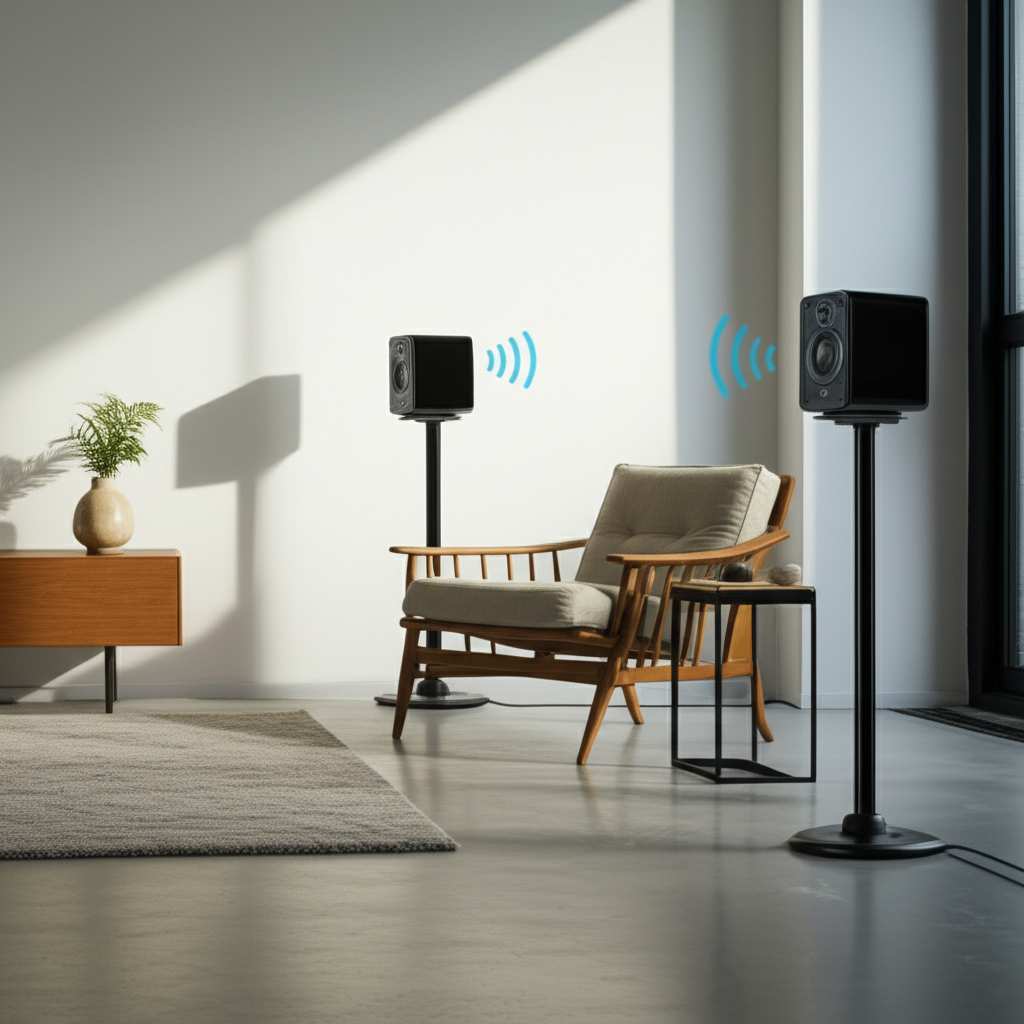
Some speakers have drivers on the front, others on the sides, and some even on the top or bottom. If your speaker has drivers on the back, you’ll need to give it some space from the wall. If it’s a 360-degree speaker, it’s designed to fill a room with sound from all directions.
Many modern speakers also have app controls. These apps can sometimes let you adjust EQ (equalization) settings. EQ is like a tone control that lets you boost or cut certain frequencies, like bass or treble. We’ll touch on this later, but for now, just get familiar with your speaker’s physical layout.
Step-by-Step: Setting Up Your Bluetooth Speaker for Amazing Sound
Ready to get hands-on? Setting up your speaker for the best sound is easier than you think. It’s mostly about finding the right spot and giving your speaker a little breathing room. Let’s walk through it.
Step 1: Choose Your Listening Area
First, decide where you’ll be doing most of your listening. Is it your living room couch? Your desk at home? Maybe your kitchen while you cook? Knowing your main spot helps you aim the sound where you want it.
Think about how many people will usually be listening. If it’s just you, you can place the speaker closer to your listening position. If it’s for a group, you’ll want a spot that distributes sound well to everyone.
Step 2: Find the Sweet Spot in the Room
This is crucial! The “sweet spot” is where the sound is most balanced and clear. For many speakers, this isn’t right in a corner or plastered against a wall.
Corners can boost bass too much, making it sound boomy. Walls can reflect sound in ways that can muddle the audio. Start by placing your speaker a foot or two away from the wall, and a bit away from corners.
Step 3: Consider Speaker Orientation
How is your speaker meant to be positioned? Most speakers are designed to sit upright or on their side. Check your speaker’s manual if you’re unsure.
If your speaker has stereo sound (meaning it has left and right channels), you might want to place two speakers in a triangle formation with your listening position. This is called stereo imaging, and it makes music sound much more immersive. For a single speaker, you’ll want to point the main drivers towards your primary listening area.
Step 4: Experiment with Distance from Walls
This is where you become the sound engineer! Move your speaker closer to and further from the wall behind it. Listen to how the bass changes. Usually, pulling it out a bit will reduce boominess and make the bass tighter.
If your speaker sounds thin, moving it a little closer to the wall might help. However, avoid pushing it right into the corner unless you specifically want a lot of bass emphasis.
Step 5: Elevate Your Speaker (If Needed)
Sometimes, placing your speaker on the floor can make the sound get absorbed by carpets or furniture. Lifting it up can help the sound travel more freely.
Try placing it on a shelf, a small table, or even a sturdy stand. The height can make a difference, especially if your listening position is higher up (like sitting on a couch).
Step 6: Connect and Test
Now, pair your device and play some music you know well. Listen critically. Does it sound clear? Is the bass too much or too little? Is the volume even?
Don’t be afraid to make small adjustments. Move the speaker six inches this way or that. Turn it slightly. Small changes can lead to big improvements. This is the fun part – tuning your sound!
Advanced Tips for Even Better Sound
Once you’ve got the basics down, you can explore a few more tricks. These can really elevate your audio experience. It’s about fine-tuning and understanding what makes your specific room and speaker combination sound its best.
Using EQ Settings Wisely
If your speaker has an app, explore the EQ settings. Most offer presets like “Rock,” “Pop,” or “Jazz.” Sometimes, a “Flat” or “Neutral” setting is a good starting point. From there, you can make small adjustments.
If music sounds too bass-heavy, try slightly reducing the bass frequencies. If vocals sound muffled, try a slight boost in the mid-range frequencies. Remember, subtle changes are usually best. Too much adjustment can make the sound unnatural.
Stereo Pairing for Immersive Sound
If you have two identical Bluetooth speakers, many models allow you to pair them in stereo mode. This means one speaker handles the left channel and the other handles the right. It creates a much wider, more realistic soundstage.
For stereo pairing, place the speakers about 5-8 feet apart, forming a triangle with your main listening spot. Point them slightly inwards towards where you’ll be sitting or standing. This setup is fantastic for movies and music that have distinct left/right elements.
Dealing with Different Room Surfaces
Hard surfaces like tile or glass can reflect sound more than soft surfaces like carpets or curtains. If your room has a lot of hard surfaces, the sound might be very echoey. You might need to experiment more with speaker placement to find a spot that minimizes harsh reflections.
Adding soft furnishings like rugs, curtains, or even bookshelves can help absorb excess sound reflections. This makes the sound from your speaker much clearer and more focused. It’s like giving your sound a cozy blanket to land on!
The Impact of Speaker Type
Not all Bluetooth speakers are created equal. Some are designed for portability, others for home audio. Portable speakers are often smaller and might have less powerful bass. Home-focused speakers might be larger and offer a richer, more detailed sound.
Also, consider the speaker’s sound dispersion. A speaker designed for 360-degree sound will fill a room more evenly than one with a directional output. Knowing your speaker’s design helps you understand its strengths and weaknesses in different placements.
Quick Guide: Speaker Placement Dos and Don’ts
Here’s a quick rundown to help you remember the most important tips for getting great sound.
- DO: Place speakers away from corners and walls to avoid boomy bass.
- DON’T: Hide speakers behind furniture, as this will muffle the sound.
- DO: Experiment with different distances from walls to find the best bass response.
- DON’T: Place speakers on surfaces that vibrate easily, like flimsy tables.
- DO: Elevate speakers off the floor for clearer sound, especially on carpet.
- DON’T: Point directional speakers directly at hard surfaces that will create harsh reflections.
- DO: Use stereo pairing if you have two speakers for a more immersive experience.
- DON’T: Over-adjust EQ settings, as this can make the sound unnatural.
Comparing Speaker Features for Optimal Sound
When choosing a Bluetooth speaker, a few features can significantly impact how well it sounds and how easy it is to set up for optimal audio. Here’s a look at what to consider.
| Feature | What it Means | Impact on Sound |
|---|---|---|
| Driver Size & Type | The actual speaker components producing sound. Larger drivers often mean better bass. | Larger drivers can produce deeper, richer bass. Multiple drivers (woofers for bass, tweeters for treble) offer a fuller sound. |
| 360-Degree Sound | Designed to project sound evenly in all directions. | Great for filling a whole room with sound. Ideal for open spaces or when you don’t have a single “sweet spot.” |
| Stereo Pairing Capability | Ability to link two identical speakers to act as a left and right channel. | Creates a wide, immersive soundstage, similar to traditional home stereo systems. Essential for a true stereo listening experience. |
| Water Resistance (IP Rating) | Protection against dust and water (e.g., IPX7 means waterproof). | Doesn’t directly impact sound quality but allows for placement in bathrooms, by pools, or outdoors, which can affect how you perceive the sound in different environments. |
| App Control / EQ Settings | A companion app that lets you control speaker functions and adjust sound profiles. | Allows for fine-tuning the sound to your preference or room acoustics. You can boost bass, cut treble, or use presets. |
| Battery Life | How long the speaker plays on a single charge. | Less direct impact on sound quality, but longer battery life means you can experiment more with placement without worrying about running out of power. |
As you can see, features like driver size and 360-degree sound are directly related to how the speaker projects audio. Stereo pairing is a game-changer if you want that rich, enveloping sound. And while water resistance doesn’t change the sound itself, it opens up placement options that can be very appealing!
For example, a speaker with true 360-degree sound might be perfect for the center of a living room, whereas a directional speaker might do better placed on a shelf pointing towards your main seating area. Always check the product specs!
Real-World Examples: Finding the Best Spot
Let’s imagine a couple of scenarios. You’ve got your speaker, and you’re ready to test!
Scenario 1: The Living Room Fiesta
You want music for a small get-together. Your living room has a couch, a coffee table, and a rug. You have a single, omnidirectional Bluetooth speaker.
Bad Spot: Pushed into the corner behind the couch. The bass will be overwhelming and muddy. The sound won’t reach guests on the other side of the room well.
Better Spot: On the coffee table, about 2-3 feet away from the wall behind the couch. This allows the 360-degree sound to spread evenly. The rug will help absorb some reflections, making the sound clearer.
Even Better Spot: If you have a small side table, place the speaker there, about 3 feet from the wall and at about ear level when people are standing. This elevates the sound and reduces absorption by the couch.
Scenario 2: The Focused Gaming Setup
You want to enhance your gaming experience with a directional Bluetooth speaker placed near your computer. Your desk is against a wall.
Bad Spot: Directly against the wall behind your monitor. The sound will bounce off the wall and directly back at you in an uncontrolled way, potentially causing echoes or harshness.
Better Spot: Place the speaker on your desk, about 6-12 inches away from the wall. Angle it slightly so the main driver is pointing more towards your ears rather than straight at the wall.
Best Spot (if you have two speakers): Use stereo pairing. Place one speaker on each side of your monitor, about 1-2 feet from the wall and angled slightly inwards. This creates an immersive sound field that’s perfect for games and movies.
These examples show how thinking about your room and the speaker’s design makes a big difference. It’s all about experimenting!
Troubleshooting Common Sound Issues
Even with the best setup, you might run into a few snags. Don’t worry, these are usually easy to fix!
- Problem: Too much bass, sounds boomy.
- Solution: Move the speaker further away from walls and corners. Try placing it on a softer surface like a rug or a thick mat. Reduce bass levels using EQ if available.
- Problem: Sound is tinny or lacks warmth.
- Solution: Try moving the speaker closer to a wall (but not in a corner). Elevate the speaker slightly. Check EQ settings and try boosting bass frequencies slightly.
- Problem: Sound is muffled or unclear.
- Solution: Ensure nothing is blocking the speaker drivers. Move the speaker out from behind objects or furniture. Consider the room’s acoustics – more soft furnishings might help absorb unwanted reflections.
- Problem: Volume isn’t consistent in different parts of the room.
- Solution: For directional speakers, place them in a central location or use stereo pairing. For 360-degree speakers, ensure they are in an open area where sound can radiate freely.
- Problem: Bluetooth connection drops or audio stutters.
- Solution: Ensure your source device (phone, tablet) is close to the speaker. Minimize obstructions between the devices. Turn off other nearby Bluetooth devices that might be causing interference. Sometimes, simply restarting both the speaker and your device can fix connection issues.
A great resource for understanding audio concepts is CNET’s guide, which offers further tips on optimizing your speaker’s performance.
Frequently Asked Questions (FAQ)
Q1: Do I need a special app to set up my Bluetooth speaker for best sound?
Not always! The most important part is physical placement. However, if your speaker has a companion app with EQ settings, it’s a great tool to fine-tune the sound after you’ve found the best spot.
Q2: What’s the best place to put a Bluetooth speaker in a small room?
In a small room, avoid corners. Try placing it on a shelf or table about a foot or two away from the wall. Experiment with angles to direct the sound away from hard surfaces.
Q3: Can I use my Bluetooth speaker outdoors? How does that affect sound?
Yes! Outdoors, sound doesn’t bounce off walls, so it can sound thinner. Placing a speaker on a surface or slightly elevated can help project the sound better. Also, consider wind – it can distort or carry away sound.
Q4: My speaker sounds better when it’s closer to the wall. Why is that?
This is usually because the wall is reflecting sound waves back, reinforcing the bass frequencies. While this can make bass sound fuller, it can also lead to muddiness. If you like the fuller bass, just make sure it doesn’t become overwhelming.
Q5: How far apart should I place two speakers for stereo sound?
For a good stereo image, aim for them to be 5 to 8 feet apart, forming an equilateral or slightly wider triangle with your listening position. Don’t place them too close together, or you’ll lose the stereo separation.
Q6: Does turning up the volume affect sound quality?
Yes, it can. At very high volumes, speakers can start to distort, meaning the sound quality degrades. It’s best to find a volume level that sounds great without pushing the speaker to its limits, especially for extended listening sessions.
Q7: Should I keep my Bluetooth speaker plugged in all the time?
Most modern Bluetooth speakers use lithium-ion batteries. It’s generally fine to keep them plugged in, as they have circuitry to prevent overcharging. However, occasionally letting the battery discharge and recharge can be good for battery health in the long run.
Conclusion: Your Sound, Your Way!
See? Setting up your Bluetooth speaker for the best sound isn’t some secret wizardry. It’s all about understanding how sound interacts with your space and making a few smart choices about placement.
By following these simple steps – choosing your spot, giving your speaker some breathing room, and experimenting a little – you can unlock amazing audio quality. Whether you’re jamming to your favorite tunes, getting lost in a podcast, or immersing yourself in a movie, you deserve the best sound possible.
Don’t be afraid to play around! Every room is different, and what sounds perfect in one might need a tweak in another. You’re now armed with the knowledge to make your speakers sound their absolute best. Now go enjoy amazing sound and make every moment louder and better!