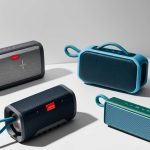
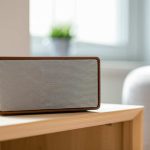
Want better sound from your portable speaker? This guide shows you easy ways to boost your audio quality, from finding the perfect spot to using simple settings. Get ready for richer music and clearer podcasts!
Hey there, tech explorer! You know how sometimes your favorite song just doesn’t sound as awesome as it should when played through your portable speaker? It’s a bummer, right? We’ve all been there, fiddling with volume knobs and wishing for a little more oomph.
Choosing a speaker can feel like a maze of technical terms. What does “wattage” really mean? How does “Bluetooth version” affect your sound? Don’t worry, we’re going to cut through all that confusion together.
My goal is to make understanding and improving your speaker’s sound as easy as pressing play. We’ll look at simple tricks and smart choices that can make a huge difference. Think of me as your friendly guide to unlocking the best possible audio experience from your portable pals.
Ready to dive in and make your music sound incredible? Let’s break down how to get the most out of your portable speaker.
Why Sound Quality Matters So Much
Music, podcasts, and even movie sound effects can totally change your mood. When your portable speaker delivers great sound, it’s like bringing a concert hall or a cinema right to your living room, or your backyard picnic! Poor sound quality can make even the best tunes sound flat and uninspiring, which is a real shame.
Think about your last get-together. Did the music fade into the background or did it get everyone tapping their feet? Good sound makes moments memorable. It transforms ordinary listening into an experience. That’s why we’re here: to make sure your speakers are always performing at their best.
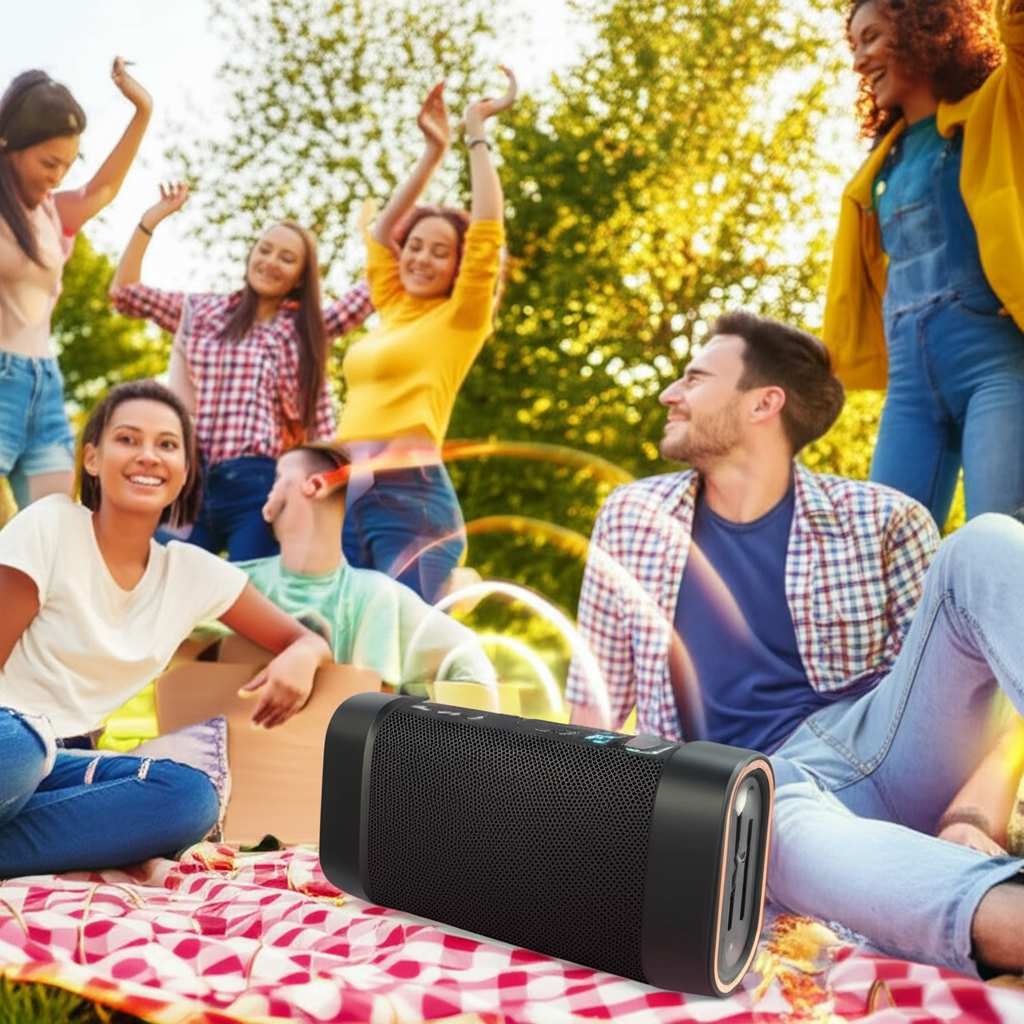
Finding the Sweet Spot: Speaker Placement Secrets
This might sound super simple, but where you put your speaker makes a massive difference. It’s not just about picking a spot that looks nice. The right location can boost bass, improve clarity, and make the sound fill the room better. You’d be surprised how much impact a few inches can have!
Imagine trying to hear a whisper in a noisy room – it’s tough! Your speaker works similarly. It needs the right environment to project its best sound. Let’s explore how to find that perfect spot for your portable audio buddy.
The Power of Surfaces: Boost Your Bass
Have you ever noticed that your speaker sounds a bit more powerful when it’s on a table or shelf compared to the floor? That’s not your imagination! Placing your speaker on a solid surface can actually amplify the bass. This is because the vibrations from the speaker can resonate with the surface, giving the low frequencies a little extra push.
Try putting your speaker near a wall or in a corner. This is often called “boundary reinforcement.” The sound waves bouncing off the walls can combine with the direct sound from the speaker. This can make the bass sound fuller and richer. Just be careful not to place it too close to a wall, as it can sometimes make the sound boomy or muddy.
Avoiding Obstructions: Let the Sound Flow
Your speaker needs clear pathways for its sound to travel. If you have it hidden behind a sofa, stuffed in a cabinet, or buried under piles of books, the sound will be muffled and weak. It’s like trying to shout through a pillow – the message just doesn’t get through clearly.
Always try to position your speaker in an open space. Make sure there are no objects directly in front of the speaker drivers. This allows the sound waves to move freely and reach your ears without being blocked. A clear line of sight to your listening area is key!
Height Matters: Aim for Ear Level
The height of your speaker can also affect how you perceive the sound. Placing a speaker too low on the floor or too high on a very tall shelf can mean that certain frequencies are lost or distorted by the time they reach your ears. Our ears are designed to hear best at a certain level, and our speakers are too!
For the best listening experience, try to place your speaker at roughly ear level when you’re sitting or standing. This ensures that the full range of sound, from the highs to the lows, is directed towards you. Think of it like aiming a flashlight – you want to point it where you want the light to go!
Outdoor Acoustics: The Open Air Challenge
Using your speaker outside is fantastic, but it’s a different acoustic challenge. Without walls or solid surfaces to bounce sound off, the audio can seem to dissipate quickly. This is especially true for bass frequencies, which tend to get lost in open spaces.
When you’re outdoors, try to place your speaker on a raised surface like a picnic table or a sturdy chair. This gives the sound a little lift. Positioning it closer to where people are gathered can also help. Some speakers have an “outdoor mode” or EQ settings designed to compensate for this. Check your speaker’s manual!
Understanding Your Speaker’s Controls and Features
Most portable speakers come with a few buttons and settings that can really tweak your sound. Don’t be intimidated by them! Learning what each one does is like unlocking secret levels for your audio. A little adjustment here and there can lead to a much richer listening experience.
We’ll go through some common controls and features. Knowing these will help you get the most out of your speaker, no matter where you are. Let’s make your music sound its absolute best!
The EQ Button: Your Sound Sculptor
Some speakers have an Equalizer (EQ) button or setting. This is your magic wand for sound! An EQ lets you adjust different frequencies – the bass (low sounds), the mids (vocals and instruments), and the treble (high sounds). It’s like having a sound mixer in your pocket.
If your music sounds a bit muddy, you might try slightly reducing the bass. If it sounds a little tinny, you could try boosting the treble. If vocals are hard to hear, a slight boost in the mids might help. Experiment with these settings to see what sounds best for different types of music or podcasts.
Stereo Pairing: Double the Sound, Double the Fun
Did you know that many portable speakers can be paired together to create a true stereo sound experience? This means you get sound from the left and right channels, just like in a proper hi-fi system. It’s an amazing way to fill a larger space with immersive audio.
To do this, you usually need two identical speakers. You then connect them wirelessly, often via Bluetooth, to your phone or tablet. One speaker acts as the left channel and the other as the right. The setup process is usually straightforward, often involving holding down a specific button on each speaker.
Here’s a quick guide to stereo pairing:
- Make sure both speakers are charged and powered on.
- Check your speaker’s manual for instructions on how to enter pairing mode for stereo linking.
- Usually, you’ll press and hold a specific button (often a Bluetooth or multi-speaker icon) on one speaker until it indicates it’s ready to link.
- Then, do the same on the second speaker.
- The speakers should automatically find each other and connect. You’ll often hear a confirmation sound.
- Once paired, connect your phone or device to one of the speakers via Bluetooth. The audio should now play in stereo across both speakers.
This feature is fantastic for parties or when you want a more engaging listening experience in a larger room. It really elevates the sound!
Waterproofing and Durability: Sound That Goes Anywhere
Many portable speakers are designed to be rugged and water-resistant. This is a huge plus for improving your sound quality experience because it means you can take them to places where regular electronics might not survive. Think beach trips, poolside lounging, or even just listening in the bathroom!
When a speaker is water-resistant (often rated with an IP code, like IPX7), you don’t have to worry as much about splashes or rain. This lets you place it in more adventurous spots where the acoustics might actually be better. Just always double-check the specific rating and what it means for your speaker model.
Connecting Your Device: The Bluetooth Advantage
Bluetooth technology is what makes most portable speakers so convenient. It allows you to wirelessly stream music from your smartphone, tablet, or laptop. But not all Bluetooth connections are created equal, and how you connect can impact sound quality.
Modern Bluetooth versions offer better sound and more stable connections. Let’s look at what’s important when you’re pairing up.
Bluetooth Versions Explained
Bluetooth has gone through many updates, and each new version generally brings improvements. Newer versions like Bluetooth 5.0 and 5.1 offer faster pairing, a longer range, and better power efficiency. Crucially for sound, they can also support higher-quality audio codecs.
Here’s a quick look at some common Bluetooth versions and what they mean:
| Bluetooth Version | Release Year | Key Improvements for Audio |
|---|---|---|
| Bluetooth 4.0 | 2010 | Introduced Bluetooth Low Energy (BLE), improved audio streaming. |
| Bluetooth 4.2 | 2014 | Faster speeds, improved security, better data transfer for audio. |
| Bluetooth 5.0 | 2016 | 2x faster speeds, 4x range, improved audio quality and stability. Supports LE Audio. |
| Bluetooth 5.1 | 2019 | Added direction finding, improved connection stability. |
| Bluetooth 5.2 | 2020 | Introduced LE Audio, Isochronous Channels for better synchronized audio. |
So, if your phone and speaker both support Bluetooth 5.0 or higher, you’re likely to get a more robust and potentially higher-fidelity wireless audio stream. It’s one of those behind-the-scenes technologies that makes a real difference!
Codec Matters: The Secret to Clearer Sound
Bluetooth codecs are like translators for your audio data. They compress the sound file to send it wirelessly and then decompress it for your speaker to play. Different codecs have different abilities to maintain sound quality during this process. The better the codec, the closer the streamed sound will be to the original recording.
Common codecs include SBC (Subband Coding), AAC (Advanced Audio Coding), aptX, and LDAC. SBC is the basic, universally compatible codec. AAC is often used by Apple devices and offers better quality than SBC. aptX (and its variants like aptX HD) and LDAC are considered high-quality codecs, offering near-CD quality sound, but both your device and your speaker need to support them.
Codec Comparison:
| Codec | Typical Quality | Compatibility | Notes |
|---|---|---|---|
| SBC | Basic | Universal | Standard for all Bluetooth audio. |
| AAC | Good | Apple devices, many Androids | Better than SBC, widely supported. |
| aptX | Very Good | Many Android devices, some Windows PCs | Requires support on both ends. |
| aptX HD | Excellent | Select Android devices | Higher resolution audio. |
| LDAC | Near-CD Quality | Select Android devices (especially Sony) | Highest quality, can be power-hungry. |
If you’re serious about sound quality, look for speakers and devices that support aptX HD or LDAC. You’ll hear a noticeable difference in detail and clarity!
Keep It Close (But Not Too Close!)
While newer Bluetooth versions have a longer range, the signal can still be affected by distance and obstructions. For the most stable and highest-quality connection, try to keep your device relatively close to your speaker. Walls, other electronics, and even your own body can sometimes interfere with the signal.
However, don’t place your device directly on top of the speaker. Sometimes, this close proximity can cause interference. A few feet away is usually the sweet spot for optimal performance. It’s a delicate balance!
Tips for Maximizing Sound Output
Beyond placement and connections, there are a few other practical tips to ensure your portable speaker is giving you the best sound it possibly can. These are small things that add up to a big improvement.
Let’s cover how to get that extra bit of richness and power out of your device.
Charge It Up!
This is a fundamental one, but it’s crucial. Many portable speakers are designed to perform at their best when they have a full charge. As the battery level drops, some speakers may automatically reduce their power output to conserve energy. This can lead to lower volume and less dynamic sound.
Always ensure your speaker is fully charged before an important listening session. It’s a simple step that guarantees you’re getting the intended audio performance without any artificial limitations. Think of it as giving your speaker the energy it needs to shine!
Update Your Firmware
Just like your smartphone or computer, portable speakers sometimes receive firmware updates. Manufacturers release these updates to fix bugs, improve performance, and even add new features. Sometimes, these updates can include enhancements to the audio processing or Bluetooth connectivity, leading to better sound quality.
Check the manufacturer’s website or their dedicated app for your speaker model. If an update is available, follow the instructions carefully. It’s usually a simple process that can pay dividends in audio performance. It’s like giving your speaker a little tune-up!
Clean Your Speaker Grilles
Over time, dust and debris can accumulate on your speaker’s grilles. This can actually block the sound waves from escaping properly, making the audio sound muffled or less clear. It’s a subtle issue, but it can definitely impact how you hear your music.
Gently clean the grilles using a soft brush (like a clean toothbrush) or a can of compressed air. Be careful not to push anything into the speaker drivers themselves. A little regular cleaning can help keep the sound pathways clear and open.
Consider the Source Material
Even the best speaker can only reproduce the quality of the audio file you’re playing. A low-quality MP3 downloaded from a questionable source will never sound as good as a high-resolution audio file streamed from a reputable service. The source of your music is just as important as the speaker itself!
If you’re using a music streaming service, consider upgrading to their highest quality setting if available. Services like Spotify, Apple Music, and Tidal offer different audio quality options. Choosing the best quality setting ensures you’re feeding your speaker the best possible signal to work with.
For more on how streaming services impact sound quality, check out this article from CNET.
Choosing the Right Portable Speaker for You
With so many options out there, picking the right portable speaker can feel overwhelming. But if you know what to look for, you can find one that fits your needs and budget perfectly. Let’s simplify the process.
Think about how and where you’ll use the speaker most often. This will guide you toward the best features for your lifestyle.
Key Features to Consider
- Sound Quality: Look for reviews that mention balanced sound, good bass, and clear vocals. Some brands are known for specific sound profiles.
- Battery Life: How long do you need it to last on a single charge? Aim for at least 8-10 hours for general use.
- Portability: How small and light does it need to be? Will it fit in a backpack or just a larger bag?
- Durability/Waterproofing: If you plan to use it outdoors or near water, look for high IP ratings.
- Connectivity: Does it support the latest Bluetooth version? Does it have an aux input for wired connections?
- Stereo Pairing: Do you want the option to link two speakers for a fuller sound?
- Price: Set a budget. You can find great speakers at various price points.
Don’t get lost in specs alone. Reading user reviews and professional reviews can give you a real-world sense of how a speaker performs. Websites like TechRadar offer great comparisons and in-depth reviews.
Budget-Friendly vs. Premium Picks
You don’t always need to spend a fortune to get good sound. Many brands offer excellent value in their mid-range speakers. These often strike a great balance between sound quality, features, and price.
Premium speakers usually offer superior build quality, more advanced audio technology (like multiple drivers for better sound separation), longer battery life, and enhanced features like app control or voice assistant integration. If sound is your absolute top priority and you’re willing to invest, a higher-end model might be worth it.
Frequently Asked Questions (FAQ)
Got more questions? We’ve got answers! Here are some common queries beginners have about improving portable speaker sound quality.
Q1: My speaker sounds tinny. What can I do?
A1: A tinny sound often means there’s too much treble and not enough bass or mid-range. Try moving your speaker closer to a wall or into a corner for more bass reinforcement. Also, check if your speaker has an EQ setting; if so, try reducing the treble slightly and boosting the mid-range or bass a bit.
Q2: Can I use my speaker while it’s charging?
A2: Yes, most portable speakers can be used while charging. However, for the absolute best sound performance and volume, it’s often recommended to use it with a full charge, as some speakers might limit output when charging to prevent overheating or battery strain.
Q3: My Bluetooth connection keeps cutting out. How can I fix it?
A3: First, try moving your device closer to the speaker and ensuring there are no major obstructions in between. Also, check if your device and speaker have the latest firmware updates. Sometimes, interference from other wireless devices (like Wi-Fi routers or microwaves) can cause issues.
Q4: Does the brand of the speaker matter for sound quality?
A4: Yes, brand reputation can be an indicator. Some brands specialize in audio and have built a reputation for excellent sound engineering. However, many newer brands also offer fantastic sound at competitive prices. Always check reviews for the specific model you’re interested in.
Q5: What’s the difference between a portable speaker and a home speaker?
A5: Portable speakers are designed for mobility, usually with built-in batteries and Bluetooth. Home speakers are often larger, require a power outlet, and are designed for stationary use, often offering more powerful sound and deeper bass due to their size and design.
Q6: How can I make my speaker sound louder without distorting?
A6: While you can’t magically increase a speaker’s maximum output, you can ensure you’re getting the cleanest loud sound. Make sure the speaker is fully charged and placed optimally. Also, try increasing the volume on your source device (phone/tablet) to 80-90% and then adjusting the speaker volume. This can sometimes provide a cleaner signal to the speaker.
Conclusion: Your Sound, Your Way!
So there you have it! Improving the sound quality of your portable speaker isn’t some complex mystery. It’s all about smart placement, understanding your settings, and keeping your gear in good shape.
By following these simple tips, you can transform your listening experience. You’ve learned how a few inches of placement can boost bass, how to use your speaker’s features to fine-tune the sound, and why things like Bluetooth versions and codecs really matter. Plus, you know how to choose the right speaker for your needs!
Don’t be afraid to experiment. Try moving your speaker around, play with the EQ if you have it, and connect your devices with confidence. The power to better sound is in your hands!
Now go enjoy amazing sound and make every moment louder and better!