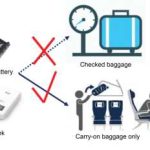
Power banks are a must-have for charging devices on the go, but did you know they’re often banned from airplanes? This is because they can pose serious safety risks if they malfunction or overheat during a flight. In short, power banks are restricted due to their lithium-ion batteries, which are flammable and potentially explosive if damaged or improperly handled. The rules are in place to protect passengers and crew from fire hazards that could happen mid-flight. So, even though we rely heavily on portable chargers, airlines have strict regulations to prevent accidents. If you’re curious about why these rules exist and how to carry your power bank safely when flying, keep reading — understanding the safety concerns can help you travel smarter and stay compliant with airline regulations.

Why is Power Bank Not Allowed on Plane
Understanding the Risks of Lithium-ion Batteries
Power banks use lithium-ion batteries, which can store a large amount of energy in a small space. These batteries are popular because they are lightweight and recharge quickly. However, their energy density also makes them a fire hazard if damaged or improperly handled. When a lithium-ion battery short circuits or overheats, it can catch fire or even explode. Airlines and aviation safety organizations restrict the transportation of these batteries to protect passengers and crew.
Why Airlines Restrict Power Bank Usage During Flights
Airlines prohibit power banks in checked luggage and have specific rules for carry-on bags. The main reason is that in-flight fires are difficult to control and very dangerous. Lithium-ion batteries can ignite if they malfunction, and an uncontrolled fire mid-air is very hard to extinguish. Restrictions help minimize the risk of a fire breaking out in the cabin or cargo hold. These rules also align with international safety standards set by organizations like the International Air Transport Association (IATA).
Rules for Carrying Power Banks on Airplanes
Most airlines follow regulations based on IATA and International Civil Aviation Organization (ICAO) guidelines. Passengers are usually allowed to carry power banks in their cabin luggage only. The capacity of the power bank determines the allowed quantity and size. Power banks with a capacity of up to 100Wh (watt-hours) are generally permitted without approval. Those between 100Wh and 160Wh may require airline approval, and above 160Wh are typically prohibited. These restrictions aim to prevent potential fire hazards on flights.
How to Calculate Watt-hours
To determine your power bank’s watt-hours, check the label or specifications. The formula is straightforward:
- Watt-hours (Wh) = (Voltage (V) x Capacity (mAh)) ÷ 1000
For example, a power bank with a capacity of 10,000mAh and 3.7V voltage has:
- Watt-hours = (3.7 x 10,000) ÷ 1000 = 37Wh
This classification helps airlines know if the power bank falls into permitted categories.
Safety Concerns Linked to Power Banks
Power banks are often small but contain powerful batteries. If damaged, they can leak, overheat, or ignite. Mishandling during travel increases the risk of accidents. The danger also increases if the power bank is defective or has manufacturing flaws. To protect everyone onboard, airlines impose restrictions. Proper packaging and handling during travel can significantly reduce risks.
Airline Policies and Regulations
Different airlines might have slightly varying rules, but most follow international standards. Airlines require passengers to carry power banks in their carry-on luggage only. It is illegal to pack them in checked bags because cabin crew cannot access them quickly in an emergency. Additionally, some airlines prohibit power banks on planes altogether if they exceed certain capacity limits, emphasizing safety above all.
What Happens if You Violate Power Bank Restrictions?
Violating airline rules can lead to confiscation of the power bank or even fines. In some cases, passengers may be denied boarding if they carry prohibited items. Security checks often involve screening carry-on luggage, and if a power bank is found to exceed limits, it might be taken away. Always follow airline guidelines to avoid inconvenience and ensure safety.
Alternatives and Best Practices When Traveling
To stay charged during flights, travelers should use approved power banks within permitted capacity limits. It is also wise to carry spare batteries in protected cases to prevent accidental activation. Charging devices before a flight and using airline-in-flight charging options can help avoid the need for large power banks. Always check airline policies before packing electronic accessories.
Proper Packing and Handling Tips
- Keep power banks in your carry-on luggage only
- Ensure the power bank is turned off during the flight
- Use protective cases to prevent damage or shorts
- Do not expose power banks to heat or moisture
- Check the capacity labels to confirm compliance with regulations
Emerging Technologies and Future Regulations
Advances in battery technology aim to make power banks safer for air travel. Researchers are developing safer lithium-ion variants and alternative energy storage solutions. Future regulations might see increased limits or entirely new safety standards. Airlines and safety bodies continually adapt to new innovations to balance convenience and safety effectively.
Summary of Key Points
- Power banks use lithium-ion batteries, which pose fire risks if mishandled
- Restrictions are in place to prevent in-flight fires and ensure safety
- Capacity limits determine whether a power bank can be carried onboard
- Proper handling, packing, and compliance with airline rules prevent issues
- Ongoing technological improvements aim to make portable charging safer for trips
Related Topics
- Travel safety tips for electronic devices
- How to choose the right power bank for travel
- Regulations for carrying batteries on airplanes
- Future trends in portable energy storage
The restrictions on power banks flying in airplanes are primarily about safety and avoiding fire hazards. Lithium-ion batteries can be very useful but also dangerous if not handled properly during travel. Following airline rules, understanding capacity limits, and taking safety precautions help ensure your journey is smooth and safe.
Are Power Banks Allowed On Plane ? Power Bank Flight Rules 2024
Frequently Asked Questions
What safety concerns lead to restrictions on carrying power banks on airplanes?
Power banks contain lithium batteries, which pose a fire risk if damaged or improperly handled. During flights, changes in cabin pressure and temperature can increase the likelihood of thermal runaway or fire. To ensure passenger safety, airlines restrict bringing certain power banks or require them to be carried in hand luggage where potential issues can be better managed.
Why are size and capacity limits enforced for power banks on flights?
Regulations specify size and capacity limits because larger or higher-capacity power banks are more prone to overheating and catching fire. Limiting these factors minimizes the risk to aircraft safety. Airlines enforce these restrictions to prevent incidents that could endanger passengers and crew during the flight.
How do airline policies vary regarding power banks in cabin baggage?
Different airlines may have specific policies about carrying power banks. Some may allow small-capacity power banks in carry-on luggage, while prohibiting larger ones. Passengers should check airline guidelines before flying to avoid delays or confiscation of their devices, ensuring they comply with safety standards established by aviation authorities.
What steps should you take to safely travel with power banks?
To travel safely, carry only power banks within the permitted capacity limits in your hand luggage. Avoid packing them in checked bags, as they are more vulnerable to damage and harder to manage in case of thermal issues. Make sure the power bank is turned off during the flight and keep it protected from physical damage.
Are there specific regulations for lithium-ion batteries in portable chargers?
Yes, lithium-ion batteries, which power most portable chargers, are classified as hazardous materials because of their fire risk. Regulatory agencies set limits on their capacity and packaging to reduce danger. Complying with these rules helps prevent accidents during air travel and ensures that the devices are transported safely.
Final Thoughts
Power bank not allowed on plane primarily due to safety concerns. Lithium-ion batteries can overheat or catch fire if damaged or improperly handled. Airlines restrict their use to prevent potential hazards during flights.
The risk of fire from batteries presents serious dangers in enclosed spaces. Promptly addressing these risks reduces the chance of accidents and ensures passenger safety.
In conclusion, why is power bank not allowed on plane? Because of safety risks associated with lithium-ion batteries, airlines prohibit them to prevent fire hazards.