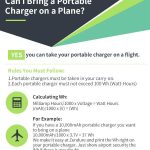
You can typically carry power banks with a capacity of up to 100Wh (about 27,000mAh at 3.7V) in your cabin luggage on a flight, but there are limits depending on the airline. For power banks exceeding this capacity (up to 160Wh or around 43,000mAh), you usually need airline approval, and only a certain number are allowed. In general, most travelers can bring one or two power banks without hassle, provided they fall within these capacities. Always check your airline’s specific regulations before flying to avoid surprises at security.
Power banks are essential for keeping your devices charged on the go, especially during long flights or layovers. Knowing the allowed capacity helps ensure a smooth security process and prevents confiscation. In this article, we’ll clarify how many mAh capacity power banks you can bring on a plane, what the rules mean, and tips to stay within limits for a stress-free travel experience.

How Many mAh Power Bank Allowed in Flight?
Understanding Power Bank Capacity Limits for Flights
Travelers often wonder about the rules for bringing power banks on airplanes. The key factor is the capacity measured in milliampere-hours (mAh). Airlines and regulators set specific limits to ensure safety and prevent fire hazards.
Most commercial airlines follow international standards set by the International Air Transport Association (IATA). These rules clearly specify how much energy storage in a power bank is permitted in carry-on and checked baggage.
Power banks are portable batteries that can power devices like smartphones, tablets, and laptops. They come in various sizes, and their mAh ratings can range from small 1,000 mAh models to larger ones exceeding 30,000 mAh.
Understanding the capacity limits can help you avoid confiscation or legal trouble at airport security. It is essential to check your power bank’s mAh rating before packing.
Global Regulations and Airline Policies
Different countries and airlines may have slightly different regulations concerning power banks. However, all follow some common international rules based on IATA guidelines.
In general, passengers are allowed to carry power banks with a capacity of up to 100 Wh (watt-hours) in their carry-on luggage. Power banks with higher capacities often need special approval or must be carried as cargo.
Most airlines specify allowances based on watt-hours, not milliampere-hours, because Wh is a more accurate measure of the energy content. To convert mAh to Wh, use the formula:
- Wh = (mAh × V) / 1000
where V is the voltage of the power bank, usually around 3.7V for lithium-ion batteries.
The typical maximum capacity allowed without restrictions is around 20,000 mAh at 3.7V, translating to approximately 74 Wh. Power banks exceeding this are generally considered high-capacity and may require approval.
What Does the Law Say About Power Bank Capacity?
The main regulation states that:
- Power banks up to 100 Wh (roughly 27,000 mAh at 3.7V) can be carried in cabin baggage without approval.
- Power banks between 100 Wh and 160 Wh (around 43,000 mAh) require airline approval.
- Power banks above 160 Wh are generally not permitted onboard and require special arrangements.
This ensures safety because lithium batteries have a risk of catching fire if damaged or improperly handled. Therefore, strict limits are in place for high-capacity power banks.
It’s important to note that these limits are for each power bank. Passengers can carry multiple devices, but the total capacity should be within these limits.
How to Calculate the Watt-Hours of Your Power Bank
Knowing how to convert mAh to Wh helps when evaluating if your power bank fits airline regulations. Here’s a simple example:
Suppose you own a power bank rated at 20,000 mAh with a voltage of 3.7V. The calculation would be:
- Wh = (20,000 mAh × 3.7 V) / 1000 = 74 Wh
This means your power bank is within the 100 Wh limit, and you should be able to carry it without special approval.
For larger capacity models, repeat this calculation to verify if they are permitted onboard.
What Happens During Airport Security Checks?
When passing through security, officers will ask to see your power banks and their specifications. Always have your devices easily accessible and ensure the mAh and Wh ratings are visible or written on the device.
If your power bank exceeds the allowed capacity, you may be asked to leave it behind or get approval from the airline beforehand.
Some airports or airlines might have stricter policies, so it is always wise to double-check ahead of your flight.
Tips for Traveling with Power Banks
To make your journey smooth, consider these tips:
- Carry only the number of power banks you need, within permitted limits.
- Ensure your devices are charged before travel to minimize the need for large power banks.
- Keep your power banks in your carry-on luggage, not checked baggage.
- Label your power bank with its capacity for quick inspection.
- If your device has a capacity close to or exceeding the limit, contact the airline in advance for approval.
These steps can help prevent issues during security checks and ensure your devices stay charged during your trip.
Are There Different Rules for Checked Baggage?
Yes. Airlines generally prohibit lithium-ion batteries with a capacity over 100 Wh in checked luggage. High-capacity power banks should only be carried in carry-on bags.
This restriction is because checked bags are more difficult to monitor, and lithium batteries pose a fire risk if they malfunction.
Always pack your batteries safely, avoiding damage and ensuring they are protected from accidental activation.
Other Related Topics
Additional information worth knowing includes:
Traveling Internationally with Power Banks
Different countries may have their rules, so check the regulations of your destination country before traveling.
Power Bank Safety Tips
Always use certified power banks and avoid cheap, unbranded products that may not meet safety standards.
Alternatives to Large Power Banks
Consider smaller, portable chargers for short trips, which are easier to carry and pose fewer security issues.
Impacts of Power Bank Use on Travel Comfort
Having a trusted power source can prevent device shutdowns, making your travel experience more enjoyable and stress-free.
Knowing how many mAh power banks you can carry on a flight is essential for a smooth journey. Most airlines permit devices up to about 20,000 mAh or 74 Wh in carry-on luggage without approval. For larger power banks, always check airline policies and obtain permissions if necessary. Understanding the regulations helps you stay compliant and ensures your devices remain charged and ready during your trip. Keep safety in mind and pack smartly to enjoy a hassle-free travel experience.
How Much mAh Power Bank Can You Take on a Plane? Rules, Tips & Travel Picks!
Frequently Asked Questions
What is the maximum capacity of a power bank I can carry on a flight?
You can generally carry a power bank with a capacity up to 100Wh (watt-hours) without approval from airline authorities. To convert mAh to Wh, use the formula: (mAh × voltage) ÷ 1000 = Wh. Most power banks are rated at 3.7V. For example, a 20,000mAh power bank at 3.7V is approximately 74Wh, which is within the allowed limit. If your power bank exceeds 100Wh but is below 160Wh, you need airline approval before bringing it onboard. Power banks with capacities over 160Wh are typically not permitted on flights.
Are there restrictions on carrying multiple power banks on a single flight?
Yes, airlines often allow passengers to carry multiple power banks, but total capacity and quantity are limited. Typically, you can bring several power banks as long as each one does not exceed 100Wh. Many airlines set a limit of two to three devices per passenger. Always check your airline’s specific regulations and ensure each power bank complies with capacity restrictions. Properly pack and carry your power banks in your carry-on luggage, as they are not permitted in checked baggage.
What do I need to do if my power bank exceeds the permitted capacity?
If your power bank has a capacity between 100Wh and 160Wh, you need to seek approval from your airline before your flight. Contact airline customer service and provide details of your device, including its capacity, to obtain permission. For power banks above 160Wh, most airlines restrict or ban their transportation entirely. Always follow airline guidelines and pack these power banks in your carry-on luggage with proper protection to prevent accidental activation or damage.
Can I carry a power bank in my checked baggage?
No, airlines generally prohibit carrying power banks in checked luggage. Lithium-ion batteries pose a fire risk if damaged or faulty, so airlines require you to keep them in carry-on baggage. Always carry your power bank with you during the flight and ensure it is stored safely to prevent accidental activation. Check with your airline for specific policies, as regulations may vary slightly depending on the carrier.
What precautions should I take when traveling with a power bank?
Ensure your power bank is within airline capacity limits and properly charged. Keep it in your carry-on luggage and avoid packing it in checked baggage. Avoid exposing it to extreme heat or direct sunlight and handle it carefully to prevent damage. If your device has a capacity close to the limit, carry proof of capacity (like the label or specifications) to present if asked by airline staff. Always review airline policies before your trip to ensure compliance.
Final Thoughts
The allowed number of mah power banks on a flight depends on airline regulations and safety guidelines. Generally, power banks with a capacity of up to 100Wh (about 27,000mAh at 3.7V) are permitted in carry-on luggage without approval. For capacities between 100Wh and 160Wh (roughly 43,000mAh), airline approval is necessary.
Power banks exceeding 160Wh are usually prohibited on flights. Always check with your airline before traveling to avoid issues during security screening. How many mah power bank allowed in flight varies, but staying within these limits ensures a smooth journey.