Thinking about Bluetooth speakers? For amazing sound, one big speaker is often easier and better than two small ones. But hey, two small ones can be super flexible! Let’s figure out which is best for YOU!
Hey there, tech adventurer! Ever found yourself staring at speaker options, wondering if bigger is always better? It’s a common question, especially with Bluetooth speakers. We all want that awesome sound for our music, movies, or even just chilling with a podcast. Sometimes, the choices can feel a little overwhelming, right?
But don’t sweat it! I’m here to make it super simple. Think of me as your friendly guide to all things tech. We’ll unpack the whole “one big vs. two small” speaker puzzle. You’ll walk away knowing exactly what’s best for your listening style and your space. Ready to dive in and find your perfect sound solution? Let’s break it down!
The Big Question: One Giant Leap or Two Tiny Steps?
Picking speakers can feel like a big decision. You want something that sounds great, is easy to use, and fits your life. That’s where the classic debate comes in: should you go for one substantial Bluetooth speaker, or a pair of smaller ones? Both have their own cool perks, but they do different things.
Imagine you’re planning a party. A single, powerful speaker might fill the room with music easily. Or, maybe you’re setting up a cozy movie night. Two smaller speakers could create a more immersive sound experience. It really depends on what you’re going for! We’re going to explore how each option can make your audio experience truly amazing.
Let’s Talk About Sound: Big vs. Small
So, what’s the real difference sound-wise between one big speaker and two smaller ones? It’s all about how sound waves travel and fill a space.
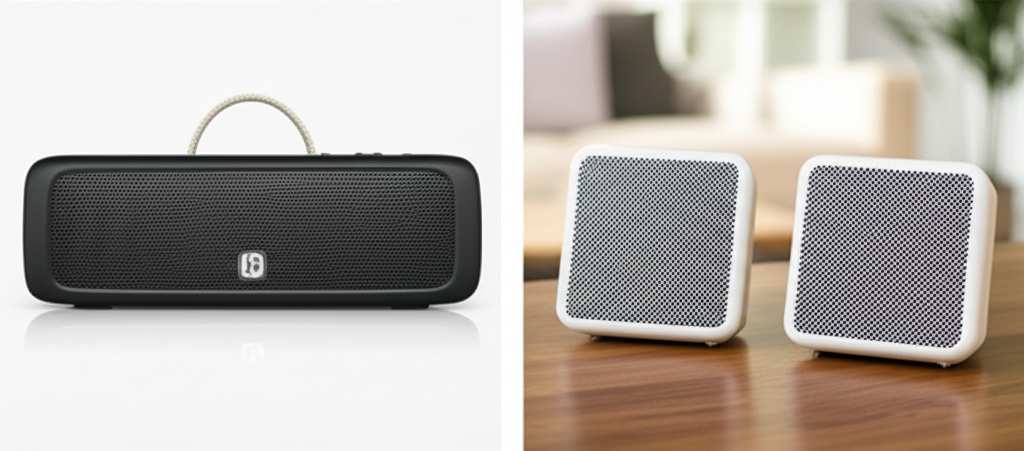
A single large Bluetooth speaker often packs more powerful drivers. These are the parts that actually make the sound. More drivers and a bigger cabinet mean it can usually produce deeper bass and a richer, fuller sound. It’s like having one really talented singer belting out a tune – powerful and commanding.
On the other hand, two smaller speakers, especially if you can place them strategically, can create a sense of “stereo sound.” This is where sound comes from two different points, making music feel more spacious and realistic. It’s like having a whole band playing, with instruments coming from different directions. This can be super cool for movies or games!
Why You Might Want One Big Bluetooth Speaker
There’s a lot to love about a single, substantial Bluetooth speaker. They’re often designed to be the all-in-one solution for great audio.
Simplicity is Key
The biggest win for a large speaker is how incredibly easy it is to use. You just pair it with your device, and boom, you’re good to go. No fuss, no complicated setups.
Easy Pairing: Connects to your phone or tablet with just a few taps.
Portability (Usually): Many large speakers are designed to be moved around your home or taken outdoors.
One Device to Manage: Only one thing to charge, one thing to store, one thing to worry about.
Think about taking it to the park or a friend’s house. You grab one box, and you’ve got your tunes ready. It’s super convenient for spontaneous gatherings or just moving from room to room.
Power and Bass
Large speakers often have more space inside for bigger components. This means they can often deliver more powerful sound and deeper bass than smaller speakers. If you love feeling the music, a big speaker might be your best bet.
Deeper Bass: You can often feel the thump of the bass more with a larger unit.
Louder Volume: Generally, they can get louder without sounding distorted.
Fuller Sound: The overall sound can feel richer and more complete.
For example, a speaker like the JBL Charge or Bose SoundLink often delivers a surprisingly robust sound for its size, and a truly large speaker takes that even further.
Convenience for Events
Planning a backyard BBQ or a small get-together? One big speaker can often be enough to provide background music or even be the main sound system. It’s less hassle than setting up multiple devices.
One-Stop Sound: Covers a good-sized area with sound.
Less Clutter: Only one speaker to place and manage.
Quick Setup: Get the party started faster.
Potential Downsides of One Big Speaker
While great, one big speaker isn’t perfect for everyone.
Less Stereo Separation: You miss out on that true stereo effect that two speakers can provide.
Can Be Bulky: If you have limited space, a very large speaker might be a bit much.
Might Be Overkill: For small rooms or quiet listening, it could be too powerful.
Why You Might Want Two Small Bluetooth Speakers
Now, let’s flip the coin. Two smaller speakers can offer a whole different kind of audio magic. They’re all about flexibility and creating a more immersive soundstage.
The Magic of Stereo Sound
This is where two small speakers really shine. When you pair two identical speakers, many can enter “stereo mode.” This means one speaker handles the left channel of the audio, and the other handles the right.
Immersive Experience: Music and movies feel like they’re happening all around you.
Wider Soundstage: Sounds appear to come from further apart, creating a more realistic feel.
Great for Movies: Dialogue can feel clearer, and action sequences more impactful.
Imagine watching a movie where a car zooms across the screen – with stereo sound, you can actually hear it move from one side to the other! It’s a game-changer for home entertainment.
Flexibility and Placement
Two small speakers give you options. You can place them apart to create that stereo effect, or use them in different rooms.
Room Coverage: Place one in the kitchen and one in the living room for music throughout your home.
Customizable Sound: Position them exactly where you want sound to be strongest.
Less Intrusive: Small speakers can blend into your decor more easily.
This flexibility is amazing for people who like to move around or have different listening zones in their house.
Portability and Convenience (in a Different Way)
While one big speaker is easy to move, two small ones can be even more portable in a different sense. You can easily slip a small speaker into a backpack for a picnic or take one to a friend’s room.
Easier to Carry: Lighter and smaller to transport individually.
Share the Sound: Give one to a friend, or use them in separate locations.
Less Worry: If one gets misplaced, you still have another.
Potential Downsides of Two Small Speakers
Of course, there are trade-offs.
Requires Pairing (Sometimes Twice): Setting up stereo mode can sometimes be a bit fiddly.
Less Bass: Individual small speakers usually won’t produce as much bass as a single large one.
More to Manage: You have two devices to keep track of, charge, and store.
Can Be More Expensive: Buying two speakers might cost more than one equivalent large speaker.
Comparing Key Features: A Quick Look
Let’s put some of the main differences side-by-side. This might help you see which features matter most to you.
| Feature | One Large Bluetooth Speaker | Two Small Bluetooth Speakers |
|---|---|---|
| Sound Quality | Often fuller, deeper bass, more powerful overall. | Can offer excellent stereo separation and a wider soundstage. |
| Ease of Use | Extremely simple; one device to manage. | Can be slightly more complex to set up in stereo mode. |
| Portability | Good for moving around the house or garden; one unit. | Individually very portable; can be split up. |
| Room Coverage | Excellent for filling a single medium to large space. | Flexible; can cover multiple spaces or create specific listening zones. |
| Bass Response | Generally stronger and deeper. | Can be less pronounced individually, but two can sometimes combine well. |
| Stereo Effect | Limited to non-existent. | Excellent, if supported and placed correctly. |
| Cost | Can vary widely; a good large speaker can be mid-to-high range. | Buying two identical small speakers might be more or less than one large one, depending on the models. |
| Setup | Plug and play; one pairing. | Requires pairing both, and potentially linking them for stereo. |
See? It’s not just about size. The table shows how each option has its own strengths. If you’re all about that deep bass and simple operation, a big speaker wins. If you crave that immersive, surround-sound feel and flexibility, two small ones are fantastic.
How to Pick the Right Speaker for You
Choosing the perfect speaker comes down to understanding your own needs and habits. Let’s think about it like this: what do you want your speaker to do for you?
Consider Your Listening Habits
Do you mostly listen to podcasts while you cook? Or do you love blasting music at parties? Are you a movie buff who wants to feel every explosion?
For Parties & Louder Music: A single, powerful large speaker is often the best bet. It can fill a larger space with sound and handle higher volumes.
For Immersive Movies & Games: Two small speakers in stereo mode will give you that theater-like experience right at home.
For Casual Background Music: Either option can work, but two small speakers offer more placement flexibility.
Think About Your Space
Where will you be using your speaker the most?
Small Apartment or Desk Setup: Two smaller speakers might be more practical and offer better sound distribution without being overpowering.
Large Living Room or Outdoor Patio: A single, robust large speaker might be better suited to cover the area effectively.
Multiple Rooms: Two small speakers can be moved or placed in different rooms to share music.
Budget Matters Too!
Sometimes, the choice is simply about what fits your wallet.
One Premium Speaker: You might spend a similar amount on one high-quality large speaker as you would on two decent smaller ones.
Two Budget Speakers: Sometimes, buying two more affordable small speakers can be cheaper than one large, high-end option.
Always check reviews! Sites like CNET often have great comparisons and recommendations.
Setting Up Your Speakers: It’s Easier Than You Think!
No matter which route you choose, getting your speakers up and running is usually a breeze.
Setting Up One Large Speaker
This is the simplest scenario.
1. Charge It Up: Make sure your speaker has enough battery power.
2. Turn It On: Press the power button. You’ll usually see a light indicate it’s ready.
3. Activate Bluetooth: Press the Bluetooth button. The speaker will go into pairing mode.
4. On Your Device: Go to your phone or tablet’s Bluetooth settings.
5. Select the Speaker: Find your speaker’s name in the list and tap to connect.
6. Play Away! You’re now connected and ready to enjoy your audio.
Setting Up Two Small Speakers for Stereo Sound
This might involve an extra step, but many modern speakers make it super simple.
1. Check Compatibility: First, ensure your speakers support stereo pairing. Look for terms like “TWS” (True Wireless Stereo) or “stereo pairing” in the product description. The two speakers must be identical models.
2. Turn Both Speakers On: Power up both of your small speakers.
3. Initiate Pairing: On one of the speakers, press and hold the Bluetooth button (or a dedicated pairing button) until you hear a confirmation sound or see a flashing light. This speaker will become the “master.”
4. Connect to Your Device: On your phone or tablet, go to Bluetooth settings and connect to one of the speakers.
5. Confirm Stereo Link: The master speaker should automatically connect to the second speaker. You’ll often hear a confirmation tone. The lights on both speakers might change to indicate they are linked in stereo.
6. Enjoy Stereo! Now, when you play audio, it will come from both speakers, creating a true stereo effect.
It’s amazing how a little bit of tech can transform your listening experience!
Fun Facts and Features to Look For
When you’re browsing, keep an eye out for these cool features that can enhance your speaker experience.
Water Resistance: Many Bluetooth speakers are water-resistant (look for IPX ratings like IPX4 or IPX7). This is great for pool parties or using them in the bathroom.
Long Battery Life: Some speakers can last 10-20 hours or even more on a single charge. This is crucial for all-day events.
App Control: Some brands offer companion apps that let you adjust EQ settings, update firmware, or manage stereo pairing.
Voice Assistant Integration: A few speakers can work with Siri, Google Assistant, or Alexa.
Multi-room Audio: Some systems allow you to link multiple speakers together, not just in stereo, but to play the same audio throughout your entire house.
A great example of advanced stereo pairing is seen in brands like TechRadar often reviews. They highlight speakers that make setting up two units for an immersive experience incredibly simple.
When Two Small Speakers Might Be Better Than One Big One
Let’s say you’re moving into a new apartment. You want great sound, but you’re not sure of the room layout yet.
Flexibility is Key: You can use two small speakers to create a nice stereo setup in your living area. Later, you can move one to your bedroom or kitchen. This is super handy!
Subtle Sound: If you prefer not to have a giant speaker dominating your decor, two smaller, more discreet speakers might be perfect.
Shared Listening: Maybe you and your roommate have different music tastes. You could each have a speaker in your own space, or use them together when you’re both in the mood.
It’s like having versatile building blocks for your sound system!
When One Large Speaker is Your Clear Winner
Imagine you’re heading to the beach or a park for a picnic. You want to share music with friends easily.
Grab and Go: One large speaker is usually simpler to pack and carry as a single unit.
Maximum Impact: For outdoor gatherings where sound can get lost, a powerful single speaker can cut through background noise better.
No Fuss Setup:** You just turn it on, connect, and let the music play. It’s perfect for when you want to get straight to the fun.
Frequently Asked Questions (FAQ)
Still have a few burning questions? Let’s clear them up!
Can I pair two different brands of small speakers together?
Unfortunately, no. For stereo pairing, both speakers need to be the exact same model from the same brand. They are designed to work together.
Will two small speakers sound as loud as one big speaker?
Not necessarily. While two small speakers can sound very full, a single large speaker is often engineered to produce higher overall volume and deeper bass on its own.
Is stereo pairing difficult to set up?
For most modern speakers, it’s quite straightforward! It usually involves turning on both speakers and pressing a button on one to link them. Check your speaker’s manual for specific instructions.
Can I use my two small speakers in different rooms at the same time?
Yes! You can pair each small speaker individually to different devices or use them as standalone speakers in different areas of your home. However, they will only create a stereo effect when paired together and connected to a single device.
What does the IPX rating mean on speakers?
The IPX rating tells you how resistant a speaker is to water. For example, IPX4 means it’s protected against splashes, while IPX7 means it can be submerged in water for a short period. It’s a handy feature for outdoor or bathroom use!
Is a large speaker always better for bass?
Generally, yes. Larger speaker enclosures allow for bigger drivers and more air movement, which is essential for producing rich, deep bass. However, some smaller speakers are surprisingly good at bass for their size.
Do I need a special app to connect two speakers?
Usually, no. Most TWS (True Wireless Stereo) features are built into the speakers themselves and don’t require a separate app. However, some premium systems might offer companion apps for more control.
The Final Verdict: Your Sound, Your Choice!
So, there you have it! The big question of one large Bluetooth speaker versus two small ones has a clear answer: it depends on what you want!
If you’re looking for booming bass, maximum volume, and ultimate simplicity, a single, powerful large speaker is probably your best friend. It’s your go-to for parties, outdoor events, or just filling a big room with sound without any fuss.
But if you dream of immersive audio, the ability to place sound exactly where you want it, and the flexibility to use your speakers in different ways or rooms, then a pair of smaller speakers is an amazing choice. They bring that cinema-like experience home and offer a versatility that’s hard to beat.
Ultimately, both options can bring amazing sound into your life. Think about how you listen, where you listen, and what makes you happy. You’ve got the knowledge now to make a choice that’s perfect for you.
Now go forth and fill your world with fantastic sound! Enjoy every beat, every note, and every moment!