Connect your Bluetooth microphone to your speaker easily! This guide walks you through simple steps so you can enjoy clear sound for parties, presentations, or karaoke in minutes. No tech headaches, just great audio.
Hey there, tech explorer! Ever feel like your sound system could be just a little bit better? Maybe you’ve got a cool Bluetooth microphone that you’re itching to use with your speaker, but you’re not sure where to start. It happens to the best of us! Picking out the perfect speaker or figuring out how to connect all your gear can sometimes feel like a puzzle.
But don’t worry, that’s exactly why I’m here! We’re going to dive into how to get that Bluetooth microphone singing along with your speaker. Think of it like introducing two friends who are going to make awesome music together. We’ll keep it super simple, skip the confusing jargon, and focus on getting you up and running fast.
You’ll be amazed at how easy it can be to boost your sound game. Whether it’s for a lively karaoke night, an important presentation, or just making your music sound epic, connecting your gear is key. So, grab a comfy seat, and let’s break down how to connect your Bluetooth microphone to your speaker, step by step. It’s going to be fun and easy!
Why Connect a Bluetooth Microphone to a Speaker?
You might be wondering why you’d even want to connect a Bluetooth microphone to a speaker. Well, think about it! Suddenly, you’re not limited by wires. This opens up a whole world of possibilities for your audio.
Imagine hosting an outdoor party where you can freely move around and still be heard clearly. Or perhaps you’re giving a presentation in a large room, and you need your voice amplified without being tethered to a podium. This setup is perfect for karaoke nights, public speaking, teaching, or even just making your video calls sound way more professional.
It’s all about freeing up your sound and making it accessible wherever you are. Plus, the convenience of wireless is a game-changer for anyone who loves to entertain or communicate with clarity.
What You’ll Need: Your Audio Toolkit
Before we jump into the connecting part, let’s make sure you have everything ready. It’s like getting your ingredients together before baking a cake! Most of the time, you won’t need much, but it’s good to check.
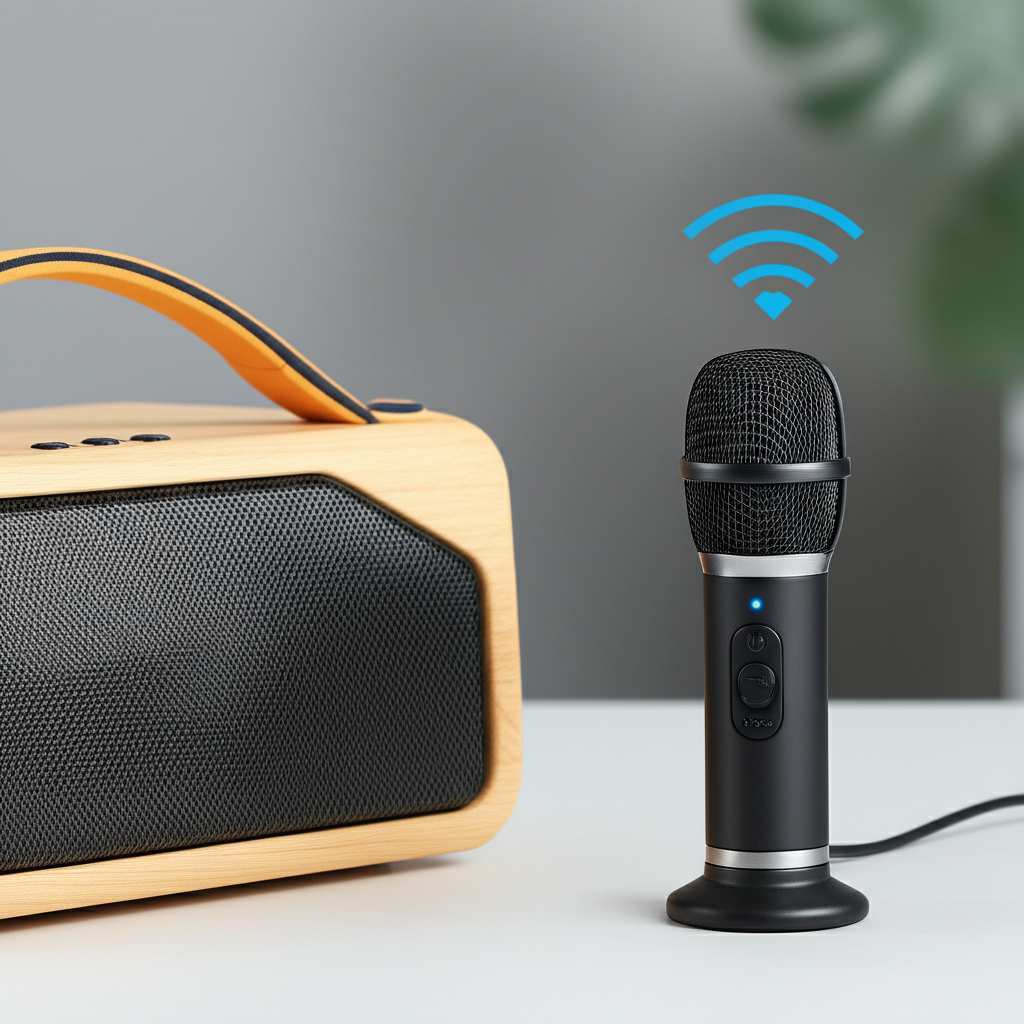
First up, you’ll need your Bluetooth Microphone. This is the star of the show for your voice! Make sure it’s charged and ready to go.
Next, you’ll need your Bluetooth Speaker. This is what will amplify the sound. Again, ensure it’s charged or plugged in.
Finally, and this is important, you need to know if your speaker and microphone are compatible. Most modern devices use standard Bluetooth, but it’s always good to check the manuals. Some older or very specialized equipment might have different connection methods.
Let’s Get Connected: The Step-by-Step Guide
Connecting your Bluetooth microphone to your speaker is usually a straightforward process. Think of it like pairing your phone to your car’s audio system. We’re just telling these two devices to talk to each other wirelessly.
Here’s how to make it happen:
-
Power On Both Devices:
Turn on your Bluetooth microphone and your Bluetooth speaker. You’ll usually see a power light turn on. -
Enable Bluetooth Pairing Mode:
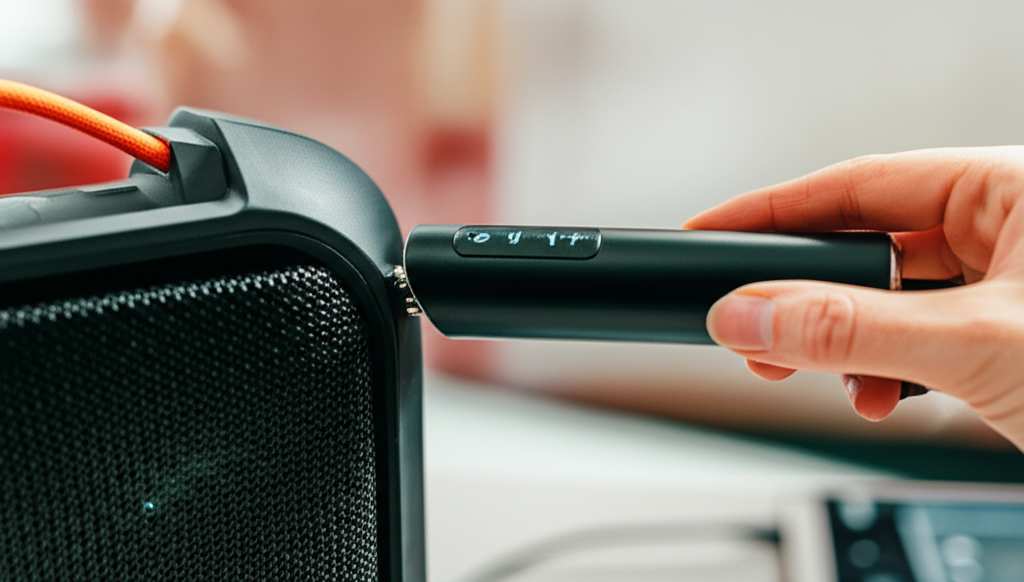
This is the crucial step! On your Bluetooth microphone, press and hold the Bluetooth button or a dedicated pairing button. You’ll typically hear a sound or see a light flashing rapidly, indicating it’s searching for a device to connect to. -
Put Your Speaker in Pairing Mode:
Now, do the same for your speaker. Find its Bluetooth button (it might be the same as the power button or a separate icon) and press and hold it until you see a flashing light or hear a confirmation tone. This tells your speaker it’s ready to accept a connection. -
Find the Devices on Each Other:
This step can vary. Some microphones are designed to find speakers automatically. Others might require you to select the speaker from a list on the microphone itself (if it has a small screen). Similarly, some speakers might scan for microphones. -
Confirm the Connection:
Once the devices find each other, they should automatically pair. You might hear a confirmation sound from both the microphone and the speaker, or the flashing lights will turn solid. This means they are now connected! -
Test the Sound:
Speak into your microphone. You should now hear your voice coming out of the speaker! Do a little test, maybe say “testing, one, two, three.” If you hear yourself, congratulations, you’ve successfully connected them!
A Little Tip for Smoother Sailing
Sometimes, devices can be a bit shy and don’t find each other right away. If this happens, try turning both devices off and on again. Also, make sure they are close to each other, ideally within 10-15 feet. This helps them establish a strong connection.
Understanding Bluetooth Versions: Why It Matters
You might have seen numbers like Bluetooth 4.0, 5.0, or even 5.3 mentioned. These are Bluetooth versions, and they’re pretty important for how well your devices connect and perform. Think of it like different generations of Wi-Fi – newer is usually better!
Here’s a quick rundown of what you might see:
| Bluetooth Version | Key Features | Typical Range | Data Speed |
|---|---|---|---|
| Bluetooth 4.0 (LE) | Lower power consumption, good for basic audio. | Up to 10 meters (33 feet) | ~1 Mbps |
| Bluetooth 4.2 | Improved security and speed over 4.0. | Up to 10 meters (33 feet) | ~1-3 Mbps |
| Bluetooth 5.0 | Much faster speeds, longer range, better power efficiency, improved audio quality. | Up to 40 meters (131 feet) | ~2 Mbps |
| Bluetooth 5.1 | Added directional finding capabilities. | Up to 40 meters (131 feet) | ~2 Mbps |
| Bluetooth 5.2 | Enhanced audio streaming (LE Audio), improved power efficiency. | Up to 40 meters (131 feet) | ~2-3 Mbps |
| Bluetooth 5.3 | Further refinements in power, connection stability, and audio quality. | Up to 40 meters (131 feet) | ~2-3 Mbps |
So, why does this matter for your microphone and speaker? Newer versions, like Bluetooth 5.0 and above, generally offer a more stable connection, a longer range, and often better sound quality. This means fewer dropouts and a more enjoyable experience.
If your microphone and speaker have different Bluetooth versions, they will usually connect using the older version’s capabilities. For example, if you have a Bluetooth 5.0 speaker and a Bluetooth 4.0 microphone, they’ll connect as Bluetooth 4.0 devices. It’s always a bonus if both your devices use the same, or a recent, Bluetooth version!
Troubleshooting Common Connection Issues
Even with the simplest guides, sometimes technology likes to throw a little curveball. Don’t let it frustrate you! Most connection problems are easy to fix.
Here are some common hiccups and how to get past them:
-
Devices Not Discovering Each Other:
Make sure both devices are in pairing mode. Sometimes, you need to actively search for devices on one of them. Try restarting both devices and trying again. -
Connection Drops Frequently:
This could be due to distance or interference. Try moving closer to the speaker and away from other wireless devices like microwaves or Wi-Fi routers. Ensure your Bluetooth versions are relatively modern. -
No Sound Coming Out:
Check the volume on both your microphone (if it has volume controls) and your speaker. Also, ensure your microphone is actually selected as the audio input if your device offers multiple options. -
Distorted or Garbled Sound:
This often points to a weak signal or too much distance. Bring the devices closer together. If the problem persists, try testing the microphone and speaker with different devices to see if one of them is faulty. -
Can’t Pair to Multiple Devices:
Most Bluetooth microphones and speakers can only connect to one device at a time. If your microphone is already connected to your phone, you’ll need to disconnect it before pairing it to your speaker.
Remember, patience is key! Technology can be quirky, but usually, a simple reset or a change in location solves the issue.
When a Direct Bluetooth Connection Isn’t an Option
What if your speaker or microphone doesn’t have Bluetooth? Or maybe you want a super-stable, professional connection? Don’t worry, there are other ways!
Many microphones and speakers still use good old cables. You might need an adapter, but it’s a reliable method.
Here are a few alternatives:
-
3.5mm Audio Cable:
This is super common. If your microphone has a 3.5mm output and your speaker has a 3.5mm aux-in port, you can simply plug them together. This is a wired connection, so no pairing is needed! -
XLR Cables:
This is more common for professional microphones. If your speaker has XLR inputs (often found on larger PA systems or professional audio interfaces), you can use an XLR cable. This is a robust, balanced connection that’s great for clear sound. -
Bluetooth Transmitters/Receivers:
If your speaker or microphone is not Bluetooth-enabled, you can buy a small Bluetooth transmitter or receiver. You plug this device into your non-Bluetooth gear, and then it can wirelessly connect to your other Bluetooth device. For example, plug a transmitter into your microphone’s audio output, and it sends the signal to your Bluetooth speaker.
Using cables or adapters can sometimes provide a more consistent sound quality, especially for critical applications like live performances or recording. It’s good to know your options!
Choosing the Right Gear: Microphone & Speaker Tips
Picking out new tech can be fun, but also a bit overwhelming. When you’re looking to connect a Bluetooth microphone to a speaker, consider what you’ll be using it for. This helps you choose gear that’s a perfect fit.
Here are some things to think about:
For Your Bluetooth Microphone:
-
Sound Quality:
Does it capture your voice clearly? Listen to reviews or try it out if you can. -
Battery Life:
How long does it last on a charge? Essential for long events. -
Connectivity:
Does it have a stable Bluetooth connection? Does it use a recent Bluetooth version? -
Ease of Use:
Is it simple to pair and operate? Look for intuitive controls. -
Durability:
If you’re using it on the go, is it built to last?
For Your Bluetooth Speaker:
-
Sound Output (Wattage):
How loud can it get? A higher wattage means it can fill bigger rooms. -
Battery Life:
Again, crucial for portability. How many hours of music or audio can it provide? -
Portability:
Is it lightweight and easy to carry? Does it have a handle? -
Connectivity Options:
Besides Bluetooth, does it have an aux-in port or other ways to connect? -
Durability and Water Resistance:
If you plan to use it outdoors or near water, look for rugged designs and water-resistance ratings (like IPX ratings).
A good starting point for reliable tech reviews is sites like CNET or TechRadar. They offer in-depth comparisons and user feedback that can guide your decision.
Fun Fact: The Birth of Bluetooth
Did you know Bluetooth technology was named after a Viking king? Harald Bluetooth united Danish tribes into one kingdom in the 10th century. The technology’s inventor, Jim Kardach, thought the name was fitting because Bluetooth technology was designed to unite different communication protocols. Pretty cool, right?
Frequently Asked Questions (FAQ)
Got more questions? No worries, we’ve got you covered! Here are some common things people ask about connecting Bluetooth microphones to speakers.
Q1: My microphone and speaker won’t connect. What should I do?
A1: First, make sure both devices are fully charged and within a few feet of each other. Then, turn both off and then back on, putting them into pairing mode again. Sometimes, restarting them solves the problem!
Q2: Can I connect my Bluetooth microphone to any Bluetooth speaker?
A2: Generally, yes! Most Bluetooth microphones are designed to connect to any standard Bluetooth speaker, and vice versa. Just ensure both devices are in pairing mode and close by. If you have issues, check your device manuals.
Q3: How far away can my microphone be from the speaker?
A3: This depends on the Bluetooth version. With Bluetooth 5.0 and newer, you can expect a reliable connection up to about 40 meters (131 feet) in open spaces. Older versions might have a shorter range, typically around 10 meters (33 feet).
Q4: Will the sound quality be good?
A4: For most casual uses like parties, karaoke, or simple announcements, the sound quality from a Bluetooth connection is excellent. For professional audio work, some might prefer wired connections for absolute clarity, but modern Bluetooth is very impressive!
Q5: My speaker is not Bluetooth. Can I still use my Bluetooth microphone with it?
A5: Yes, you can! You’ll likely need a Bluetooth transmitter. Plug the transmitter into your speaker’s audio output (like an aux-in port), and then pair your Bluetooth microphone to the transmitter wirelessly.
Q6: How do I know if my devices are successfully paired?
A6: Usually, there’s an indicator. You might see a solid blue light on both devices instead of a flashing one, or you’ll hear a confirmation sound from the speaker or microphone. Sometimes, your phone or computer might show them as “connected” in its Bluetooth settings.
Q7: Can I connect my Bluetooth microphone to multiple speakers at once?
A7: Most standard Bluetooth microphones and speakers are designed to connect to only one device at a time. Some advanced systems or multi-room speakers might offer this feature, but it’s not common for basic setups.
You’re All Set for Awesome Sound!
See? Connecting your Bluetooth microphone to your speaker is totally doable and not nearly as complicated as it might seem. You’ve learned how to get your devices talking to each other, what to do if things get a little tricky, and even some cool facts about Bluetooth itself.
You’re now equipped to take your audio experience to the next level. Whether you’re planning a backyard bash, a lively presentation, or just want to enjoy some karaoke with friends, you know exactly how to make it happen. Don’t hesitate to experiment and explore the possibilities!
Now go enjoy amazing sound and make every moment louder and better!