
Choosing the right sound box for your home theater is key to an immersive audio experience. Consider speaker types, room size, and your budget to make the best choice. Our guide will help you navigate the options and create a cinematic soundscape at home.
So, you’ve got the big screen, the comfy couch, and you’re ready to transform your living room into a cinematic paradise. But what about the sound? A killer home theater setup isn’t complete without an equally killer sound system. The heart of that system, the component that brings movies, music, and games to life with rich, enveloping audio, is your sound box – or more accurately, your collection of speakers. Choosing the best sound box for your home theater can seem daunting, with so many options out there. But don’t worry, we’re here to break it down for you.
Think of your speakers as the voice of your home theater. They’re responsible for every whisper, every explosion, every musical note. Getting this right means the difference between a good movie night and an unforgettable, truly immersive experience. We’ll guide you through understanding the different types of speakers, how your room plays a role, and what to consider to make sure you pick the perfect sound box combination for your entertainment haven.
Let’s dive into how to make sure your home theater sounds as good as it looks.
- Understand Speaker Types: Know the difference between bookshelf, floorstanding, satellite, and soundbar speakers to match your needs and space.
- Consider Your Room: Room size, shape, and acoustics significantly impact sound quality. Larger rooms benefit from more powerful speakers.
- Determine Your Budget: Home theater speakers range from affordable to high-end. Set a realistic budget before you start shopping.
- Match to Your Receiver: Ensure your chosen speakers are compatible with your AV receiver’s power output and impedance.
- Don’t Forget the Subwoofer: A subwoofer adds crucial low-end frequencies for explosions, bass, and immersive effects.
- Listen Before You Buy: If possible, audition speakers in a similar environment to your own to assess their performance.
- Think About Future Expansion: Consider if you plan to expand your system to 5.1, 7.1, or Dolby Atmos later on.
📑 Table of Contents
Understanding Speaker Types for Your Home Theater
When we talk about the “sound box” for a home theater, we’re really talking about a system of speakers. Each speaker plays a specific role in creating that surround sound magic. There are several main types you’ll encounter, and understanding their purpose is the first step to building a great system.
Bookshelf Speakers
These are compact speakers, designed to sit on a shelf, stand, or entertainment unit. They’re great for smaller rooms or as part of a larger surround sound system where they handle the front left and right channels, or even surround channels. They offer a good balance of sound quality for their size, but they might not deliver the deepest bass on their own. For a more powerful sound, you’ll likely want to pair them with a subwoofer.
Floorstanding (Tower) Speakers
These are the larger, more imposing speakers that stand on the floor. They often have multiple drivers (the individual speaker units) and a larger cabinet, allowing them to produce a fuller range of sound, including more substantial bass. If you have a larger room and want a more commanding presence in your sound, floorstanding speakers are a fantastic choice for your front left and right channels.
Satellite Speakers
These are typically very small speakers designed to be discreet. They are usually part of a 5.1 or 7.1 system and handle the surround and rear channels. Their job is to create that immersive effect, placing sounds around you. Because they are small, they rely heavily on the subwoofer to fill in the lower frequencies.
Center Channel Speaker
This is arguably the most important speaker for dialogue clarity. The center channel speaker is positioned directly in front of the main listening area, usually above or below your TV. It handles the vast majority of spoken dialogue, ensuring you don’t miss a word of your favorite movies or shows. If you’re building a 5.1 system, a good center channel speaker is a must-have. You can explore some excellent options in our guide on the best center speaker for home theater.
Soundbars
Soundbars are an all-in-one solution, a single bar-shaped speaker that sits below your TV. They are designed for simplicity and can offer a significant upgrade over your TV’s built-in speakers. Many soundbars come with a wireless subwoofer and can simulate surround sound. While convenient and often space-saving, they typically can’t match the immersion and discrete sound placement of a true multi-speaker surround sound system. However, for a simpler setup, they are a great starting point.
Matching Your Sound Box to Your Room
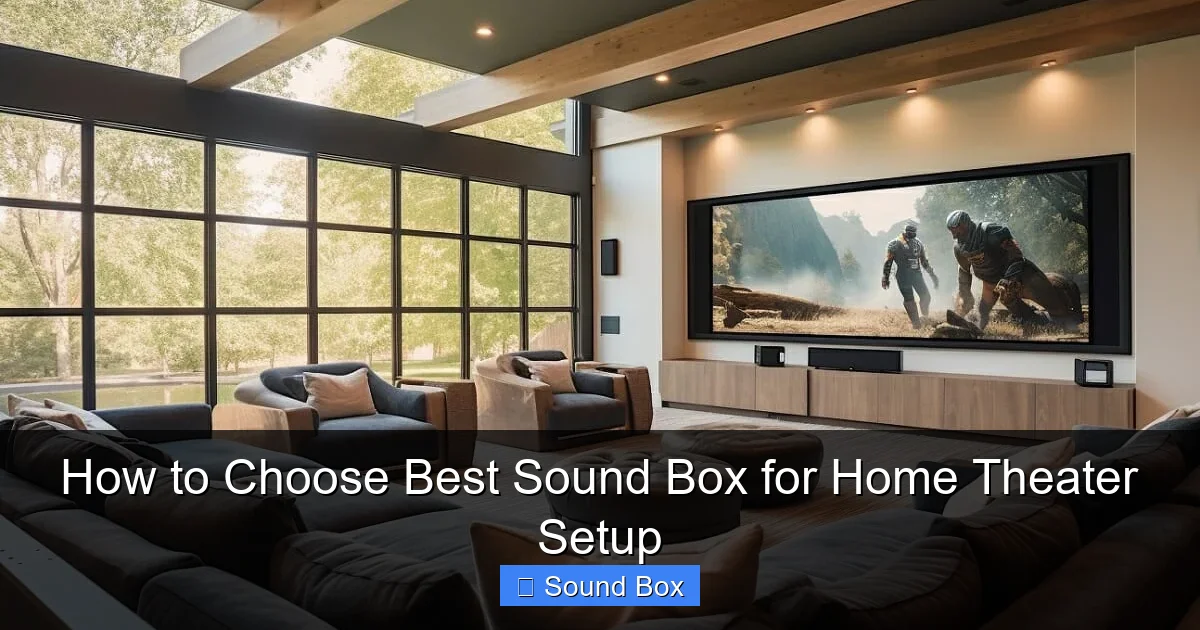
Visual guide about How to Choose Best Sound Box for Home Theater Setup
Image source: decorilla.com
The room where you set up your home theater plays a huge role in how your speakers will sound. It’s not just about the speakers themselves; it’s about how they interact with your environment.
Room Size and Speaker Power
Larger rooms require more powerful speakers to fill them with sound. If you have a massive living room, small satellite speakers or bookshelf speakers might struggle to provide enough volume and dynamic range. In such cases, floorstanding speakers or more robust bookshelf speakers would be a better fit for your front channels. For smaller rooms, you might find that bookshelf speakers or even a good soundbar are more than adequate, preventing the sound from becoming overwhelming.
Room Acoustics and Speaker Placement
Hard surfaces like bare walls, windows, and tiled floors can reflect sound, leading to echoes and muddiness. Soft furnishings like carpets, curtains, and upholstered furniture help to absorb sound, making it clearer and more focused. The shape of your room also matters. An unusually shaped room might have “dead spots” where sound doesn’t reach well.
Speaker placement is crucial for achieving the best sound. Generally, for a 5.1 system, your front left and right speakers should be placed at an equal distance from your TV and your main listening position, forming an equilateral triangle. The center channel should be directly in front of you, and surround speakers should be to your sides and slightly behind. Getting this right significantly impacts the immersive experience. For more detailed guidance, check out our tips on how to position speakers for best sound, as the principles largely apply to home theaters too.
Considerations for Dedicated Home Theaters vs. Living Rooms
If you have a dedicated home theater room, you have more control over acoustics and layout. You can optimize the room for sound from the ground up. In a multi-purpose living room, you have to work with existing furniture and decor. This might mean prioritizing speakers that are less intrusive visually or acoustically easier to integrate.
Defining Your Home Theater Audio Needs and Budget
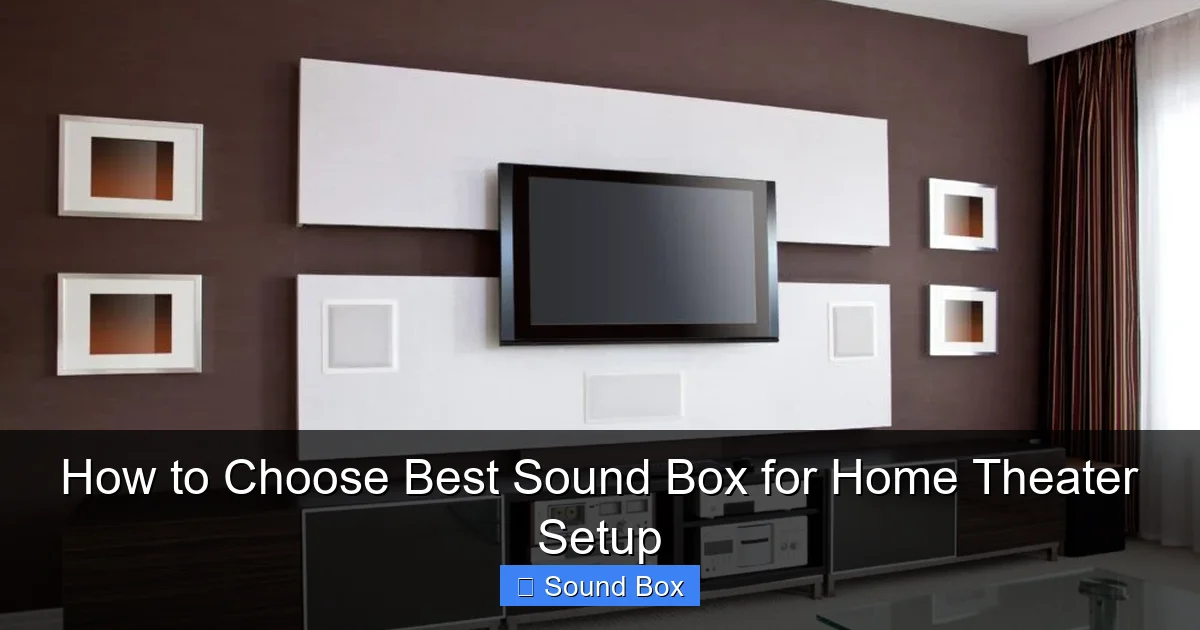
Visual guide about How to Choose Best Sound Box for Home Theater Setup
Image source: blog.unpakt.com
Before you even start looking at specific speaker models, it’s essential to define what you want from your home theater’s sound and how much you’re willing to spend.
What Kind of Experience Do You Want?
Are you a movie buff who craves every rumble and explosion? Do you love immersive gaming experiences? Or are you looking for a system that also excels at playing music? Different speaker configurations and qualities cater to different priorities. A robust 5.1 or 7.1 system with a powerful subwoofer is ideal for movie and gaming enthusiasts. For music lovers, the clarity and tonal accuracy of the front speakers and center channel become even more important.
Setting Your Budget
Home theater speakers can range from a few hundred dollars for a basic surround system or soundbar to tens of thousands for high-end audiophile setups. It’s important to be realistic about your budget. Remember that you’ll also need an AV receiver to power your speakers, and potentially speaker cables. Trying to get the best sound on a budget is achievable, but you might need to prioritize certain components or start with a smaller system and expand later. Consider that high-quality speaker cables can also make a difference, so looking into how to choose speaker cable for your home cinema system is a worthwhile endeavor.
Component Breakdown: Receiver, Speakers, and Subwoofer
Your AV receiver is the brain of your home theater, powering and processing all the audio and video signals. Make sure the speakers you choose are compatible with your receiver’s power output and impedance ratings. A powerful receiver can drive more demanding speakers, while a less powerful one might be better suited to more efficient speakers. The subwoofer is dedicated to reproducing low-frequency effects (LFE) – the deep bass you feel as much as hear. Don’t underestimate its importance for a truly cinematic experience.
Essential Components: The Role of the Subwoofer and Receiver

Visual guide about How to Choose Best Sound Box for Home Theater Setup
Image source: hometheaterpros.com
While we’ve touched on them, let’s give the subwoofer and AV receiver their due. These two components are critical to a well-functioning home theater sound box.
The Power of the Subwoofer
A subwoofer is specifically designed to reproduce low-frequency sounds, typically below 120 Hz. This includes everything from the deep rumble of an earthquake in a movie to the punch of a bass guitar in music. Without a subwoofer, your main speakers would have to handle these demanding low frequencies, which they might not be designed to do effectively, leading to muddy sound and potentially damage. A good subwoofer adds depth, impact, and a sense of scale to your audio. When choosing a subwoofer, consider its size, power (wattage), and the size of your room.
The AV Receiver: The System’s Command Center
Your AV receiver (Audio/Video receiver) is the central hub for your entire home theater system. It receives audio and video signals from your sources (Blu-ray player, streaming device, game console), processes the audio, amplifies it, and sends it out to your speakers. It also handles video switching and often features network connectivity for streaming. Key features to look for in an AV receiver include the number of channels it supports (e.g., 5.1, 7.1, Atmos), HDMI inputs, power output per channel, and support for audio formats like Dolby Atmos and DTS:X. Choosing the right receiver is just as important as choosing the right speakers, as it dictates what kind of speaker configurations you can run and how powerful your system can be.
Practical Tips for Choosing Your Sound Box
Now that you understand the components and considerations, let’s get into some practical advice to help you make the best choice.
Listen Before You Buy
This is perhaps the most important tip. Whenever possible, go to a reputable audio store and listen to speakers. Bring your own music or movie clips if you can. Pay attention to how the speakers sound in a showroom environment, and try to imagine them in your own room. What sounds good in a perfectly treated, acoustically designed room might sound different in your living room. If you’re buying online, read reviews from trusted sources and look for retailers with good return policies.
Consider Your Existing System
If you already have an AV receiver, ensure the speakers you choose are compatible. If you have a great set of front speakers, you might start by adding a center channel and subwoofer, then gradually upgrade your surrounds. Building a system piece by piece is a common and often budget-friendly approach.
Don’t Neglect the Cables
While the speakers and receiver are the stars of the show, speaker cables are the arteries that carry the sound signal. Using appropriate gauge and quality speaker cables can ensure that the signal reaches your speakers without degradation. For most home theater setups, standard 14-gauge or 16-gauge speaker wire is sufficient. However, if you have very long runs or high-end speakers, you might consider thicker gauge wire. If you’re curious about this, our guide on which speaker cable length works best for home theatre can provide more insight.
Think About Future Upgrades
Are you planning to eventually upgrade from a 5.1 system to a 7.1 or even a Dolby Atmos setup? If so, choose an AV receiver that supports more channels than you currently need. This allows you to add more speakers down the line without having to replace your receiver.
Conclusion
Choosing the best sound box for your home theater setup is an exciting journey that will significantly enhance your entertainment experience. It’s not just about buying speakers; it’s about understanding how they work, how they fit into your space, and what your personal audio preferences are. By considering the different types of speakers, the impact of your room’s acoustics, your budget, and the crucial roles of the subwoofer and AV receiver, you’re well on your way to creating a home theater that sounds absolutely phenomenal.
Remember to listen before you buy, consider future upgrades, and don’t be afraid to ask for advice from audio professionals. With the right sound box, your living room will transform into a truly captivating audio-visual experience, making every movie night, game session, or music listening a memorable event. Happy listening!
Frequently Asked Questions
What is the difference between bookshelf and floorstanding speakers?
Bookshelf speakers are smaller, designed to sit on shelves or stands, and are suitable for smaller rooms or as surround speakers. Floorstanding (or tower) speakers are larger, stand on the floor, and typically produce a fuller sound with deeper bass, making them ideal for larger rooms or as front speakers.
How important is the center channel speaker?
The center channel speaker is very important, especially for movies and TV shows. It handles the majority of dialogue, ensuring that spoken words are clear and distinct from the sound effects and music.
Do I need a subwoofer for my home theater?
Yes, a subwoofer is highly recommended for a home theater setup. It reproduces the low-frequency effects (LFE) that add depth, impact, and realism to movies, games, and music, which standard speakers often cannot handle.
Can I use Bluetooth speakers for my home theater?
While some advanced soundbars offer Bluetooth connectivity, traditional Bluetooth speakers are generally not suitable for a dedicated home theater surround sound system. They lack the proper connections, synchronization, and multi-channel capabilities needed for immersive surround audio.
How does room size affect speaker choice?
Larger rooms require more powerful speakers to adequately fill the space with sound and maintain clarity. Smaller rooms can be overwhelmed by overly powerful speakers, so it’s best to match speaker output and size to the dimensions of your listening area.
What is Dolby Atmos and how does it affect speaker choice?
Dolby Atmos is an immersive surround sound technology that adds height channels, creating sound that comes from above you. To utilize Dolby Atmos, you’ll need compatible speakers (either upward-firing or ceiling-mounted) and a Dolby Atmos-enabled AV receiver.
=== END FAQS ===


