For your beach Bluetooth speaker, aim for at least an IPX7 rating. This means it can handle submersion in water, which is perfect for sandy shores and accidental splashes!
Hey there, tech adventurer! Max here from AffTechy.com, your go-to buddy for all things gadgety. You know, I just love how a good speaker can turn a simple beach day into an epic party. The right tunes can really make the waves sound better, right? But then comes the tricky part – picking the right speaker. You see all these numbers and letters, like “IPX7” or “IP67,” and your brain starts to feel like a tangled charging cable. Don’t worry, though! I’m here to untangle all that techy jargon for you. We’ll figure out exactly what kind of waterproof protection you need so your speaker stays happy and your tunes keep flowing, even near the salty sea. Ready to dive in and make smart speaker choices? Let’s make this super simple!
Why Waterproofing Matters at the Beach
Picture this: you’re at the beach, music is pumping, and suddenly a rogue wave or a playful splash comes your way. Or maybe your speaker takes a tumble in the sand, which is basically like tiny little rocks getting everywhere. Without good waterproofing, your awesome speaker could turn into a very expensive paperweight. That’s no fun for anyone!
That’s why understanding waterproof ratings is a game-changer for beachgoers. It’s not just about preventing damage; it’s about giving you peace of mind. You can relax, enjoy your music, and not stress about every little drop of water or grain of sand. It’s about freedom to have fun!
Decoding the IP Rating: Your Secret Code to Waterproofing
So, what’s this “IP” thing you see everywhere? IP stands for “Ingress Protection.” It’s a standard way to rate how well something is protected against things like dust and water. Think of it as a secret code that tells you exactly what your speaker can handle.
This code has two numbers. The first number tells you about protection from solid stuff, like dust and sand. The second number is the important one for water – it tells you how well it resists water. The higher the number, the better the protection. Easy, right?
The First Number: Dust and Sand Defense
Let’s quickly look at the first digit in an IP rating. This number is all about how well the speaker is protected from solid objects, especially dust and sand. This is super important for beach speakers because sand can get into everything!
Here’s a quick rundown of what those first numbers mean:
0: No protection. Not great for the beach!
1: Protected against large objects (bigger than 50mm). Still not beach-ready.
2: Protected against medium-sized objects (bigger than 30mm). Better, but still risky.
3: Protected against small objects (bigger than 1mm). Getting warmer.
4: Protected against dust. This is pretty good for sand, as it means dust can’t get in easily.
5: Dust protected. This is even better! It means dust might get in, but not enough to harm the device.
6: Totally dustproof. This is the gold standard for solid protection! Nothing gets in, not even the finest dust or sand.
For the beach, you’ll want at least a “4” or higher here, but the second number is usually more critical for water.
The Second Number: Water Resistance Unpacked
Now, let’s get to the splash zone: the second number. This is the real star of the show when you’re thinking about beach speakers. It tells you how well your speaker can handle water.
Here’s what those second numbers mean, from least to most waterproof:
0: No protection from water. Avoid this like a sunburn!
1: Protected against vertically falling water drops. Okay for a light drizzle, not for the beach.
2: Protected against water drops falling at a 15-degree angle. Still only good for very light splashes.
3: Protected against water spray. This means it can handle a gentle shower, but not being submerged.
4: Protected against water splashes from any direction. This is good for accidental spills, but not for dropping it in the water.
5: Protected against water jets. This means it can handle a low-pressure water stream. Getting better!
6: Protected against strong water jets. It can handle powerful streams of water, like from a hose. Very robust!
7: Protected against the effects of temporary immersion in water. This is the sweet spot for beaches! It means it can be submerged up to 1 meter for about 30 minutes.
8: Protected against continuous immersion in water under conditions specified by the manufacturer. This is the highest level, meaning it can handle prolonged submersion.
Which Waterproof Rating Is Best for a Beach Bluetooth Speaker?
So, you’re at the beach, sun shining, music playing. What rating do you really need? For a beach Bluetooth speaker, the absolute sweet spot is an IPX7 rating.
Why IPX7? Let’s break it down. The “X” in IPX7 means it hasn’t been officially tested for dust protection (or the manufacturer hasn’t shared that data), but the “7” is pure gold for water. It means your speaker can handle being dropped into the water, up to 1 meter deep, for about 30 minutes. That covers pretty much all beach scenarios!
Imagine accidentally knocking your speaker off your towel into the shallow edge of the water. Or maybe you’re setting it up near the sprinklers at a beachside picnic. With an IPX7 rating, your speaker is built to survive these common beach mishaps.
What about IP67? That’s even better! An IP67 speaker is both dustproof (the “6”) and waterproof up to 1 meter for 30 minutes (the “7”). If you can find a speaker with IP67, go for it! It offers that extra layer of sand protection that can be super handy.
Comparing Waterproof Ratings: A Quick Look
Let’s put those numbers into perspective. It’s helpful to see how different ratings stack up against each other, especially when you’re thinking about where you’ll use your speaker.
| IP Rating | Dust Protection | Water Protection | Best Use Case |
| :——– | :————– | :—————————————————— | :———————————————————- |
| IPX4 | Not specified | Splashes from any direction | Indoor use, light kitchen splashes |
| IPX5 | Not specified | Water jets | Outdoor use in light rain, near pools |
| IPX7 | Not specified | Temporary immersion (1m for 30 mins) | Ideal for beaches, pools, boating, accidental drops |
| IP65 | Dustproof | Water jets | Outdoors, dusty environments, near pools |
| IP67 | Dustproof | Temporary immersion (1m for 30 mins) | Excellent for beaches, dust, sand, and accidental drops |
| IP68 | Dustproof | Continuous immersion (deeper/longer than 7, per mfg specs) | Submersible use, very adventurous water activities |
As you can see, IPX7 and IP67 are your top contenders for beach use. IPX7 gives you the essential water submersion protection, while IP67 adds that extra dustproofing which is a huge plus for sandy environments.
Why IPX7 is Often Enough for the Beach
You might be wondering, “Why not just go for the highest rating, like IP68?” That’s a great question! While IP68 offers even more robust protection, IPX7 is usually more than enough for typical beach activities.
Think about it: how often are you planning to continuously submerge your speaker for hours on end at the beach? Probably not often! The main risks are splashes, brief drops into the water, or maybe a bit of rain. An IPX7 speaker is designed to handle exactly those situations with ease.
Plus, higher ratings can sometimes mean a higher price tag. Getting an IPX7 speaker means you’re getting excellent protection for its intended use without overpaying for features you might not need. It’s about getting the best bang for your buck!
What About Dust Protection? Is IPX7 Enough?
This is where IPX7 can be a little less clear. Remember that “X” means dust protection wasn’t tested or specified. However, most speakers rated IPX7 are still pretty good at keeping dust out. Manufacturers know that if it’s waterproof enough for submersion, it’s likely robust enough for splashes and general outdoor use.
If dust and sand are your absolute biggest concern, then an IP67 rating is your best bet. The “6” means it’s completely dustproof. This is fantastic because sand is super fine and can sneak into tiny openings. An IP67 speaker will give you that extra peace of mind knowing even the finest sand won’t get in and mess with your speaker’s insides.
So, while IPX7 is great for water, IP67 is the king of beach protection if sand is a major worry.
More Than Just Waterproof: Other Features to Consider
While waterproofing is key for the beach, don’t forget about other awesome features that make a speaker great for outdoor fun!
Sound Quality: Of course, you want it to sound good! Look for clear highs and decent bass. A speaker that sounds tinny won’t do justice to your favorite beach tunes.
Battery Life: Long battery life is crucial for a full day at the beach. Aim for at least 10-15 hours of playtime. Nobody wants their music to die before sunset!
Portability: You’ll be carrying it around, so make sure it’s not too bulky or heavy. Many beach speakers are designed to be compact and easy to clip onto a bag.
Connectivity: Bluetooth range is important. You don’t want your music cutting out every time you walk a few feet away from the speaker. Latest Bluetooth versions (like 5.0 or higher) offer better range and stability.
Durability: Beyond waterproofing, how tough is it? Can it withstand bumps and drops? Many rugged speakers have protective grilles and shock-absorbent materials.
Floating Ability: Some speakers are designed to float! This is a super fun feature if you plan to use it in or near the water. No more panicking if it slips off the edge of your boat or paddleboard.
Setting Up Your Beach Speaker: Easy Steps
Once you’ve got your awesome new waterproof speaker, getting it ready is a breeze. Here’s a simple guide to get you started:
1. Charge It Up: Before you head out, make sure your speaker is fully charged. This ensures you have music all day long.
2. Turn It On: Usually, there’s a power button you press and hold. You’ll often hear a sound or see a light indicating it’s on.
3. Activate Bluetooth: Look for a Bluetooth button or a dedicated pairing button. Press it, and your speaker will enter pairing mode. You might hear a chime or see a flashing light.
4. Open Bluetooth on Your Device: Go to the Bluetooth settings on your smartphone, tablet, or laptop.
5. Scan for Devices: Your device will search for available Bluetooth devices.
6. Select Your Speaker: You should see your speaker’s name in the list. Tap on it to connect.
7. Confirmation: Once connected, you’ll usually hear a confirmation sound, and the flashing light might turn solid. Now you’re ready to play music!
It’s really that simple! Most modern Bluetooth speakers are designed for super easy setup.
Keeping Your Speaker in Top Shape: Maintenance Tips
Your waterproof speaker is tough, but a little care goes a long way to keep it performing its best, especially after a beach trip.
Rinse After Saltwater/Sand: Always rinse your speaker with fresh water after using it in saltwater or sandy conditions. Salt can corrode parts over time, and sand can get into small crevices.
Dry Thoroughly: After rinsing, gently dry the speaker with a soft cloth. Make sure to open any charging ports or speaker grilles (if possible) and let them air dry completely before charging or storing.
Check Ports: Ensure charging ports and any other openings are free of sand or debris before plugging anything in.
Store Properly: Keep your speaker in a cool, dry place when not in use. Avoid leaving it in direct sunlight for extended periods, as extreme heat can damage the battery and other components.
Following these simple steps will help ensure your beach speaker lasts for many summers to come.
A Quick Look at Popular Beach Speaker Brands
Many brands offer fantastic waterproof speakers perfect for the beach. Some of the most popular and reliable ones include:
JBL: Known for their robust “Flip” and “Charge” series, often with IPX7 ratings and great sound.
Ultimate Ears (UE): Their “Boom” and “Megaboom” speakers are legendary for being tough, waterproof (IPX7), and having 360-degree sound.
Sony: Offers a range of waterproof speakers, like the “XB” series, that pack a punch with powerful bass and good water resistance.
Anker: A more budget-friendly option that still delivers on durability and waterproofing for many of its Soundcore models.
When looking at these brands, always double-check the specific model’s IP rating to make sure it meets your needs.
Real-World Scenarios: When Waterproofing Saves the Day
Let’s imagine some common beach scenarios where your waterproof speaker shines:
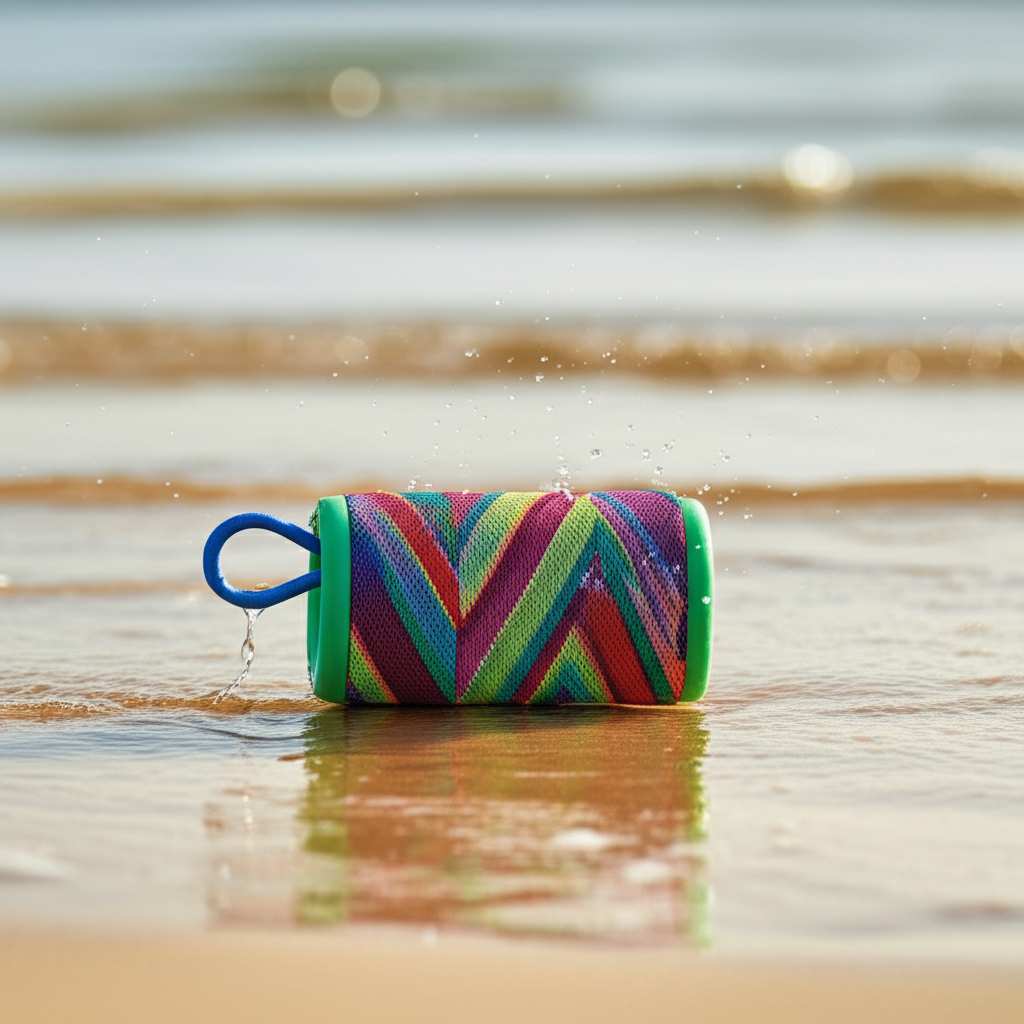
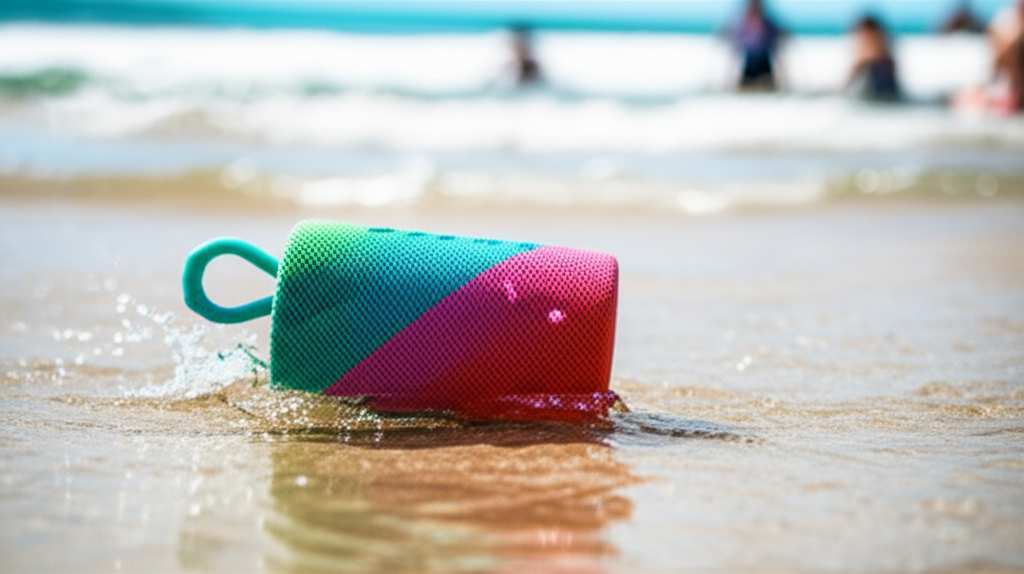
The “Oops, I Dropped It” Moment: You’re reaching for your sunscreen, and your speaker slips from your hand, landing in the shallow water. With an IPX7 or IP67 speaker, you just grab it, rinse it off, and keep the music playing. No drama!
The “Beach Bar” Setup: You’re setting up your picnic near the water’s edge. The kids are playing, and a splash or two is inevitable. Your speaker is safe from the spray.
The “Boating Buddy”: You take your speaker on a small boat trip. Water splashes over the side, or it gets a bit damp from the sea spray. It handles it like a champ.
The “Sandy Surprise”: You set your speaker down on what you thought was a clean spot, but sand gets kicked up. An IP67 speaker is designed to keep that sand out completely.
These everyday moments are exactly why investing in a speaker with a decent waterproof rating is so smart for beach lovers.
Frequently Asked Questions (FAQs)
Q1: What is the most important waterproof rating for a beach speaker?
A1: For beach use, you’ll want at least an IPX7 rating. This means it can handle temporary submersion in water, which is perfect for splashes or accidental drops.
Q2: Is IPX7 good enough for sand?
A2: IPX7 focuses on water protection. If sand is a big concern, look for IP67, which is also dustproof and offers better protection against fine sand getting inside.
Q3: Can I take my IPX7 speaker swimming with me?
A3: An IPX7 speaker can be submerged up to 1 meter for about 30 minutes. So, if you accidentally drop it in the water, it should be fine. However, it’s not designed for continuous swimming or deep-water use.
Q4: What does the “X” in IPX7 mean?
A4: The “X” means that the dust protection rating hasn’t been specified or tested. The focus for IPX7 is entirely on water resistance.
Q5: How do I clean my beach speaker after use?
A5: Always rinse your speaker with fresh water after using it in saltwater or sand. Then, dry it gently with a soft cloth. Make sure all ports are completely dry before charging.
Q6: Should I worry about my speaker getting hot in the sun?
A6: Yes, direct sunlight and high temperatures can affect battery life and speaker components. It’s best to keep your speaker out of direct sun when possible, even if it’s waterproof.
Q7: Are there speakers that float?
A7: Yes, some beach speakers are specifically designed to float! These are great for use on paddleboards, kayaks, or just floating in the water. They usually have a very high waterproof rating too.
The Bottom Line: Dive In with Confidence!
Choosing the right waterproof rating for your beach Bluetooth speaker is all about matching the speaker’s toughness to your adventures. For most beachgoers, an IPX7 rating is your golden ticket, offering fantastic protection against water splashes and accidental dips. If you’re a serious sand-lover or just want that extra layer of security, IP67** is even better, adding complete dustproofing.
Remember to also consider sound quality, battery life, and portability. With the right knowledge, you can confidently pick a speaker that will be your ultimate beach companion, bringing the soundtrack to all your sunny days without a worry.
Now go out there, explore, and enjoy amazing sound on all your seaside escapades! Happy listening!