Finding the perfect portable Bluetooth speaker wattage means balancing loudness with battery life and portability. For most casual listening, 5-20 watts is great, while 20-50 watts offers more power for parties. Anything over 50 watts is usually for larger gatherings or those who want serious boom!
Hey there, tech adventurer! So, you’re on the hunt for a new portable Bluetooth speaker, huh? It’s like stepping into a candy store, but for sound! You want something that can blast your favorite tunes at the park, make movie nights epic, or just fill your room with awesome audio. But then you see all these numbers, like “watts” and “Bluetooth versions,” and suddenly, it feels a bit like deciphering a secret code.
Don’t worry, I’ve been there too! It’s easy to get lost in all the tech talk. You just want good sound, right? Something that’s loud enough when you need it, but also easy to carry around and won’t die on you after an hour. That’s where understanding a little bit about wattage can really help you make the right choice.
Think of wattage like the horsepower of a car. More horsepower usually means more power and speed. In speakers, more watts generally mean more loudness. But it’s not just about the biggest number! There’s a sweet spot for every situation.
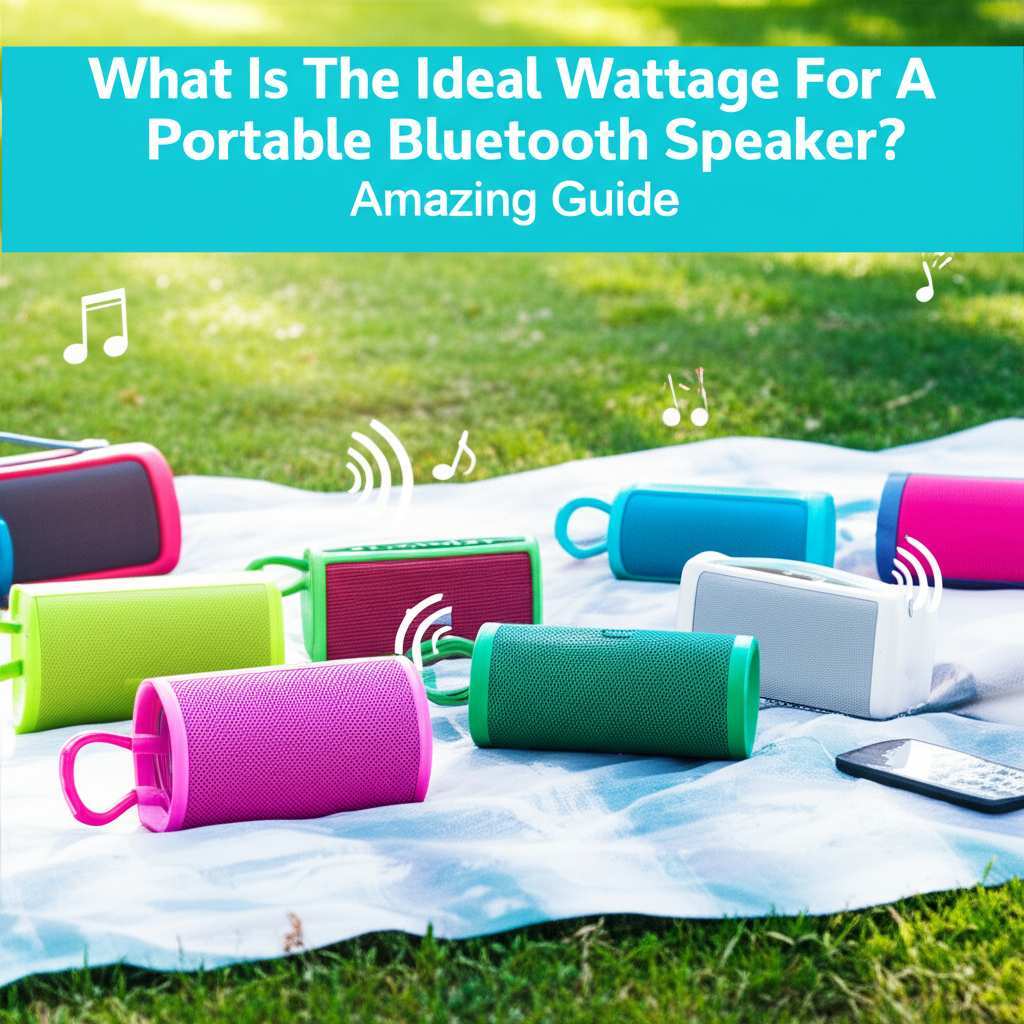
Today, we’re going to break down this whole “wattage” thing for portable Bluetooth speakers. We’ll figure out what’s ideal for chilling at home, having a picnic, or even throwing a backyard bash. By the end of this, you’ll feel like a pro, ready to pick a speaker that sounds amazing and fits your life perfectly. Let’s make this super simple and fun!
Let’s Talk About Sound: What Exactly Are Watts?
So, what’s the big deal with watts? In simple terms, a watt is a unit of power. For a speaker, it tells you how much electrical power it can handle and, generally, how loud it can get. More watts mean the speaker can push more air, which translates to a louder sound. It’s like turning up the volume knob, but it’s built into the speaker’s design.
But here’s a cool little secret: wattage isn’t the only thing that determines how loud a speaker sounds. The efficiency of the speaker’s drivers (the parts that actually make the sound) and the size of the speaker enclosure also play a big role. Sometimes, a smaller speaker with smart design can sound just as loud as a bigger one with higher wattage.
Still, for portable Bluetooth speakers, wattage is a really good starting point. It gives you a handy way to compare different models and get an idea of their potential sound output. It’s a key piece of the puzzle in finding that perfect audio companion.
Why Wattage Matters for Your Portable Speaker
Imagine you’re at a beach party, and your speaker is trying to compete with crashing waves and chatter. If it’s too low in wattage, it’ll just get drowned out. You won’t hear your music, and the party vibe will fizzle. On the other hand, if you’re just listening to a podcast in your quiet bedroom, a super high-wattage speaker might be overkill and even sound distorted at lower volumes.
Wattage directly impacts the speaker’s loudness (or volume) and also its ability to produce clear, rich sound, especially at higher volumes. A speaker with adequate wattage for its size and intended use will sound better for longer without straining. It helps avoid that tinny, distorted sound you get when a speaker is pushed too hard.
So, choosing the right wattage isn’t just about being loud. It’s about getting a balanced, enjoyable listening experience wherever you go. It’s about matching the speaker’s power to your lifestyle and where you’ll be using it most.
Finding Your Sweet Spot: Wattage Ranges Explained
Let’s break down what different wattage ranges typically mean for portable Bluetooth speakers. This will help you see what’s out there and what might be best for you.
The Cozy Corner: 1-10 Watts
Speakers in this range are usually quite small and super portable. Think tiny puck-like speakers or ones that fit easily in a pocket. They’re perfect for personal listening or quiet environments.
Best for:
- Listening to podcasts or audiobooks in your room.
- Background music while you’re working at your desk.
- Solo listening in a quiet park.
These little guys are great for a bit of personal sound. They won’t fill a stadium, but for close-up listening, they’re just right. Battery life is often excellent here too, as they don’t use much power.
The Everyday Explorer: 10-30 Watts
This is a really popular range for portable Bluetooth speakers. You get a good balance of loudness, portability, and battery life. These speakers can easily fill a medium-sized room or be heard clearly in a moderately noisy outdoor setting.
Best for:
- Casual get-togethers with friends.
- Picnics and backyard barbecues.
- Louder personal listening or small room parties.
Many of the best-selling portable speakers fall into this category. They offer a significant step up in sound quality and volume from the smaller options without becoming too bulky. You’ll find great clarity and enough punch for most everyday situations.
The Party Starter: 30-60 Watts
Now we’re getting serious! Speakers in this wattage range are designed to be loud and fill larger spaces. They’re great for parties, outdoor gatherings, or anywhere you need your music to be the main event. They often have a more robust build and can produce deeper bass.
Best for:
- Larger parties and gatherings.
- Outdoor events where you need to overcome ambient noise.
- Creating an immersive sound experience.
These speakers might be a bit larger and heavier than their lower-wattage cousins. However, the payoff is significant volume and richer sound. Battery life can vary, so it’s good to check the specs if you plan on using it for extended periods away from a power source.
The Powerhouse: 60+ Watts
These are the big boys of the portable Bluetooth speaker world. If you need to make a serious statement with your sound, these are the ones. They can easily power a large party, a community event, or even serve as a primary sound system for a casual gathering.
Best for:
- DJing at outdoor events.
- Loud celebrations and festivals.
- Situations where extreme volume is required.
Be aware that speakers in this category are often less “portable” in the sense of easily fitting in a bag. They might be heavier and bulkier. Battery life can also be a consideration, as powering such a large output requires more energy. Many high-wattage speakers also come with AC power adapters for continuous use.
Beyond Watts: Other Factors That Shape Sound
While wattage is a great indicator, it’s not the whole story. Several other features influence how your portable Bluetooth speaker performs and how loud it feels.
Driver Size and Number
The drivers are the actual speakers inside the unit. Larger drivers can move more air, contributing to louder and deeper sound. Some speakers have multiple drivers, like woofers for bass and tweeters for treble, which can create a richer sound profile.
A speaker with a large woofer might produce more impressive bass even at a moderate wattage. Similarly, dedicated tweeters will make vocals and higher-pitched sounds clearer. It’s a team effort!
Speaker Design and Enclosure
The way the speaker is built matters! A well-designed enclosure can amplify sound and improve bass response. Passive radiators, for example, are often used in smaller speakers to boost bass without needing a lot of extra power.
Think of it like a musical instrument. The body of a guitar or violin helps shape its sound. The same idea applies to speaker enclosures, making them more than just a box for electronics.
Bluetooth Version and Codecs
While not directly about wattage, the Bluetooth version affects sound quality and stability. Newer versions (like Bluetooth 5.0 and above) offer better range, faster pairing, and more efficient power usage. Audio codecs (like aptX or LDAC) can also transmit higher-quality audio wirelessly.
This is like the highway your music travels on. A better highway (newer Bluetooth and codecs) means smoother, clearer delivery of your tunes.
Battery Life
Higher wattage speakers tend to consume more power. So, if you’re looking at a powerful speaker, always check its advertised battery life. A speaker might be loud, but if it only lasts an hour, it might not be ideal for a full day out.
Some manufacturers offer a range for battery life depending on volume. For example, 10 hours at 50% volume might be 5 hours at 80% volume. It’s good to know what your typical listening habits are.
Putting It All Together: How to Choose Your Ideal Speaker
Now that we understand the different wattages and other factors, let’s make this practical. How do you pick the right speaker for you?
Step 1: Consider Your Primary Use Case
Where will you use your speaker most? Is it for quiet personal listening, background music at small gatherings, or powering a big party?
Be honest about your typical environment. If it’s mostly indoors or for personal use, you probably don’t need a powerhouse. If you’re often outdoors with friends, more wattage might be necessary.
Step 2: Think About Portability Needs
Do you want something that fits in your backpack, or is a slightly larger speaker okay if it means better sound and volume?
Weight and size are key here. A 100-watt speaker might sound amazing, but if it weighs 20 pounds and is the size of a small suitcase, it’s probably not what you’re looking for in a “portable” speaker.
Step 3: Set Your Volume Expectations
How loud do you really need it to be? Louder isn’t always better, especially if you value battery life or crystal-clear sound at moderate levels.
Remember that 3dB increase in volume requires doubling the amplifier power. So, going from 20W to 40W might sound twice as loud, but going from 80W to 100W might not be a huge difference to your ears.
Step 4: Read Reviews and Check Specs
Once you have an idea of wattage and size, dive into reviews! See what real users say about the loudness, sound quality, and battery life.
Look for reputable tech sites like CNET or TechRadar for in-depth reviews and comparisons. They often test speakers in real-world scenarios.
A Quick Wattage Guide for Common Scenarios
To make it even easier, here’s a quick rundown of what wattage might be ideal for different situations.
| Scenario | Ideal Wattage Range | Key Features to Look For |
| :———————– | :—————— | :——————————————————– |
| Personal Listening | 1-10 Watts | Compact size, long battery life, good clarity at low volume |
| Picnics/Small Groups | 10-30 Watts | Balanced sound, good bass, decent battery, easy to carry |
| Backyard BBQs | 30-60 Watts | Loud enough for ambient noise, good bass, durable |
| Pool Parties/Larger | 50-100+ Watts | Very loud, weather-resistant, powerful bass, good battery |
This table is a general guide, of course! If your backyard is particularly large or noisy, you might lean towards a higher wattage. If your picnics are always super chill with just a few friends, a 20-watt speaker might be plenty.
Tips for Getting the Most Out of Your Speaker
Once you’ve got your speaker, here are a few friendly tips to keep it sounding great and lasting long.
- Placement is Key: For better bass, place your speaker near a wall or in a corner. It can reflect and amplify the low frequencies.
- Keep it Clean: Dust can affect sound quality. Wipe your speaker down gently with a soft, dry cloth regularly.
- Manage Battery Wisely: Avoid draining the battery completely all the time. Charging it when it’s around 20-30% is often best for long-term battery health.
- Firmware Updates: Some speakers can be updated via an app. These updates can sometimes improve sound performance or battery efficiency.
- Pairing Smarts: Always ensure you’re using the latest stable Bluetooth connection. Sometimes, “forgetting” and re-pairing your device can fix connection issues.
Frequently Asked Questions About Speaker Wattage
Got more questions buzzing in your head? Here are some common ones answered in a friendly way!
- Q1: Can a speaker with lower wattage sound better than one with higher wattage?
- Absolutely! Speaker design, driver quality, and acoustics play a huge role. A well-engineered 20-watt speaker might sound clearer and more balanced than a poorly made 50-watt one, especially at moderate volumes.
- Q2: Do I need a super high wattage speaker for outdoor use?
- It depends! For quiet background music outdoors, maybe not. But if you’re in a busy park or at a lively event, a higher wattage speaker will be much more effective at cutting through ambient noise and providing an enjoyable listening experience.
- Q3: How does wattage affect battery life?
- Generally, higher wattage means more power consumption, which can lead to shorter battery life, especially when playing at high volumes. Speakers designed for high wattage often have larger batteries to compensate.
- Q4: What’s the difference between RMS wattage and Peak wattage?
- RMS (Root Mean Square) wattage is the continuous power output the speaker can handle. Peak wattage is the maximum power it can handle for very short bursts. RMS is a more realistic measure of a speaker’s sustained performance.
- Q5: Is it okay to use a speaker at its maximum wattage all the time?
- It’s generally not recommended to run any speaker at its absolute maximum wattage continuously. Doing so can strain the components, potentially leading to distortion or even damage over time. It’s best to leave a little headroom.
- Q6: Will a higher wattage speaker sound good at low volumes?
- Yes, good quality higher wattage speakers can still sound excellent at low volumes. They often have a wider dynamic range, meaning they can reproduce both quiet and loud sounds effectively. However, some very high-wattage speakers might sound their best when pushed a bit harder.
- Q7: Can I connect two smaller speakers together instead of buying one big one?
- Yes! Many portable speakers offer a “TWS” (True Wireless Stereo) or similar pairing feature. Connecting two identical speakers can create a stereo soundstage and significantly increase the overall volume and immersion. This can be a great alternative to a single large speaker for parties.
Wrapping Up Your Speaker Adventure!
So there you have it! We’ve journeyed through the world of portable Bluetooth speaker wattage, from the whisper-quiet to the room-shaking. You now know that wattage is a key indicator of loudness, but it’s just one piece of the sound puzzle.
Remember, the “ideal” wattage is totally personal. It’s about matching the speaker’s power to your life, your favorite listening spots, and your crowd size. Whether you’re a solo listener wanting a subtle soundtrack, or you’re the life of the party needing to pump up the jams, there’s a perfect wattage out there for you.
Don’t get bogged down by the numbers alone. Consider how you’ll use it, where you’ll take it, and what kind of sound experience you’re dreaming of. Read those reviews, check out those specs, and trust your ears when you get the chance to listen. Now go forth and find that speaker that will make your music, podcasts, and movies sound absolutely fantastic, wherever life takes you! Enjoy the sound!