Mount your Bluetooth speaker on your kayak easily! This guide shows you simple, secure ways to enjoy music on the water without losing your sound. Get ready for awesome adventures with your favorite tunes right by your side.
Hey there, fellow adventure seekers and music lovers! Ever paddled out on the water, felt that perfect breeze, and thought, “Man, this would be even better with some tunes”? I know I have. Music just has a way of making everything more epic, whether you’re out fishing, exploring a new lake, or just cruising along the coast.
But then comes the tricky part, right? You’ve got this awesome portable Bluetooth speaker, and you want to bring it along. The big question is: how do you keep it safe and sound on your kayak? You don’t want it falling into the water or bouncing around like a lost ping pong ball.
Trust me, I’ve been there. Figuring out the best way to attach gear to a kayak can feel like a puzzle. There are so many options, and you want something that’s super secure but also easy to use. That’s why I’m here! We’re going to dive into some super simple, beginner-friendly ways to mount your Bluetooth speaker so you can have your soundtrack follow you wherever the water takes you.
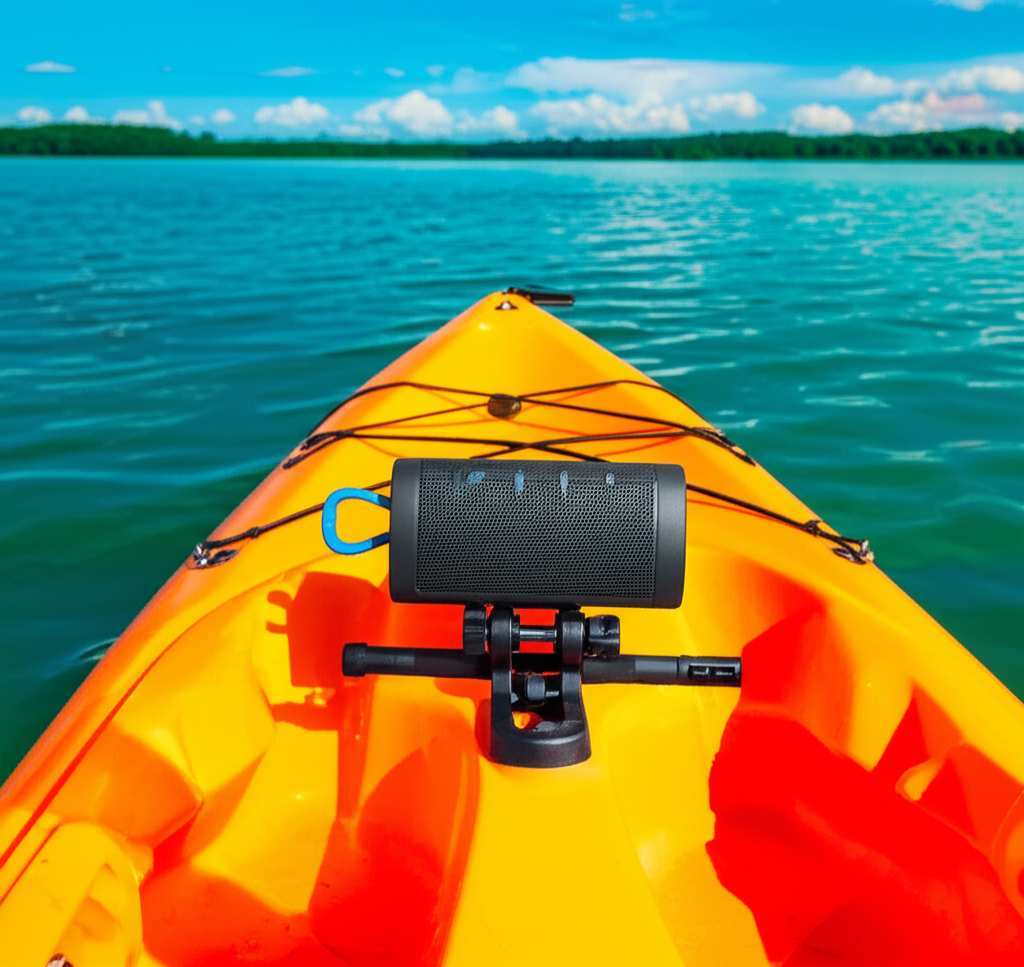
We’ll cover everything from the easiest quick fixes to more permanent solutions. No complicated tools, no confusing jargon. Just straightforward tips to get you paddling and grooving in no time. Ready to make your kayak adventures even more unforgettable? Let’s get this party started!
Why Bring Music on Your Kayak Anyway?
Okay, before we get to the “how,” let’s talk about the “why.” Is it really worth the effort to bring a speaker on your kayak? My answer is a resounding YES!
Imagine this: you’re gliding across calm water, the sun is warm, and your favorite chill playlist is playing softly. It’s pure bliss. Or maybe you’re on a solo fishing trip, and a little upbeat music keeps your energy high. Music can totally change the vibe of your trip. It can make a peaceful paddle even more serene or a fun group outing even livelier.
Plus, let’s be honest, sometimes the sounds of nature are great, but a little bit of your own soundtrack makes it feel like your adventure. It’s your personal concert on the water!
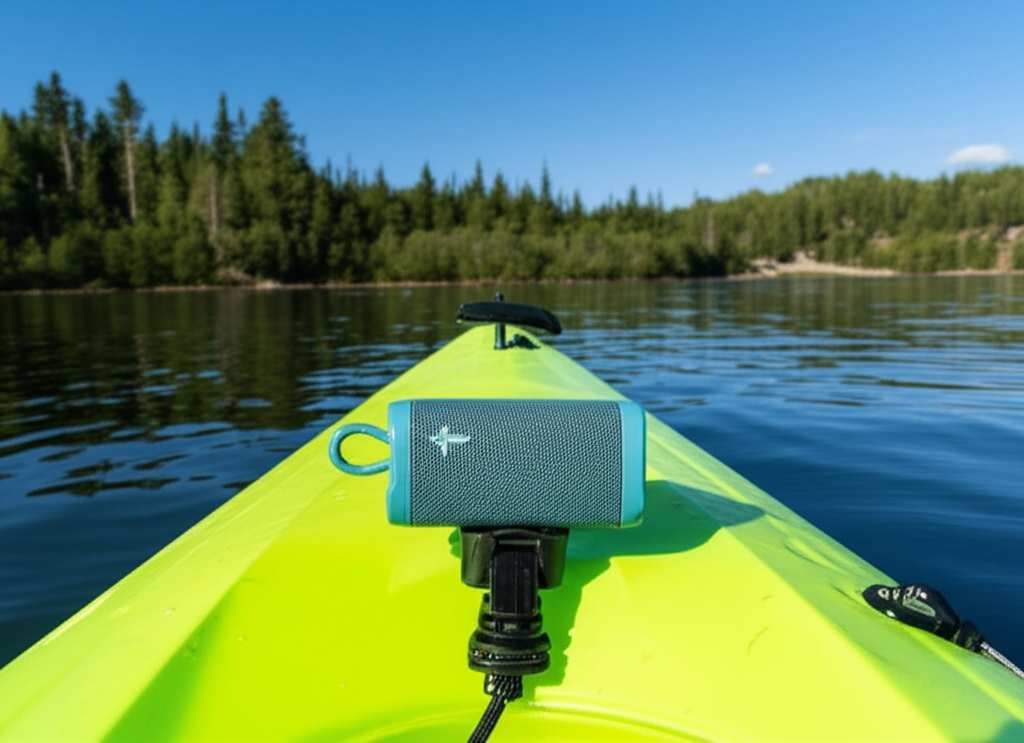
Choosing the Right Speaker for Your Kayak Adventure
Now, not all speakers are created equal, especially when they’re heading out on the water. You want something that can handle a little splash and keep the music going. Here are a few things to look for:
Water Resistance is Key: This is probably the most important feature. Look for speakers with an IPX rating. An IPX7 rating means it can be submerged in water up to 1 meter for about 30 minutes. That’s super handy if your kayak tips a bit or a wave comes over the side. Even an IPX5, which protects against water jets, is a good start.
Durability: Kayaks can be a bit rough on gear. A speaker with a rugged design, maybe with rubberized edges, can take a few bumps and keep on playing.
Battery Life: You don’t want your music to die halfway through your trip. Look for speakers that offer at least 8-10 hours of playtime. Some can go even longer!
Size and Portability: You need a speaker that’s not too bulky. It should fit easily on your kayak without getting in the way. Many smaller speakers are perfect for this.
Sound Quality: Of course, you want it to sound good! But for kayak adventures, clarity and volume are often more important than deep bass. You need to be able to hear it over the water and wind.
Let’s look at some common speaker types and how they stack up for kayaking.
Speaker Comparison for Kayak Adventures
| Speaker Type | Water Resistance (Typical) | Durability | Battery Life (Typical) | Portability | Best For |
| :——————– | :————————- | :——— | :——————— | :———- | :————————————— |
| Rugged Portable | IPX5 – IPX7 | High | 10-20 hours | Excellent | Most kayak trips, all-around performer |
| Waterproof Floating | IPX7+ | Very High | 12-24 hours | Excellent | Kayaking, paddleboarding, pool parties |
| Small Personal Speaker | IPX4 – IPX6 | Medium | 6-12 hours | Superior | Short trips, personal listening |
| Boombox Style | Varies (often lower) | Medium | 8-15 hours | Good | Group trips, stationary setups |
As you can see, rugged and waterproof speakers are generally your best bet for kayaking. They’re built to handle the elements. A small personal speaker can work if you’re super careful, but for most people, a dedicated water-resistant model is the way to go.
Easy Ways to Mount Your Bluetooth Speaker on a Kayak
Alright, the moment you’ve been waiting for! Let’s get your speaker secured. We’ll start with the simplest methods that require no drilling or permanent changes to your kayak.
Method 1: The Bungee Cord & Deck Rigging
Most kayaks come with built-in deck rigging. These are usually bungee cords or straps that run along the deck. They’re perfect for securing gear!
Here’s how to use them:
1. Find a Good Spot: Look for a spot on your kayak deck that’s flat and out of the way. The front or back deck often works well. You want it somewhere you can reach it, but it won’t interfere with your paddling.
2. Place Your Speaker: Put your speaker on the chosen spot. Make sure it’s stable.
3. Use the Bungee Cords: Carefully stretch the existing bungee cords over your speaker. You want them to hold it snugly, but not so tight that they might damage the speaker or get stretched out permanently.
4. Add Extra Straps (Optional): If your speaker feels a bit wobbly, you can use extra bungee cords or Velcro straps. Loop them around the speaker and anchor them to other parts of your kayak’s rigging.
Pro-Tip: Some speakers have a loop or handle. You can often hook a bungee cord directly through this for extra security.
This method is fantastic because it’s free if you use your kayak’s existing rigging, and it’s completely reversible. Plus, it’s super fast to set up and take down.
Method 2: The Velcro Strap Solution
Velcro straps are like magic for securing things. They’re strong, adjustable, and easy to use.
Here’s what you’ll need:
Heavy-duty, waterproof Velcro straps (the kind used for organizing cables or securing gear).
Your Bluetooth speaker.
Your kayak.
Here’s how to do it:
1. Position Your Speaker: Find a secure spot on your kayak deck.
2. Wrap the Straps: Loop one or two Velcro straps around the speaker. Make sure they’re snug.
3. Secure to the Kayak: Now, wrap the other end of the Velcro strap around a sturdy part of your kayak. This could be a handle, a seat support, or even a piece of deck rigging. You might need to get creative here depending on your kayak’s design.
4. Tighten It Up: Pull the Velcro tight to make sure the speaker is firmly attached. Give it a gentle tug to test its stability.
Why this works: Velcro straps are versatile. You can often find anchor points on your kayak that bungee cords might not reach easily. They also provide a very firm grip.
Method 3: Using a Cup Holder Mount
Many kayaks have built-in cup holders. If yours does, this can be a surprisingly effective and stable mounting solution!
You’ll need:
A speaker that fits snugly into a standard cup holder. Some portable speakers are designed with this in mind, or you can use a small one.
A cup holder adapter or mount (optional, but helpful). There are specialized mounts designed to hold speakers or bottles in cup holders. These often have adjustable bases.
Here’s the setup:
1. Place the Speaker: Put your speaker directly into the kayak’s cup holder.
2. Use an Adapter (If Needed): If the speaker is a bit loose, use a foam adapter or even a rolled-up towel to fill the gap and keep it from rattling.
3. Specialized Mounts: If you’re using a dedicated cup holder mount, follow its instructions. These usually have a base that fits into the cup holder and a platform or clamp to hold your speaker securely.
The Advantage: Cup holders are usually in convenient locations. This method keeps your speaker upright and accessible. It’s also very easy to remove and reinstall.
Method 4: DIY Kayak Speaker Mount (Advanced Beginner)
If you’re a bit handy and want something super secure, you can create a simple DIY mount. This might involve a few more tools, but it’s still very beginner-friendly.
What you might need:
A small piece of marine-grade plastic or wood.
Some stainless steel screws or bolts.
A drill.
Velcro straps or a bungee cord.
Your speaker.
Here’s the general idea:
1. Create a Base: Cut your plastic or wood to a size that can comfortably hold your speaker.
2. Add Anchor Points: Drill holes in the base where you can attach eye straps or loops. These will be your attachment points to the kayak.
3. Secure the Speaker: Attach your speaker to this base using Velcro straps or a bungee cord.
4. Mount to Kayak: Use stainless steel screws or bolts to attach the base to a solid part of your kayak. You might need to drill holes into the kayak for this, so make sure it’s a location you’re comfortable modifying. Alternatively, you can use strong adhesive, but screwing is more secure.
Important Note: If you’re drilling into your kayak, make sure you know what you’re doing! Look up guides for your specific kayak model. Using marine-grade sealant around the holes is a good idea to prevent leaks.
This method gives you a custom fit for your speaker and kayak. It’s very secure once installed.
Securing Your Speaker: What to Look For
No matter which method you choose, always think about these key points to ensure your speaker stays put:
Stability: Does it wiggle or wobble when you tug on it? If so, add more support.
Accessibility: Can you easily turn it on/off or adjust the volume without it being a struggle?
Protection: Is it likely to get knocked around by your paddle or gear? Try to place it in a protected spot.
Water Drainage: If you’re mounting it in a spot that might collect water, make sure there’s a way for that water to drain away from the speaker.
Fun Facts About Kayak Audio!
Did you know that sound travels differently on water than it does on land? Water can absorb some sound waves, which is why sometimes you might need your speaker to be a bit louder than you think. Also, wind and waves can create their own “noise,” so choosing a speaker that can project sound well is a smart move. Some waterproof speakers even float, which is a great safety feature in case it accidentally goes overboard! It’s like having a buoyant dance partner.
Advanced Tips for the Ultimate Kayak Sound System
Once you’ve mastered the basics, you might want to take your kayak audio game to the next level. Here are a few ideas:
Waterproof Bluetooth Earbuds: For personal listening or if you don’t want to disturb others, a pair of waterproof earbuds is fantastic. They often have great battery life and are very secure.
Speaker Tethers: Even with a secure mount, a small safety tether from the speaker to your kayak can be a lifesaver. It’s a cheap insurance policy against accidental drops.
Portable Power Bank: If your speaker has a long battery life but you’re on a multi-day trip, a waterproof power bank can keep it charged up.
How to Maintain Your Kayak Speaker
Keeping your speaker in good shape means it’ll last longer and sound better.
1. Rinse After Use: After every trip, especially if you’ve been in saltwater, rinse your speaker with fresh water. Salt can be corrosive.
2. Dry Thoroughly: Let it air dry completely before storing it.
3. Check Charging Port: Make sure the charging port is clean and dry before plugging it in.
4. Store Properly: Keep it in a safe place where it won’t get crushed.
Following these simple steps will help your speaker survive many adventures.
Frequently Asked Questions (FAQ)
Got more questions? Here are some common ones beginners ask:
Q1: Will my regular Bluetooth speaker work on a kayak?
A1: It can, but it’s risky! Regular speakers aren’t built to withstand splashes or submersion. If you use one, keep it in a waterproof bag or container, which might muffle the sound. A water-resistant speaker is much safer.
Q2: How loud can I play my speaker?
A2: Be considerate of others on the water! While you want to enjoy your music, try to keep the volume at a level that doesn’t disturb wildlife or other kayakers. Check local regulations too; some areas have noise restrictions.
Q3: What if my speaker falls in the water?
A3: If you have a waterproof speaker (IPX7 or higher), it should be okay for a short time. If it floats, great! If not, try to retrieve it quickly. Rinse it with fresh water afterward, even if it was freshwater, and dry it thoroughly. Don’t try to charge it until you’re absolutely sure it’s dry inside and out.
Q4: Can I mount my speaker on the kayak seat?
A4: You can, but it might not be the most stable spot. Seats can be padded or move, making it harder to get a secure mount. The deck or the area behind the seat is usually better.
Q5: Do I need a special mount for my speaker?
A5: Not always! Bungee cords and Velcro straps often work perfectly. If you want something super secure or have a unique kayak, a specialized mount might be helpful, but start with the simple solutions first.
Q6: How do I connect my speaker to my phone?
A6: Turn on your speaker and put it in pairing mode (check your speaker’s manual for how). Then, go to the Bluetooth settings on your phone, search for available devices, and select your speaker’s name. It should connect automatically after the first time.
Q7: Can I use my speaker for calls on the kayak?
A7: Many Bluetooth speakers have a built-in microphone. You can usually answer calls by pressing a button on the speaker. Just be aware of wind noise, which can make calls difficult.
Let the Adventures (and the Music) Begin!
So there you have it! Mounting a Bluetooth speaker on your kayak doesn’t have to be complicated. With a few simple tools and a little creativity, you can bring your favorite soundtrack along for every paddle. Whether you use the trusty bungee cords, versatile Velcro straps, or a handy cup holder, you’re all set to enjoy your time on the water with a little extra rhythm.
Remember, the goal is to have fun and stay safe. Choose a method that feels secure for your speaker and your kayak, and always double-check that everything is snug before you set off. Now you can explore new waters with your personal soundtrack accompanying you.
Go out there, enjoy the sun, the water, and your favorite tunes. Happy paddling and happy listening!