Want to build your own Bluetooth speaker? It’s totally doable! This guide walks you through turning simple parts into awesome sound. Get ready to create a speaker that’s uniquely yours and sounds fantastic.
Hey there, tech adventurers! Ever found yourself wishing for a speaker that’s just… perfect? Maybe one that fits your space exactly, or has that cool retro look you love? Or perhaps you just love the idea of building something with your own hands that blasts your favorite tunes. I get it! Sometimes, the off-the-shelf options just don’t hit the right note.
It can feel a bit overwhelming, right? All those technical terms, the different shapes and sizes, and wondering if you can really pull it off. But here’s the secret: making your own Bluetooth speaker isn’t just for super-geeks. It’s a fun project that lets you dive into the magic of sound and electronics.
Think of it like cooking your favorite meal from scratch. You start with simple ingredients, follow a few steps, and end up with something delicious. Building a speaker is similar! We’ll take some cool electronic bits, put them together, and voilà – you’ll have a custom speaker ready to fill your room with sound.
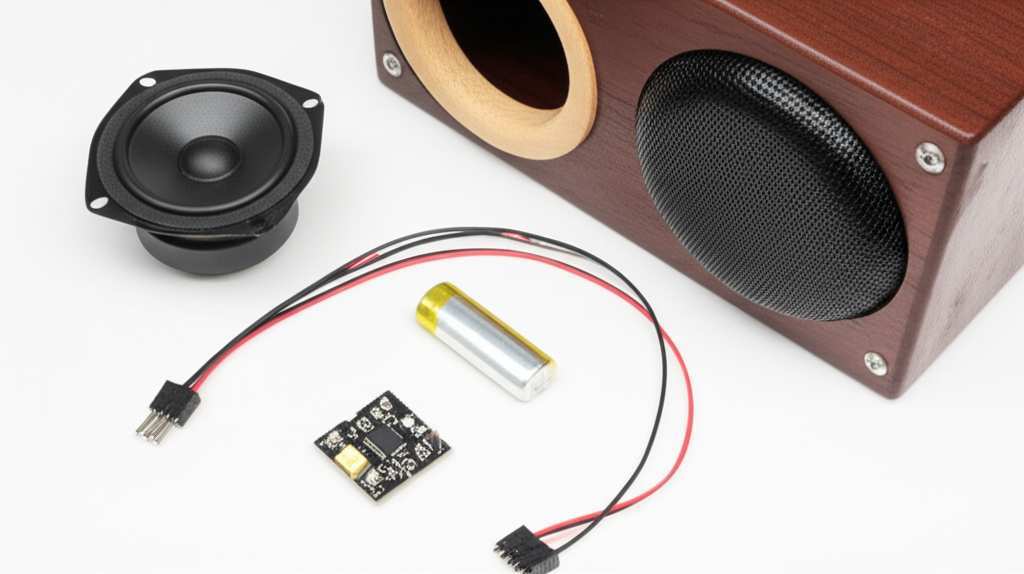
We’ll go through everything step by step. No confusing jargon, just clear instructions so you feel confident and excited. By the end, you’ll know how to make a Bluetooth speaker that’s not only awesome but also a creation you can be proud of. Let’s dive in and make some noise!
Why Build Your Own Bluetooth Speaker?
You might be wondering, “Why bother making one when I can just buy one?” That’s a fair question! But building your own Bluetooth speaker comes with some seriously cool perks. It’s not just about saving money, though that can be a bonus. It’s about the experience and the outcome.
First off, you get to customize it. Want a speaker that looks like a vintage radio? Or one that’s small enough to clip onto your backpack? You can do that! You choose the colors, the materials, and even the size. It’s your masterpiece, made exactly how you want it.
Plus, it’s a fantastic learning experience. You’ll get a hands-on understanding of how speakers work, how Bluetooth connects, and how basic electronics come together. It’s like a fun science project that results in something you can actually use every day. Imagine the bragging rights: “Yeah, I built this!”
What You’ll Need: Your Speaker-Building Toolkit
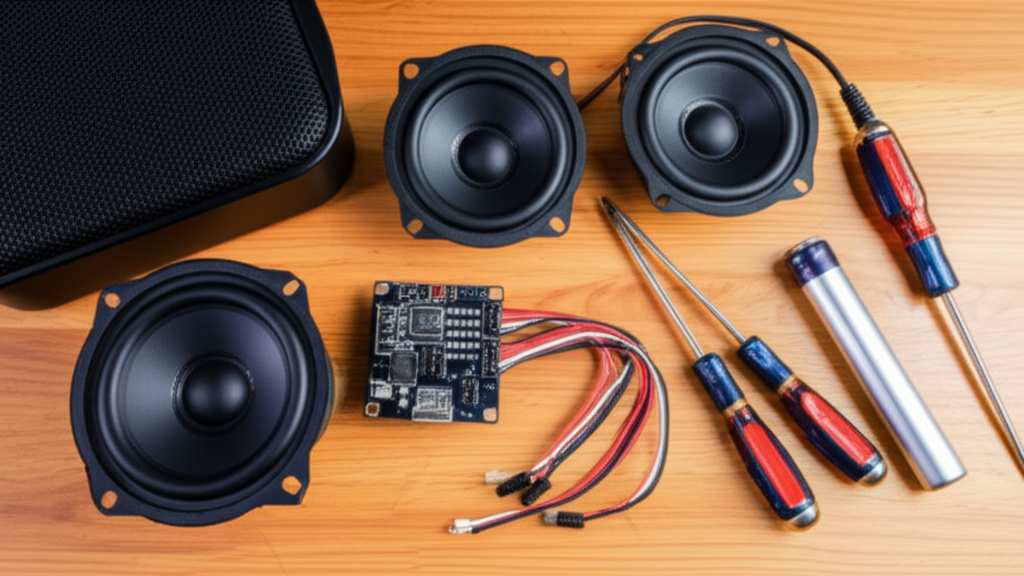
Alright, let’s get down to business! To build your very own Bluetooth speaker, you’ll need a few key components. Don’t worry, these are all readily available online or at electronics stores. Think of these as your building blocks for amazing sound.
Here’s a breakdown of what you’ll need. It might seem like a lot, but we’ll go through each part and explain what it does.
Essential Components
Speaker Driver(s): This is the heart of your speaker, the part that actually makes the sound. You can get them in various sizes and power ratings. For a basic project, one or two smaller drivers (like 3-inch or 4-inch) are great.
Bluetooth Audio Receiver Module: This little gadget is what allows your speaker to connect wirelessly to your phone or other devices. It takes the Bluetooth signal and turns it into audio that the speaker driver can play.
Amplifier Module: The Bluetooth receiver module usually outputs a weak audio signal. An amplifier boosts this signal so your speaker driver can produce loud, clear sound. Many kits come with a combined Bluetooth receiver and amplifier.
Power Source: This could be a rechargeable battery pack (like a Li-ion battery with a charging circuit) for portability, or a simple DC power adapter if you want a speaker that stays plugged in.
Enclosure (Speaker Box): This is the physical housing for all your components. You can build this from wood, plastic, or even use a repurposed container. The enclosure is super important for sound quality!
Wires and Connectors: You’ll need wires to connect everything together. Small gauge wires are usually sufficient. You might also need screw terminals or JST connectors for easier assembly and disassembly.
Tools: Basic tools like a screwdriver, wire strippers, soldering iron (if your components aren’t plug-and-play), and possibly a drill or saw if you’re building a custom enclosure.
Optional but Helpful Items
On/Off Switch: To easily turn your speaker on and off.
Volume Control Knob: Some amplifier modules have a place to connect a potentiometer for volume adjustment.
LED Lights: For that extra cool factor!
Sound Dampening Material: Stuffing this inside the enclosure can improve sound quality by reducing unwanted vibrations.
Let’s look at a few of these in a bit more detail.
Choosing Your Speaker Drivers
When picking speaker drivers, size matters, but so does what they’re designed for. You’ll find full-range drivers, which try to cover all the sound frequencies (low bass to high treble). For a simpler build, these are perfect. You can also get woofers (for bass), mid-range speakers, and tweeters (for treble).
For your first project, a single full-range driver or a pair of them is usually the easiest and most cost-effective route. Check the impedance (usually 4 or 8 ohms) and power handling (in watts) of the driver. Make sure your amplifier module can handle these specifications.
The Brains: Bluetooth Receiver & Amplifier
These often come as a single module, which makes things super simple! You’ll find modules that are easy to connect with screw terminals, and others that require soldering. Look for one that supports a recent Bluetooth version (like Bluetooth 4.0 or 5.0) for better range and stability.
Many of these modules also include a built-in amplifier. This is awesome because it means you only need one small board to handle both the wireless connection and powering the speaker. Just check its output power (e.g., 2x3W, 1x5W) to ensure it’s strong enough for your chosen speaker driver.
Powering Your Sound Machine
For a portable speaker, a rechargeable battery is the way to go. Lithium-ion (Li-ion) batteries are popular because they’re small and hold a good charge. You’ll want a battery pack that comes with a charging and protection circuit. This prevents overcharging or over-discharging, which can be dangerous.
If you’re building a speaker that will live near an outlet, a simple 5V or 12V DC power adapter is an easy option. Just make sure the voltage and current output match what your amplifier module needs.
Building Your Bluetooth Speaker: Step-by-Step
Now for the fun part: putting it all together! Don’t worry, we’ll take it slow. Think of this as assembling a cool LEGO set, but with sound!
Step 1: Prepare Your Enclosure
First, decide what your speaker will look like. Will you build a box from scratch, or repurpose something cool? If you’re building a box, cut your wood or plastic pieces to size. Remember, the size and shape of the enclosure significantly impact sound. A good rule of thumb is to make it sturdy and airtight, except for a small port if you’re designing for better bass.
If you’re repurposing something, like an old tin or a wooden cigar box, clean it up and make sure it’s suitable. You’ll need to cut holes for your speaker driver(s), any switches, and maybe a charging port.
Step 2: Mount the Speaker Driver(s)
Carefully place your speaker driver(s) into the holes you’ve made in the enclosure. Use screws or strong adhesive to secure them firmly. Make sure they are sealed well to prevent air leaks, which can make the sound muddy.
Step 3: Wire Up the Electronics
This is where it all connects. You’ll typically connect the following:
1. Power Source to Amplifier Module: Connect the positive and negative terminals of your battery or power adapter to the corresponding power input on your amplifier module. If you’re using a switch, place it in between the power source and the amplifier.
2. Amplifier Output to Speaker Driver(s): Connect the speaker output terminals on the amplifier module to the terminals on your speaker driver(s). If you have two drivers, you’ll usually have two sets of outputs (left and right channels).
3. Bluetooth Module to Amplifier (if separate): If your Bluetooth receiver and amplifier are separate units, connect the audio output of the Bluetooth module to the audio input of the amplifier.
Pro Tip: If you’re new to soldering, practice on some scrap wires first. A good solder joint is shiny and smooth. If it looks dull or lumpy, it might be a bad connection.
Step 4: Install the Bluetooth Receiver and Amplifier
Mount your Bluetooth receiver and amplifier module inside the enclosure. You can use small screws, double-sided tape, or hot glue. Make sure the components are not touching each other or any metal parts of the enclosure if they are not insulated.
Step 5: Connect the Power Source and Switch
Connect your chosen power source. If you have a rechargeable battery, ensure the charging port is accessible from the outside. Install your on/off switch in a convenient location and wire it up.
Step 6: Test Your Speaker!
Before you seal everything up, it’s time for the big reveal! Turn on your speaker. Your phone or tablet should be able to detect a new Bluetooth device. Pair it, and play some music. Listen carefully. Does it sound clear? Are there any strange rattles or buzzes?
If everything sounds good, you’re almost done! If not, double-check your wiring. Loose connections are the most common culprits.
Step 7: Final Assembly and Finishing Touches
Once you’re happy with the sound, carefully close up your enclosure. Make sure all wires are tucked away neatly and won’t get pinched. You can now add any decorative touches – paint, fabric, stickers, whatever makes it uniquely yours!
Understanding Speaker Specifications: What Do They Mean?
When you look at speaker parts, you’ll see numbers and terms that might seem confusing. Let’s break down some of the most common ones so you know what you’re looking at.
Here’s a quick guide to the important specs:
| Specification | What It Is | Why It Matters |
| :—————- | :———————————————– | :————————————————————————— |
| Impedance (Ohms) | Electrical resistance of the speaker. | Must match your amplifier’s output. Mismatch can damage the amp or speaker. |
| Power Handling (Watts) | Maximum power the speaker can safely take. | Higher wattage means it can handle a more powerful amplifier for louder sound. |
| Frequency Response (Hz) | Range of sounds the speaker can produce. | Lower Hz means better bass. Higher Hz means better treble. |
| Sensitivity (dB) | How loud the speaker gets with a given power. | Higher dB means it’s more efficient and plays louder with less power. |
| Bluetooth Version | The standard used for wireless connection. | Newer versions (5.0+) offer better range, stability, and lower power use. |
| Amplifier Output Power (Watts) | How much power the amp can deliver. | Needs to be sufficient for your speaker driver’s power handling. |
Don’t get bogged down by every single detail. For a beginner, focus on matching impedance and ensuring your amplifier has enough power for your driver. The frequency response is important for sound quality, but for a first build, a good full-range driver will give you a great experience.
Enclosure Design: The Secret to Great Sound
The box your speaker sits in, called the enclosure, is way more important than many people realize. It’s not just a shell; it’s a crucial part of the sound system. A well-designed enclosure can make even a small speaker sound full and rich.
Sealed vs. Ported Enclosures
There are two main types of enclosures:
Sealed (Acoustic Suspension): This is a simple, airtight box. It’s easier to build and provides very tight, accurate bass. It’s great for clarity but might not produce the deepest rumble.
Ported (Bass Reflex): This enclosure has a small tube or opening (a port). This port is tuned to a specific frequency and helps to boost the bass response, making it sound fuller and louder. It’s a bit more complex to design correctly.
For your first DIY speaker, a sealed enclosure is often the easiest to get right. You can experiment with different materials too! Dense woods like MDF or plywood are excellent. Even sturdy cardboard can work for a very basic project, though it won’t sound as good as wood.
Fun Fact: The size of the enclosure also plays a big role. A larger box generally allows for deeper bass, but it can also make the speaker less portable. It’s a trade-off between sound and size!
For more in-depth enclosure design, you can check out resources from audio engineering sites like those found on CNET’s audio section. They often have guides on speaker building and acoustics.
Troubleshooting Common Issues
Even with the best plans, sometimes things don’t work perfectly on the first try. That’s totally normal! Here are a few common problems and how to fix them.
No Sound:
Check that the speaker is turned on.
Make sure the Bluetooth device is connected and playing audio.
Verify all your wiring connections are secure, especially the power to the amplifier and the speaker outputs.
Ensure the volume is turned up on both your Bluetooth device and the speaker (if it has a volume control).
Distorted or Crackling Sound:
The volume might be too high. Try turning it down slightly.
The amplifier might not be powerful enough for the speaker driver, or the driver’s power handling is too low.
Check for loose wires or components vibrating against the enclosure.
Bluetooth Connection Issues:
Make sure the speaker is in pairing mode.
Try turning Bluetooth off and on again on your device.
Ensure your device is close enough to the speaker.
Restart both your device and the speaker.
If you’re still stuck, don’t hesitate to search online forums or communities dedicated to DIY electronics. Someone has likely encountered the same problem and found a solution!
Comparing DIY vs. Commercial Bluetooth Speakers
It’s always interesting to see how your DIY creation stacks up against what you can buy. Let’s look at some general comparisons.
| Feature | DIY Bluetooth Speaker | Commercial Bluetooth Speaker |
| :—————— | :————————————————– | :————————————————— |
|
Customization | High (look, features, sound tuning) | Limited (color, some model variations) |
| Cost | Can be cheaper, or more expensive for high-end parts | Varies widely, from budget to premium |
| Learning Curve | Moderate to High (requires some technical skill) | Very Low (plug and play) |
| Sound Quality | Potentially excellent with careful design and parts | Varies greatly by price and brand |
| Satisfaction | High (pride in building it) | Moderate (enjoying a finished product) |
| Portability | Depends on chosen components and enclosure design | Often optimized for portability and durability |
| Warranty/Support** | None (you are the support!) | Typically 1-2 years |
| :—————— | :————————————————– | :————————————————— |
|
Building your own speaker is less about replacing every commercial speaker on the market and more about the joy of creation, learning, and having something truly unique. For the cost of a mid-range commercial speaker, you can often build a DIY version that rivals it in sound quality, with the added bonus of being yours.
Frequently Asked Questions (FAQ)
Got more questions buzzing around? Here are some common ones beginner builders ask.
Q1: How much does it typically cost to build a Bluetooth speaker?
A: It really varies! For a basic speaker using affordable parts, you might spend $30-$70. If you use high-end drivers, a powerful amplifier, and a nice enclosure material, the cost can go up to $150 or more. It’s often comparable to or less than buying a decent commercial speaker of similar quality.
Q2: Do I need to know how to solder?
A: Not always! Many Bluetooth amplifier modules are available with screw terminals, meaning you can just strip wires and screw them in. However, soldering usually provides a more secure and reliable connection, and it’s a useful skill to learn for future projects.
Q3: What’s the best type of enclosure material?
A: For great sound, dense materials like MDF (Medium-Density Fiberboard) or plywood are excellent. They help prevent vibrations and resonances that can color the sound. Thicker materials are generally better.
Q4: Can I use my old computer speakers?
A: Yes, you often can! Old computer speakers usually have decent drivers inside. You can salvage the drivers and sometimes even the amplifier from them to use in your DIY project. Just make sure the impedance and power ratings are compatible with your chosen Bluetooth module.
Q5: How long will a rechargeable battery last?
A: Battery life depends heavily on the battery’s capacity (measured in mAh – milliampere-hours) and how loud you play the music. A typical 2000mAh battery might give you 6-10 hours of playtime at moderate volumes.
Q6: Can I make my DIY speaker waterproof?
A: Making a speaker truly waterproof is challenging and requires special waterproof components and sealing techniques. For a beginner project, it’s best to aim for splash resistance. Keep it away from direct rain or submersion.
Q7: Where can I buy parts for my DIY speaker?
A: Great places to look are online electronics retailers like Adafruit, SparkFun, Amazon, eBay, and AliExpress. You can also find specialized audio component stores online.
Ready to Rock Your Own Creation?
So there you have it! Building your own Bluetooth speaker is an incredibly rewarding project. You’ve learned about the essential parts, how they fit together, and even some of the science behind great sound. It’s a journey from individual components to a finished product that brings music and joy into your life.
Remember, the first time might involve some trial and error, and that’s part of the adventure! Don’t be afraid to experiment. Every speaker you build will teach you something new. You’ve got the knowledge now to tackle this project with confidence.
So, gather your parts, get your tools ready, and start building. You’re not just assembling electronics; you’re creating an experience. You’re making something that’s uniquely yours, something that will play your favorite songs with a personal touch. Now go enjoy amazing sound and make every moment louder and better!