Charge your Bluetooth speaker anywhere with the sun! This guide shows you the simple steps to connect your portable solar charger and keep the music going, even off the grid. It’s easier than you think!
Hey there, tech explorers! Ever found yourself wishing you could blast your favorite tunes outdoors, but your trusty Bluetooth speaker is running on empty? It’s a common problem, right? We love bringing our music, podcasts, or even movie sound effects wherever we go, but power outlets aren’t always available. It can be a real bummer when the battery dies just as the fun is getting started.
I remember one time, I was at a park with friends, and we had the perfect picnic set up. The sun was shining, the food was great, and we were ready for some chill background music. But then, silence. My speaker’s battery had given up the ghost! We spent the next hour trying to find a power source, which totally killed the vibe. That’s when I started thinking about smarter ways to keep the music alive, especially when we’re out enjoying nature.
This is where portable solar chargers come in. They’re like little rays of sunshine for your gadgets! Today, we’re going to demystify how you can use one of these eco-friendly powerhouses to give your Bluetooth speaker the juice it needs. Don’t worry if you’re not a tech wizard; we’ll break it down so it’s super simple.
Ready to unlock the power of the sun for your soundtrack? Let’s dive in and make sure your music never has to stop!
What’s So Cool About Solar Charging?
Imagine this: you’re camping, hiking, or just lounging on a beach far from any plugs. Your phone is low, your speaker is quiet, and suddenly you feel a bit disconnected. Solar chargers are like your personal, portable power station, harnessing the sun’s energy to keep your devices alive. It’s not just convenient; it’s also a fantastic way to be a bit kinder to our planet.
Think of it as having a little piece of the sun in your backpack, ready to power up your adventures. It’s a pretty neat trick, and it means more freedom for you and your gadgets. Plus, it feels pretty good knowing you’re using clean energy, right?
Let’s Talk Speakers: What Do They Need?
Before we hook anything up, it’s good to know what your Bluetooth speaker is looking for when it needs a charge. Most portable Bluetooth speakers are powered by rechargeable lithium-ion batteries. These batteries are charged via a USB cable. That’s the magic connector that makes it all happen!
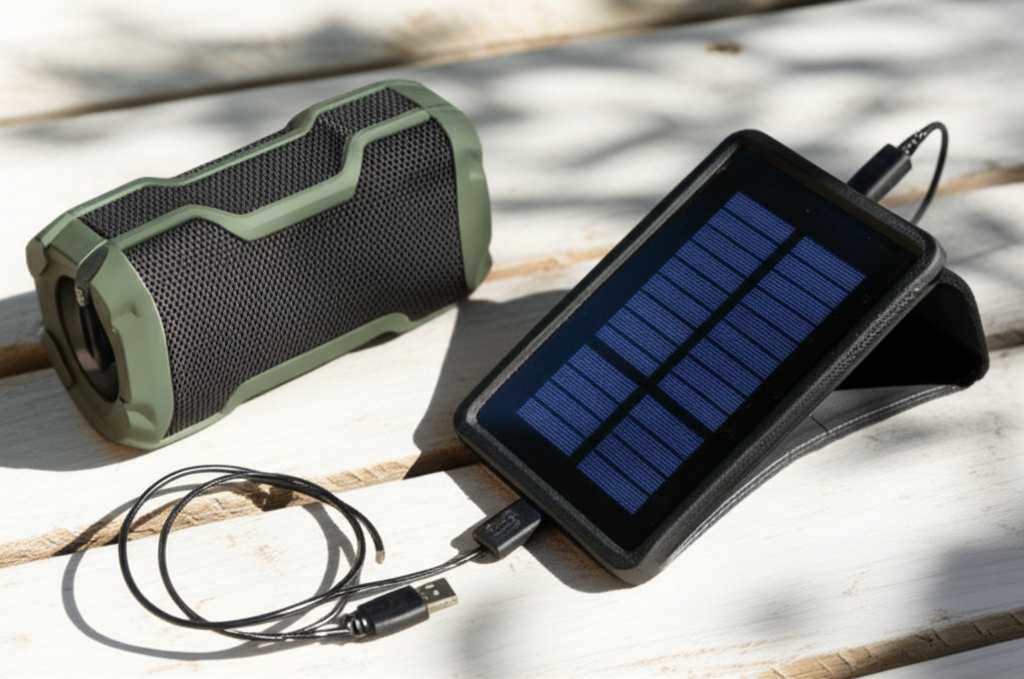
The cable typically plugs into a standard USB-A port or, more commonly these days, a USB-C port on your speaker. The other end of the cable usually goes into a power source. Normally, that power source is a wall adapter plugged into an outlet. But guess what? A solar charger can be that power source too!
Portable Solar Chargers: Your Sun-Powered Power Bank
So, what exactly is a portable solar charger? It’s basically a device with solar panels that capture sunlight and convert it into electricity. This electricity can then be used to charge other devices directly, or it can be stored in a built-in battery (like a power bank) for later use. The latter type is super handy because you can charge the solar panel when the sun is out, and then use that stored power to charge your speaker even when it’s cloudy or dark.
These chargers come in all sorts of shapes and sizes. Some are small, foldable panels you can clip onto a backpack. Others are larger, more robust units designed for longer trips. The key thing to look for is the output type. Most modern solar chargers will have one or more USB ports, making them compatible with most Bluetooth speakers.
Types of Portable Solar Chargers
Foldable Solar Panels: These are lightweight and easy to pack. They often have multiple panels that unfold to capture more sun.
Solar Power Banks: These have a built-in battery that stores solar energy. They can charge your devices even when the sun isn’t shining.
Hybrid Solar Chargers: Some chargers combine a solar panel with a hand crank or a wall adapter for more charging options.
How to Choose the Right Solar Charger for Your Speaker
Not all solar chargers are created equal, and picking the right one makes a big difference. You want something that’s efficient and reliable. Here’s what to consider:
Output Power (Watts): This tells you how much power the charger can deliver. For charging a Bluetooth speaker, you usually don’t need a super high wattage. Look for chargers that offer at least 5 watts, but 10-20 watts is even better for faster charging.
USB Ports: Make sure it has standard USB-A or USB-C ports that match your speaker’s charging cable. Some chargers offer multiple ports, which is great if you want to charge your phone and speaker at the same time.
Durability and Weather Resistance: If you plan to use this outdoors, especially in unpredictable weather, look for chargers that are built tough and can handle a little splash or dust.
Portability: Consider how you’ll be carrying it. A lightweight, foldable charger is perfect for hiking, while a more robust unit might be fine if it’s just going from your car to a campsite.
Built-in Battery (for Solar Power Banks): If you want to charge your speaker at night or on a cloudy day, a solar charger with a built-in battery is a must. Check the battery capacity (measured in mAh – milliampere-hours) to see how many times it can fully charge your speaker.
Let’s Get Charging: The Step-by-Step Guide
Okay, you’ve got your Bluetooth speaker and your trusty portable solar charger. It’s time to make some magic happen! Here’s how to connect them.
Step 1: Find a Sunny Spot
This is the most crucial step! Your solar charger needs sunlight to work. Find an open area where the sun is shining directly on the panels. Avoid shade from trees, buildings, or even your own body. The more direct sunlight, the better and faster it will charge.
Pro Tip: If you’re on the move, like hiking, try clipping a foldable solar panel to your backpack. This way, it charges as you walk!
Step 2: Connect Your Speaker to the Solar Charger
Grab the USB charging cable that came with your Bluetooth speaker. It’s usually a USB-A to Micro-USB, USB-A to USB-C, or USB-C to USB-C cable.
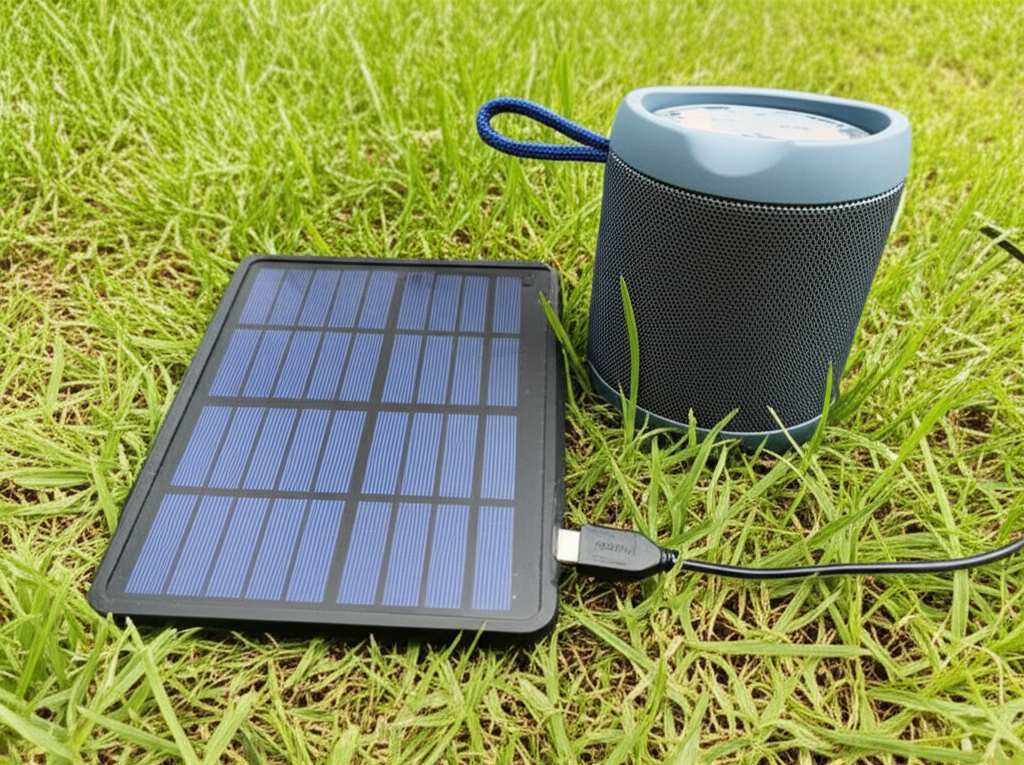
Plug the standard USB end (USB-A or USB-C) into the output port on your portable solar charger.
Plug the other end of the cable (Micro-USB or USB-C) into the charging port on your Bluetooth speaker.
You should see an indicator light on your speaker turn on, showing that it’s receiving power. This light often indicates charging, and it might change color or turn off when the battery is full.
Step 3: Position for Maximum Sun Exposure
Once everything is connected, make sure the solar panels are angled directly towards the sun. Think of it like aiming a telescope! The more perpendicular the panels are to the sun’s rays, the more energy they’ll capture. If you have a charger with adjustable legs or a stand, use it to get that perfect angle.
Fun Fact: The sun’s energy is incredibly powerful. Even on a cloudy day, solar panels can still capture enough light to generate some power, though it will be much slower.
Step 4: Monitor and Wait (Patiently!)
Charging your Bluetooth speaker from a solar charger might take longer than using a wall outlet, especially if the sun isn’t super strong or if your charger has a lower wattage. Be patient!
Keep an eye on the charging indicator on your speaker. If your solar charger has a display, it might show you the current power output, which can be interesting to watch.
If using a solar power bank: You can either charge your speaker directly from the power bank’s USB port, or you can let the solar panel charge the power bank’s internal battery first. If you charge the power bank first, you can then use its stored energy to charge your speaker later, which is super convenient.
Step 5: Enjoy Your Music!
Once your speaker has enough charge, unplug it from the solar charger. Now you’re free to roam and enjoy your music, powered by the sun! You can even leave it connected to continue charging while you listen, especially if you’re in a sunny spot for a while.
Important Considerations for Solar Charging
While charging your Bluetooth speaker with a solar charger is fantastic, there are a few things to keep in mind to get the best experience.
Charging Speed: As mentioned, solar charging can be slower. Don’t expect a full charge in an hour like you might from a wall adapter. It can take several hours of direct sunlight to fully charge a speaker.
Weather Dependence: Clouds, rain, and even dust on the solar panels can significantly reduce charging efficiency. Always check the weather forecast if you’re relying on solar power.
Device Compatibility: Most Bluetooth speakers charge via USB, making them compatible with solar chargers. However, always check your speaker’s manual to confirm its charging requirements.
Battery Health: While generally safe, repeatedly charging a device from a less stable power source like solar might have a very minor long-term effect on battery health compared to a consistent wall charger. However, for most users and modern devices, this is negligible. The convenience usually outweighs any tiny theoretical risk.
Direct Sunlight is Key: For best results, the solar panels need direct, unobstructed sunlight. Angle them towards the sun throughout the day as it moves across the sky.
Comparing Solar Charger Options
To give you a clearer picture, let’s look at how different types of solar chargers might stack up for charging a typical Bluetooth speaker. We’ll focus on key features that matter for this task.
Here’s a little comparison table:
| Feature | Foldable Solar Panel (15W) | Solar Power Bank (10,000mAh with 5W panel) | Large Portable Solar Panel (30W) |
|---|---|---|---|
| Charging Speed (Approx.) | Moderate | Slow (direct) / Moderate (stored) | Fast |
| Portability | Excellent | Good | Fair |
| Ability to Charge in Shade/Night | No | Yes (from stored battery) | No |
| Best Use Case | Hiking, Backpacking | All-around, backup power | Car camping, Base camp |
| Typical Output Ports | 1-2 USB-A | 1-2 USB-A | 1-2 USB-A, sometimes USB-C |
So, what does this mean for you? If you’re always on the go and need something light, a foldable panel is great. If you want the flexibility to charge your speaker even when the sun goes down, a solar power bank is your best bet. For faster charging and if you’re not worried about weight, a larger panel works wonders.
What to Look For in Your Speaker’s Charging Specs
When you look at your Bluetooth speaker, you might see numbers related to its battery. For example, a speaker might have a 5200mAh battery and charge at 5V/1A (which is 5 Watts). This tells you how much power it uses and how fast it can potentially charge.
mAh (milliampere-hour): This is the battery capacity. A higher mAh means a longer playtime.
V (Volts) & A (Amperes): These indicate the voltage and current the speaker expects. Multiplying them gives you Watts (V x A = W), which is the power. So, 5V x 1A = 5W.
Knowing this helps you match your solar charger’s output. A 10W solar panel can theoretically charge a 5W speaker twice as fast as a 5W panel, assuming ideal conditions.
Keeping Your Gear in Top Shape: Solar Charger Maintenance
To ensure your solar charger works its best for years to come, a little bit of care goes a long way. It’s mostly about keeping it clean and protected.
Here are some simple maintenance tips:
Clean the Solar Panels: Dust, dirt, or smudges on the panels can block sunlight and reduce efficiency. Wipe them gently with a soft, damp cloth. Avoid abrasive cleaners.
Inspect Cables and Ports: Regularly check your USB cables for any fraying or damage. Make sure the ports on both the charger and the speaker are clean and free of debris.
Store Properly: When not in use, store your solar charger in a cool, dry place. If it has a built-in battery, it’s a good idea to charge it up at least every few months to keep the battery healthy.
Protect from Extreme Conditions: While many chargers are weather-resistant, avoid leaving them in direct sun for extended periods when not in use, as extreme heat can degrade components. Also, avoid submerging them in water unless they are specifically rated as waterproof.
Fun Facts About Solar Energy and Gadgets
Did you know that the first portable solar charger for consumer electronics was developed back in the 1970s? It’s true! While they’ve become much more efficient and affordable today, the concept has been around for a while.
Also, the energy from the sun that reaches Earth in just one hour is more than enough to power the entire world for a whole year! This is why solar technology is so exciting – we have an almost limitless clean energy source available to us.
Troubleshooting Common Issues
Sometimes, things don’t go exactly as planned. Here are a few common hiccups and how to fix them:
Speaker Not Charging:
Check Sunlight: Is the charger in direct, bright sunlight?
Check Connections: Are the USB cable and ports firmly connected?
Try a Different Cable: The USB cable might be faulty.
Check Charger Output: Is the solar charger itself functional? Try charging another device with it.
Slow Charging:
Sunlight Intensity: It might just be a less sunny day. Angle the panels better.
Charger Wattage: Your charger might have a lower wattage, making it naturally slower.
Speaker Battery Condition: An older speaker battery might not charge as quickly.
Solar Charger Gets Hot:
* It’s normal for solar panels and power banks to get warm when in direct sunlight or charging. However, if it feels excessively hot, unplug it and let it cool down in a shaded area.
Frequently Asked Questions (FAQ)
- Can I charge my Bluetooth speaker directly from a solar panel?
- Yes, absolutely! As long as your solar panel has a USB output port and you have the correct charging cable for your speaker, you can connect them directly. Just make sure the panel is getting plenty of sunlight.
- How long does it take to charge a Bluetooth speaker with a solar charger?
- This varies a lot! It depends on the size of your speaker’s battery, the wattage of your solar charger, and the intensity of the sunlight. It could take anywhere from 4 to 12 hours of good sunlight, sometimes more.
- Do I need a solar power bank, or will a simple solar panel work?
- A simple solar panel works great if you want to charge your speaker while the sun is out. A solar power bank is better if you want to store solar energy and use it to charge your speaker later, like at night or on a cloudy day.
- Is it safe to leave my Bluetooth speaker connected to a solar charger all day?
- Generally, yes. Most modern speakers and solar chargers have built-in protection against overcharging. However, it’s always a good idea to disconnect it once it’s fully charged, or if you’re concerned about extreme heat, to prolong the battery’s lifespan.
- What kind of USB cable do I need?
- You’ll need the charging cable that came with your Bluetooth speaker. Most speakers use a Micro-USB or USB-C port for charging. You’ll plug the other end (usually USB-A or USB-C) into your solar charger.
- Can I charge my phone and my speaker at the same time from a solar charger?
- If your solar charger has multiple USB output ports, then yes, you can charge both devices simultaneously. Just make sure the total power output of the charger is sufficient for both devices.
The Sunny Side of Portable Power
So there you have it! Charging your Bluetooth speaker from a portable solar charger is a straightforward and rewarding process. It’s all about finding that sweet spot of sunlight and making the right connections. You’re not just powering your music; you’re embracing a more sustainable and free way to enjoy your tech on the go.
Remember, the key is patience and positioning. A little effort in finding good sunlight and angling your panels correctly will make all the difference. Whether you’re on a remote trail, at a beach picnic, or just want to reduce your reliance on wall outlets, solar charging is a fantastic option.
Now you’re equipped with the knowledge to harness the sun’s energy for your audio adventures. Go ahead, explore those off-grid possibilities, and keep the good times rolling with your soundtrack powered by nature! Now go enjoy amazing sound and make every moment louder and better!