Build your own Bluetooth speaker with this easy guide! Learn the simple steps to create amazing sound and enjoy your music anywhere. It’s a fun project for everyone!
Hey there, tech adventurer! Ever cranked up your favorite tunes and thought, “Man, I wish I could make my own speaker”? It sounds like a big, complicated job, right? Like something only super-smart engineers do in a fancy lab. But what if I told you it’s actually super doable, even for beginners?
I remember when I first started tinkering with gadgets. Picking out the right speaker felt like a puzzle. So many specs, so many confusing terms! It’s easy to get lost. But here’s the cool part: building your own Bluetooth speaker is a fantastic way to understand how sound really works and get exactly the sound you want.
Imagine impressing your friends with a speaker you made yourself! It’s not just about saving money; it’s about the fun of creation and the satisfaction of making something awesome. We’re going to break down this project into simple, easy-to-follow steps.

So, grab your curiosity, and let’s dive into the exciting world of DIY audio. We’ll make this as easy as picking your favorite song. Ready to make some noise? Let’s break it down step by step.
Why Build Your Own Bluetooth Speaker?
So, why go through the effort of building your own Bluetooth speaker when you can just buy one? That’s a fair question! For starters, it’s incredibly rewarding. There’s a special kind of pride in saying, “Yep, I made this!” Plus, it’s a fantastic learning experience. You’ll get a real feel for how audio technology works.
Think about it: you get to choose all the parts. Want super deep bass? You can pick a woofer that delivers. Need crystal-clear highs? There’s a tweeter for that. You can customize the look too, making it a true reflection of your style. It’s like building your dream car, but for sound!
This project is also a great way to understand electronics without getting overwhelmed. We’ll keep things simple and fun. You’ll learn about circuits, sound drivers, and Bluetooth connectivity in a hands-on way. It’s much more engaging than just reading a manual, right?

What You’ll Need: Your Speaker Building Toolkit
Before we get our hands dirty, let’s gather our supplies. Think of this as your treasure map to building an awesome speaker. You don’t need a whole workshop; most of these items are easy to find online or at electronics stores.
Here’s a list of the main components you’ll be looking for:
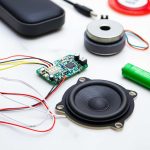
- Speaker Drivers: These are the heart of your speaker – they produce the sound! You’ll usually need at least two: a woofer for low frequencies (bass) and a tweeter for high frequencies (treble). Sometimes, you can find full-range drivers that handle most sounds.
- Amplifier Module: This little guy takes the audio signal from your Bluetooth receiver and makes it powerful enough to drive the speakers. Look for one that matches the power needs of your drivers.
- Bluetooth Receiver Module: This is what lets your speaker connect wirelessly to your phone or tablet. Many amplifier modules come with Bluetooth built-in, which simplifies things!
- Power Source: This could be a rechargeable battery pack (like a Li-ion battery with a charging circuit) for portability, or a simple power adapter if you plan to keep it plugged in.
- Enclosure (Speaker Box): This is the shell that holds everything together. The material and design of the enclosure significantly impact sound quality. Wood is a popular choice!
- Wiring and Connectors: You’ll need some speaker wire to connect the drivers to the amplifier and wires to connect the power source.
- Tools: Basic tools like a screwdriver, wire strippers, a soldering iron (optional, but very useful), and maybe a drill if you’re building your own enclosure.
Don’t worry if some of these names sound a bit technical. We’ll explain what each one does as we go. Think of them as the building blocks for your sound masterpiece!
Step 1: Choosing Your Speaker Drivers
Let’s start with the sound makers themselves: the speaker drivers. These are the cones that vibrate to create sound waves. You’ll typically find them in different sizes, measured in inches. A larger driver usually means it can produce lower frequencies (more bass).
For a good balance, many DIY speakers use a two-way system: a woofer for the low end and a tweeter for the high end. Some people opt for a single full-range driver, which is simpler but might not offer the same depth of sound. For your first project, a simple full-range driver or a woofer/tweeter combo is a great starting point.
When picking drivers, pay attention to their impedance (measured in ohms, usually 4 or 8 ohms) and their power handling capacity (measured in watts). Make sure these match your amplifier! A common and easy-to-find size for a personal speaker is around 3 to 4 inches for a full-range driver.
Step 2: The Brains of the Operation: Amplifier and Bluetooth
This is where the magic happens for wireless sound! You need a way to receive the music signal wirelessly and then make it loud enough to hear. Many hobbyist electronic stores sell integrated amplifier and Bluetooth modules. These are perfect for beginners because they combine two essential functions into one easy-to-wire board.
When choosing an amplifier module, make sure it has enough power for your speaker drivers. If your drivers are rated at 20 watts each, an amplifier that can output at least 20-30 watts per channel would be a good choice. You’ll also want to check the Bluetooth version it supports; Bluetooth 4.0 or higher is standard and offers good range and efficiency.
Here’s a quick look at what to consider:
| Feature | Why It Matters | What to Look For |
|---|---|---|
| Power Output (Watts) | Needs to be strong enough for your speaker drivers. | Slightly higher than your drivers’ wattage. |
| Bluetooth Version | Affects connection stability and audio quality. | Bluetooth 4.0 or higher (5.0 is great!). |
| Input Voltage | Must match your power source (battery or adapter). | Check the module’s specifications carefully. |
| Size and Form Factor | Needs to fit inside your enclosure. | Measure your enclosure before buying! |
Choosing an amplifier with built-in Bluetooth is a real time-saver. It means fewer wires and less complexity, which is perfect for your first build. Many modules also have simple controls like volume up/down and play/pause buttons.
Step 3: Powering Your Project
Every electronic device needs power, and your Bluetooth speaker is no exception. For a portable speaker, a rechargeable battery is the way to go. Lithium-ion (Li-ion) batteries are popular because they’re lightweight and hold a good charge.
You’ll also need a battery management system, often called a BMS, or a charging module. This protects the battery from overcharging or over-discharging, which is super important for safety and battery life. A simple USB charging module can make recharging easy.
If you’re building a speaker that will mostly stay in one place, a DC power adapter might be simpler. Just make sure the voltage and amperage (current) of the adapter match what your amplifier module requires. Always double-check these specs to avoid damaging your components!
Step 4: Building the Enclosure – The Speaker Box
The enclosure, or speaker box, is more than just a pretty shell. It plays a crucial role in how your speaker sounds. The box needs to be sturdy and airtight (unless it’s a ported design, but let’s keep it simple for now!). A well-built enclosure prevents sound waves from the back of the speaker driver from interfering with the sound from the front.
MDF (Medium-Density Fiberboard) is a favorite material for speaker enclosures because it’s dense and easy to work with. Plywood is another good option. You can buy pre-made speaker enclosures or build your own. If you’re building your own, simple box designs are best for beginners.
Here are some quick tips for building your enclosure:
- Measure Twice, Cut Once: Accuracy is key! Make sure your driver and module cutouts are precise.
- Use Wood Glue: A good wood glue will create strong, airtight seals between the panels.
- Consider Bracing: For larger enclosures, internal bracing can prevent the box from vibrating, which muddles the sound.
- Dampening Material: Adding a layer of acoustic foam or polyfill inside the box can help absorb unwanted sound reflections.
You can get really creative with the look of your enclosure. Paint it, cover it with fabric, or even add some cool LED lights! It’s your chance to make it unique.
Step 5: Wiring It All Together
This is where your speaker starts to come alive! Wiring can seem intimidating, but if you take it step by step, it’s quite manageable. Always disconnect your power source before you start wiring.
Here’s a typical wiring order:
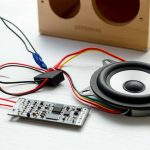
- Connect Speaker Drivers: Use speaker wire to connect the positive (+) terminal of each driver to the corresponding output on your amplifier module. Do the same for the negative (-) terminals.
- Connect Bluetooth/Amplifier Module to Power: Connect your power source (battery or adapter) to the power input terminals on your amplifier module. Make sure the polarity is correct – positive to positive, negative to negative.
- Connect Control Buttons (if any): If your module has separate buttons for power, volume, or play/pause, wire them according to the module’s instructions.
Many amplifier modules come with clear diagrams. If you’re soldering, make sure your connections are clean and secure. If you’re using screw terminals, ensure the wires are stripped properly and firmly clamped.
Here’s a simplified wiring example:
Power Source (+) –> Amplifier Module Power Input (+)
Power Source (-) –> Amplifier Module Power Input (-)
Woofer (+) –> Amplifier Output Left (+) (or designated woofer out)
Woofer (-) –> Amplifier Output Left (-) (or designated woofer out)
Tweeter (+) –> Amplifier Output Right (+) (or designated tweeter out)
Tweeter (-) –> Amplifier Output Right (-) (or designated tweeter out)
(Note: If using a single full-range driver, it will connect to one set of amplifier outputs.)
This is a general guide. Always refer to the specific diagrams that come with your amplifier module!
Step 6: Testing and Troubleshooting
Before you seal up your enclosure, it’s time for a test run! Connect your power source and try to pair your phone or tablet with the Bluetooth module. Play some music. Does it sound good? Are there any weird noises?
If it doesn’t work, don’t panic! Most issues are simple to fix.
Here are some common problems and solutions:
- No Power: Check your power connections. Is the battery charged? Is the adapter plugged in and working? Is the polarity correct?
- No Sound: Ensure the Bluetooth is connected. Is the volume turned up on both your device and the speaker? Double-check the speaker wire connections to the drivers and the amplifier.
- Distorted Sound: The volume might be too high for the amplifier or drivers. Try lowering the volume. Check for loose wires or connections.
- Bluetooth Won’t Connect: Make sure the module is in pairing mode. Try resetting the module or your phone’s Bluetooth settings.
A quick tip: if you hear humming or buzzing, it might be a grounding issue or interference. Sometimes moving wires around can help.
Step 7: Final Assembly and Enjoyment!
Once you’ve tested everything and are happy with the sound, it’s time for the final assembly. Carefully place all your components inside the enclosure. Secure the amplifier module and power source so they don’t rattle around.
Then, mount your speaker drivers into their cutouts. Connect the final wires if you haven’t already. Seal up the enclosure, making sure all panels are secure.
And voilà! You’ve built your very own Bluetooth speaker. Now, connect your device and blast your favorite tunes. You’ve not only created a cool gadget but also learned a ton about how sound and electronics work together. It’s a truly satisfying project!
Comparing Speaker Components: A Quick Guide
Choosing the right components can make a big difference. Here’s a simple table to help you think about what matters most for your DIY speaker.
| Component | Key Specs to Consider | Beginner-Friendly Choice | Impact on Sound |
|---|---|---|---|
| Speaker Drivers | Size (inches), Impedance (ohms), Power Handling (watts) | 3-4 inch full-range driver or a 2-way (woofer + tweeter) set. | Bass, treble, clarity, volume. |
| Amplifier Module | Power Output (watts), Voltage Input, Bluetooth Version | Integrated Bluetooth amplifier board (e.g., TPA3116D2 based). | Volume, clarity, distortion at high volumes. |
| Power Source | Voltage (V), Capacity (mAh/Ah), Charging method | Rechargeable Li-ion battery pack with a protection/charging board. | Playback time, portability. |
| Enclosure Material | Density, rigidity, ease of use | MDF or good quality plywood. | Bass response, resonance, overall clarity. |
This table shows that for beginners, focusing on matching your driver’s needs to the amplifier and choosing a reliable power source is key. Don’t get bogged down in super-advanced specs for your first build; focus on getting a good, functional setup. You can always upgrade later!
Frequently Asked Questions (FAQ)
Q1: Do I need to be an expert to build a Bluetooth speaker?
Not at all! This guide is designed for beginners. With simple components and clear instructions, anyone can build a functional Bluetooth speaker. It’s a great way to learn!
Q2: Where can I buy the parts for my Bluetooth speaker?
You can find most components online from retailers like Amazon, eBay, Adafruit, SparkFun, or specialized electronics hobbyist stores.
Q3: How long will my DIY Bluetooth speaker last?
With good quality components and proper care, your speaker can last for years! The battery life will depend on its capacity and how loudly you play music.
Q4: Can I make my speaker waterproof?
Making a speaker truly waterproof is quite challenging and often requires specialized enclosures and waterproof components. However, you can make it water-resistant by ensuring your enclosure is well-sealed and protecting it from direct rain or splashes.
Q5: What if I want my speaker to be louder?
To make your speaker louder, you’ll need a more powerful amplifier and speaker drivers that can handle that extra power. You might also need a larger battery to support the higher power draw.
Q6: Is it cheaper to build a Bluetooth speaker than to buy one?
Sometimes yes, sometimes no. High-quality components can add up, but building your own often gives you better sound for the price than a similarly priced commercial speaker. Plus, you get the satisfaction of making it yourself!
Q7: Can I use old computer speakers or car speakers?
Yes, you absolutely can! Old speaker drivers can be salvaged and reused. Just make sure to check their impedance and power ratings to ensure they are compatible with your chosen amplifier module. It’s a fantastic way to upcycle!
Wrapping Up Your Awesome Project!
See? Building your own Bluetooth speaker is totally achievable and incredibly fun. You’ve learned about all the essential parts, from the drivers that make the sound to the amplifier that powers it and the Bluetooth module that connects it all wirelessly. You’ve also seen how important the enclosure is and how to wire everything up safely.
This project isn’t just about ending up with a cool gadget; it’s about the journey of learning and creating. You now have a deeper understanding of audio tech and the confidence to tackle more electronics projects.
So, go ahead, fire up your creation! Pair your phone, pick your playlist, and enjoy the amazing sound you made yourself. You’ve earned it! Now go enjoy amazing sound and make every moment louder and better!