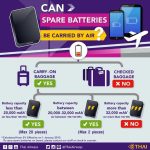
You can typically carry power banks up to 100Wh (watt-hours) in your carry-on luggage without restrictions. For power banks between 100Wh and 160Wh, airline approval is usually required, and those over 160Wh are generally not allowed onboard. Always check individual airline policies before flying, but generally, the rule of thumb is to keep your power banks within these limits to avoid any issues at security.
If you’re wondering how much power bank you can safely bring on a flight, the answer largely depends on its capacity measured in watt-hours. Most travelers can carry power banks with up to 100Wh comfortably, which is enough for multiple charges on your devices. Larger capacity power banks may require airline approval, so planning ahead helps ensure a smooth journey. Remember, these rules are in place to prevent safety hazards and ensure everyone’s security onboard. So, before packing your portable charger, double-check its capacity and your airline’s specific regulations to stay compliant.

How Much Power Bank Allowed in Flight
Understanding Power Bank Regulations for Air Travel
Travelers often ask, “How much power bank is allowed in flight?” Airlines and aviation safety authorities set specific rules to ensure passenger safety. These regulations are primarily based on the capacity measured in watt-hours (Wh) and are designed to prevent potential hazards caused by Lithium-ion batteries.
What Is a Power Bank and Why Is Its Capacity Important?
A power bank is a portable device that stores electrical energy to charge gadgets like smartphones, tablets, or laptops. The capacity of a power bank, usually indicated in milliamp-hours (mAh) or watt-hours (Wh), determines how much energy it contains. Higher capacity devices can charge gadgets multiple times but may face stricter airline restrictions.
How to Calculate Watt-Hours (Wh) of Your Power Bank
Knowing how to convert mAh to Wh helps understand airline regulations better. The formula is simple:
- Watt-hours (Wh) = (mAh × Voltage) ÷ 1000
For example, a power bank with 10,000mAh capacity at 3.7V has:
- Wh = (10,000 × 3.7) ÷ 1000 = 37Wh
This calculation helps determine whether your power bank complies with airline policies.
Airline Regulations for Power Banks Based on Capacity
Different airlines follow guidelines set by the International Air Transport Association (IATA). These standards classify batteries into three categories:
1. Power Banks with Capacity Up to 100Wh
Most airlines allow passengers to carry power banks up to 100Wh in carry-on luggage without prior approval. This category covers most consumer power banks. It’s the most common and easiest to carry.
2. Power Banks Between 100Wh and 160Wh
Power banks in this range are usually larger and may require airline approval before travel. Many airlines limit the number of such devices to two per passenger.
3. Power Banks Over 160Wh
Such devices are generally prohibited in passenger aircraft due to safety concerns. These might include larger battery packs used for professional or industrial purposes.
Specific Airline Policies and Variations
While IATA provides general guidelines, individual airlines may have specific rules. Always verify with your airline before your flight. Some airlines may have stricter policies, especially for international flights or certain countries.
Carrying Power Banks in Checked Baggage vs. Cabin Baggage
Airlines universally recommend carrying power banks in cabin luggage. Power banks are not permitted in checked bags because of safety risks. Lithium-ion batteries can pose fire hazards if damaged or malfunctioning.
Benefits of Carrying Power Banks in Cabin
- Immediate access to charging during delays or emergencies
- Reduced risk of damage or theft in checked luggage
What Happens If You Carry Non-Compliant Power Banks?
Carrying power banks that exceed the allowed capacity or are prohibited can result in confiscation or even fines. Security officers are trained to detect and handle such devices. Always check and adhere to airline regulations for a smooth travel experience.
How to Pack Your Power Bank Safely for Flights
Proper packing is crucial to avoid accidents. Ensure your power bank is:
- In your carry-on luggage
- Stored in a protective case to prevent short circuits
- Powered off during transit
Additional Tips for Traveling with Power Banks
- Carry the original documentation or capacity labels
- Check local regulations in destination countries
- Update your airline about your power bank if it exceeds 100Wh
Related Topics to Consider When Traveling with Power Banks
1. TSA and Security Checks
The Transportation Security Administration (TSA) enforces power bank policies in the United States. Be prepared to remove devices from your bag during screening for inspection.
2. International Travel Regulations
Different countries may have additional restrictions on lithium batteries. Always research the rules of your destination country ahead of time.
3. Power Bank Travel Accessories
Use specialized cases or covers to protect your device and prevent short circuits during travel. Some travel accessories include built-in safety features compliant with airline standards.
4. Recommendations for Buying Power Banks for Travel
Choose power banks within the 100Wh limit for hassle-free travel. Look for reputable brands with proper safety certifications like UN38.3, UL, or CE markings.
5. Impact of Battery Capacity on Charging Speed and Efficiency
Larger capacity power banks can charge devices multiple times but may be heavier and bulkier. Balance capacity with portability for the best travel experience.
Summary of Important Rules and Tips
| Capacity in Wh | Allowed in Cabin | Approval Needed | Restrictions |
|---|---|---|---|
| Up to 100Wh | Yes | No | Limit of two devices per passenger |
| 100Wh to 160Wh | Yes | Yes, airline approval required | Limit of two devices per passenger |
| Over 160Wh | No | N/A | Generally prohibited |
Final Thoughts on Power Banks and Air Travel
Understanding the capacity limits for power banks helps ensure smooth security checks and compliance with airline rules. Always check your device’s capacity and airline policies before packing. Carrying a compliant power bank guarantees your gadgets stay charged throughout your journey without any issues.
The key is to stay informed about the capacity rules in your destination and airline. Proper packing and adherence to regulations make traveling with power banks safe and hassle-free. Remember, safety first—always prioritize carrying approved and appropriately rated devices.
Can you take a power bank on an airplane?
Frequently Asked Questions
What are the size restrictions for power banks when flying?
Airlines generally restrict power banks based on their capacity. Typically, power banks with a capacity up to 100Wh (watt-hours) are allowed in your carry-on luggage without prior approval. Power banks between 100Wh and 160Wh may require approval from the airline, and those exceeding 160Wh are usually not permitted onboard. Always check your airline’s specific policies before traveling to avoid issues during security checks.
Can I carry multiple power banks on a flight?
Yes, you may carry multiple power banks in your carry-on luggage, but each must comply with capacity restrictions. For power banks under 100Wh, there’s usually no limit on the number you can bring. However, for larger ones between 100Wh and 160Wh, airlines may limit the number permitted. Packaging them separately and keeping them in your hand luggage helps security officers inspect them easily.
Are there any regulations for charging devices with power banks during the flight?
Most airlines allow passengers to use power banks to charge devices during the flight, but the power banks themselves are usually kept turned off and disconnected from charging during takeoff and landing. Always follow crew instructions regarding the use of electronic devices or charging accessories to ensure safety and compliance with airline policies.
What should I do if my power bank exceeds the allowed capacity?
If your power bank exceeds the permitted capacity, you should leave it at home or attempt to get approval from the airline in advance. Some airlines might allow larger capacity power banks if you get prior approval, but many will not permit them onboard. Never attempt to conceal a prohibited power bank in your luggage, as security measures are strict, and violations can lead to confiscation or penalties.
Final Thoughts
Power bank regulations vary depending on airline and country. Generally, devices with up to 100Wh (watt-hours) are allowed in carry-on luggage without prior approval. For power banks between 100Wh and 160Wh, airline approval is necessary. Any power bank exceeding 160Wh is usually prohibited onboard.
Always check with your airline before traveling to avoid surprises. Pack your power bank in your hand luggage rather than checked baggage. Knowing how much power bank allowed in flight helps ensure a smooth journey.