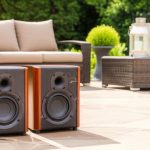
Choosing the right wattage for your home theater sound box is crucial for an immersive audio experience. Generally, a range of 100-200 watts per channel is considered good for most home theaters, offering a balance of power, clarity, and dynamic range. Consider your room size, speaker sensitivity, and personal listening preferences when making your decision.
# How Many Watts Is Good for Home Theater Sound Box
So, you’ve got your dream setup: a big, beautiful screen, comfy seating, and the anticipation of movie nights that feel like you’re right there in the action. But what about the sound? That’s where your home theater sound box, or more accurately, your speaker system and the amplifier that powers it, comes into play. You’ve probably seen numbers like “100 watts,” “200 watts,” or even “500 watts” thrown around. It leaves you wondering, how many watts is good for a home theater sound box? It’s a question that sparks a lot of debate, and the truth is, there isn’t a single magic number that fits everyone. But don’t worry, we’re going to break it down so you can make an informed decision and truly immerse yourself in your favorite movies, shows, and games.
Think of wattage like the horsepower of a car. More horsepower generally means more potential speed and power. Similarly, higher wattage in your sound system can translate to a more robust, dynamic, and louder audio experience. However, just like a sports car might be overkill for a grocery run, excessively high wattage isn’t always necessary or even beneficial for everyone’s home theater setup. We need to consider the whole picture to find that sweet spot where sound is powerful, clear, and enjoyable without being overwhelming or straining your equipment.
## Understanding Wattage: More Than Just a Number
Before we dive into specific recommendations, it’s super important to understand what “watts” actually mean in the context of audio. You’ll see different types of wattage ratings, and they can be a bit confusing.
### RMS vs. Peak Wattage: The Crucial Distinction
This is where many people get tripped up. You’ll often see two wattage ratings:
* RMS (Root Mean Square) Wattage: This is the more important number. RMS wattage indicates the continuous power an amplifier can deliver to a speaker, or the continuous power a speaker can handle, without distortion. It’s a measure of sustained output. This is the number you should focus on when comparing equipment.
* Peak Wattage (or Music Power): This is the maximum power an amplifier can produce or a speaker can handle for a very brief moment, like during a sudden loud sound effect. It’s a bit of a marketing number and doesn’t tell you much about the system’s sustained performance. Always prioritize RMS wattage.
When you’re looking at specifications for your home theater receiver (the component that powers your speakers) or your individual speakers, always ask for the RMS wattage. For instance, if a receiver says “150 watts,” you need to know if that’s RMS or peak. A receiver rated at 100 watts RMS per channel will perform very differently from one rated at 100 watts peak per channel.
### Sensitivity: The Unsung Hero
Wattage isn’t the only factor determining how loud a speaker can get. Speaker sensitivity is equally, if not more, important. Sensitivity is measured in decibels (dB) and tells you how efficiently a speaker converts amplifier power into sound.
* Higher sensitivity (e.g., 90dB and above): These speakers are very efficient. They can produce a loud volume with less power. If you have higher sensitivity speakers, you might not need as many watts from your amplifier.
* Lower sensitivity (e.g., below 87dB): These speakers are less efficient and require more power from the amplifier to reach the same volume level.
So, a 50-watt amplifier powering a 95dB sensitive speaker can sound just as loud as a 200-watt amplifier powering an 85dB sensitive speaker, assuming all other factors are equal. This is why focusing solely on wattage can be misleading.
## What Wattage is Recommended for a Home Theater?
Now that we’ve got the basics covered, let’s talk about what wattage is generally considered “good” for a home theater sound box setup. Remember, this is a spectrum, and your ideal number will depend on several factors.
### The Sweet Spot: 100-200 Watts Per Channel
For most average-sized living rooms (think 10×12 to 15×20 feet), a home theater receiver or amplifier that can deliver **100 to 200 watts of RMS power per channel** is an excellent starting point.
* Why this range? This wattage provides ample power to drive most home theater speakers to satisfyingly loud volumes for movies, music, and games. It allows for dynamic range, meaning you can hear quiet dialogue clearly and also experience the full impact of explosions and dramatic scores without the system straining or distorting.
* For example: If you have a 5.1 surround sound system, this means your receiver should be capable of outputting 100-200 watts RMS to each of the five speakers and the subwoofer (though subwoofer power is often rated differently, discussed later).
This range ensures you have enough headroom to handle demanding movie soundtracks and to fill your room with sound. It’s a common and reliable choice for a reason.
### For Larger Rooms or Critical Listeners
If your home theater is in a significantly larger room, or if you are a true audiophile who enjoys listening at very high, near-cinematic volumes, you might consider going higher.
* 200-300+ watts per channel: In larger spaces, more powerful amplifiers are needed to ensure consistent sound pressure levels across the entire listening area. This extra power helps overcome the acoustics of a larger room and prevents the amplifier from clipping (distorting) when pushed hard.
* For the enthusiast: If you love that “going to the movies” feeling with powerful bass and impactful sound effects that you can almost feel, more watts can definitely contribute to that experience. However, ensure your speakers are also rated to handle this kind of power.
It’s important to note that exceeding the recommended power handling of your speakers can lead to damage. Always check the speaker’s specifications.
## Factors Influencing Your Wattage Needs
As we’ve touched on, wattage is just one piece of the puzzle. Here are the key factors that will help you determine how many watts is good for *your* home theater sound box:
### 1. Room Size and Acoustics
This is perhaps the biggest influencer.
* Small to Medium Rooms (under 200 sq ft): You likely won’t need more than 75-125 watts per channel. Even 50 watts RMS can be plenty loud if your speakers are efficient. Too much power can actually be detrimental, making the sound harsh or leading to unintended distortion if the volume is cranked too high.
* Large Rooms (200-400 sq ft): This is where the 100-200 watts per channel recommendation really shines. You’ll have enough power to fill the space without pushing the amplifier to its limits.
* Extra-Large Rooms or Open-Concept Spaces (over 400 sq ft): You’ll definitely want to look at amplifiers pushing 200-300+ watts per channel, especially if you want impactful bass and clear sound at a distance.
Acoustics also play a role. Rooms with a lot of soft furnishings (carpets, curtains, sofas) will absorb sound, meaning you might need a bit more power to compensate. Hard surfaces (bare walls, hardwood floors) can reflect sound, making a room sound “live” and potentially requiring less power for the same perceived loudness.
### 2. Speaker Sensitivity
We discussed this earlier, but it’s worth reiterating.
* High Sensitivity (90dB+): Speakers like these are very efficient. You can often get away with amplifiers in the 50-100 watt range and still achieve impressive volumes. This is common in some bookshelf speakers or certain brands known for their efficiency.
* Medium Sensitivity (87-90dB): This is a very common range for most bookshelf and floorstanding home theater speakers. The 100-200 watt per channel recommendation is usually perfect here.
* Low Sensitivity (below 87dB): These speakers are power-hungry. You’ll likely need amplifiers closer to the 150-300+ watt per channel range to get the best performance and dynamic range out of them. High-end floorstanding speakers often fall into this category.
### 3. Your Listening Habits
How loud do you actually like to listen?
* Casual Listeners: If you prefer dialogue-driven dramas or enjoy background music while you chat, you might be perfectly happy with 50-75 watts per channel. The goal is clarity and immersion at moderate volumes.
* Enthusiasts and Movie Buffs: If you love the thrill of action movies with booming sound effects, dramatic orchestral scores, and a generally more intense experience, you’ll benefit from the higher end of the spectrum, 100-200 watts per channel or even more. This allows for that “wow” factor without distortion.
* Reference Level Listening: If your goal is to replicate the sound pressure levels found in a commercial cinema, you’ll need significantly more power, often exceeding 200 watts per channel, combined with high-sensitivity speakers.
### 4. Amplifier and Speaker Matching
It’s crucial that your amplifier and speakers are a good match.
* Amplifier Power vs. Speaker Power Handling: Your amplifier should ideally be able to provide a bit *more* power than your speakers are rated to handle continuously (RMS). This might sound counterintuitive, but it means the amplifier is less likely to strain or “clip” when you need it to produce loud sounds. Clipping is a major cause of speaker damage. For example, if your speakers are rated for 120 watts RMS, an amplifier providing 130-150 watts RMS per channel is a great match.
* Underpowering vs. Overpowering: While overpowering can damage speakers, *underpowering* a speaker with an amplifier that’s too weak and is constantly pushed to its maximum output can also lead to distortion and damage. It’s often better to have a bit more clean power than not enough.
* Consider the receiver: Most people use an AV receiver to power their home theater speakers. Check the receiver’s power output ratings (always RMS) and compare them to your speaker’s power handling recommendations. Don’t forget to check the specifications for the number of channels the receiver can power simultaneously at its stated wattage. Some receivers will state a higher wattage when only two channels are driven, and a lower wattage when all channels are driven.
## Wattage Considerations for Different Speaker Types
In a home theater, you have multiple speakers: front left and right, center, surround, and possibly height or rear surround speakers, plus a subwoofer. Their power needs can vary slightly.
### Front Left and Right Speakers
These are your main workhorses for music and the primary audio drivers. They often benefit most from the full power of your amplifier. The 100-200 watt per channel range is generally ideal here.
### Center Channel Speaker
The center channel is critical for dialogue. While it doesn’t always need as much raw power as the front left/right speakers for booming action, it needs to be incredibly clear and capable of handling dynamic shifts in speech. Matching its power handling to your front speakers is usually a good idea. If you’re using a dedicated AV receiver, it will likely send the same power signal to the center as the fronts, so ensure it can handle it. For the best center speaker for home theater, consider its ability to reproduce clear dialogue.
### Surround and Height Speakers
These speakers are primarily for ambient effects and immersion. They generally require less power than the front speakers because they are not tasked with carrying the main audio load or providing the most impactful sound. You might find that 50-100 watts per channel is perfectly adequate for these.
### Subwoofer Wattage: A Different Ballgame
Subwoofers are a special case. They are designed to reproduce very low frequencies (bass) and often have their own built-in amplifiers (they are active speakers).
* Integrated Subwoofers: Most home theater subwoofers come as a complete unit with an internal amplifier. Wattage ratings for subwoofers can be even more varied and sometimes less standardized than for full-range speakers. Look for RMS wattage if available, but also consider the subwoofer’s driver size (e.g., 10-inch, 12-inch, 15-inch) and the enclosure design, as these significantly impact bass output. A 100-watt RMS amplifier in a well-designed subwoofer can produce impressive bass.
* External Subwoofer Amplifiers: In very high-end systems, you might use a separate amplifier for your subwoofer(s). These can range from a few hundred watts to over 1000 watts, depending on the desired output and the number of subwoofers used.
For most home theaters, a good quality powered subwoofer with 150-300 watts of RMS internal amplification is usually sufficient for rooms up to about 300 sq ft.
## Don’t Forget Other Factors for Great Sound
While wattage is a key spec, remember that true home theater magic comes from a combination of factors.
* Speaker Quality: Even with high wattage, cheap speakers won’t sound good. Invest in good quality speakers that suit your listening preferences.
* Room Treatment: Acoustic panels, bass traps, and thoughtful speaker placement can dramatically improve sound quality, sometimes more than simply adding more watts. Learning how to position speakers for the best sound is a vital skill.
* Receiver Quality: The receiver’s amplification stage, DACs (digital-to-analog converters), and processing capabilities all contribute to the final sound.
* Source Quality: A high-quality audio source (e.g., Blu-ray, high-resolution streaming) will provide better sound information for your system to reproduce.
* Speaker Cables: Using appropriate speaker cable for your home cinema system ensures the signal gets to your speakers cleanly.
Ultimately, the goal is a balanced and cohesive system where all components work together harmoniously. While it’s tempting to think “more watts = better,” it’s more about finding the *right* amount of clean, stable power that complements your speakers and your listening environment.
## Conclusion: Finding Your Home Theater’s Power Sweet Spot
So, how many watts is good for a home theater sound box? For most enthusiasts looking for a robust and immersive experience in an average-sized room, aiming for an AV receiver or amplifier that delivers **100-200 watts of RMS power per channel** is a fantastic target. This range offers a great balance of dynamic range, clarity, and the ability to drive most home theater speakers effectively without distortion.
However, always remember to consider your specific room size, the sensitivity of your chosen speakers, and your personal listening volume preferences. A larger room might demand more power, while highly sensitive speakers might sing beautifully with less. Don’t get caught up in peak wattage numbers; focus on RMS. By understanding these elements, you can confidently select a home theater sound system that delivers breathtaking audio and makes every movie night an event. Happy listening!
Key Takeaways
- Wattage isn’t everything: While important, wattage is just one factor. Speaker sensitivity, room size, and amplifier quality also play significant roles in perceived loudness and sound quality.
- 100-200 watts per channel is a good baseline: For most average-sized living rooms, this range provides ample power for a dynamic and engaging home theater experience without distortion.
- Larger rooms need more power: If you have a spacious home theater room, you’ll likely benefit from amplifiers and speakers with higher wattage to fill the space effectively.
- Consider speaker sensitivity: High-sensitivity speakers (90dB or higher) require less power to reach loud volumes, meaning lower wattage might suffice.
- Don’t confuse peak vs. RMS: Always look for RMS (Root Mean Square) wattage, which indicates continuous power handling, rather than peak wattage, which is a short burst.
- Personal preference matters: Some people prefer a quieter listening experience, while others enjoy very loud, cinematic volumes. Tailor your wattage choice to your own habits.
- A balanced system is key: Ensure your receiver or amplifier’s wattage output matches or slightly exceeds the recommended power handling of your speakers for optimal performance and longevity.
Frequently Asked Questions
How much wattage is too much for home theater speakers?
Generally, it’s considered too much if the amplifier’s RMS wattage significantly exceeds the speaker’s maximum RMS power handling rating. While an amplifier providing slightly more power than the speaker’s rating can be beneficial for clean headroom, drastically exceeding it can lead to overdriving the speaker, causing distortion and potential damage.
Does wattage affect bass quality in a home theater?
Yes, wattage plays a role in bass quality, especially for subwoofers. Sufficient amplifier power allows speakers, particularly subwoofers, to reproduce low frequencies with authority and control, preventing them from sounding muddy or weak. However, the speaker’s design, driver size, and enclosure are also critical for good bass.
What is the difference between AV receiver wattage and individual speaker wattage?
AV receiver wattage refers to the power the receiver can output to each connected speaker channel. Individual speaker wattage, often referred to as power handling, indicates the maximum continuous power (RMS) the speaker can safely accept from an amplifier without sustaining damage.
Can I mix speakers with different wattage ratings in my home theater?
Yes, you can mix speakers with different wattage ratings, but it’s essential to match them to your amplifier’s capabilities. Ensure your AV receiver can supply adequate power to all speakers, especially those with lower sensitivity or higher power handling needs. It’s often recommended that your amplifier’s power output is at least 1.5 times the speaker’s RMS power handling for optimal performance.
Does a higher wattage speaker automatically mean better sound quality?
Not necessarily. Higher wattage speakers are designed to handle more power, which can lead to louder playback and more dynamic range, but sound quality is also determined by design, materials, driver technology, and overall build quality. A well-designed lower-wattage speaker can often outperform a poorly designed high-wattage speaker.
Is it better to have an amplifier with more watts than my speakers can handle?
It’s generally better to have an amplifier that can provide a bit more clean power than your speakers’ RMS power handling. This allows the amplifier to operate without straining when you need it to produce louder sounds. However, drastically exceeding the speaker’s rating can still lead to damage if the volume is pushed too high, causing distortion (clipping).