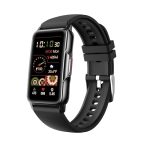
Smartwatches count your steps by using built-in motion sensors that detect your movements throughout the day. When you walk or run, these devices interpret the motion data to estimate how many steps you’ve taken. Essentially, they turn complex movements into simple, easy-to-understand numbers, helping you stay motivated and on track with your fitness goals.
In short, a smartwatch tracks steps mainly through accelerometers that monitor your movements. These sensors analyze your wrist’s motion patterns to determine when you’re walking or running, providing you with real-time step counts and encouraging a more active lifestyle.
Walking into the world of smartwatches, it’s fascinating to see how tiny sensors can translate your everyday movements into valuable health data. From casual strolls to intense workouts, these devices are smarter than they look, helping you keep tabs on your physical activity seamlessly. As technology advances, smartwatches continue to become even more accurate and user-friendly, making it easier than ever to stay motivated and monitor your fitness journey effortlessly.

How Does a Smart Watch Track Steps?
Smart watches are popular devices that help us stay active and monitor our health. One of their main features is counting steps, which motivates many people to move more each day. But have you ever wondered how a smart watch actually tracks your steps? Let’s explore how this technology works in detail.
Understanding Accelerometers in Smart Watches
The core component that allows a smart watch to track steps is called an accelerometer. This tiny sensor detects movement and acceleration in all directions. It sends data to the watch’s processor, which then analyzes the motion patterns.
Every step you take causes specific movements that the accelerometer can recognize. When your wrist moves forward and backward or side to side during walking or running, the sensor picks up these vibrations. The watch’s software interprets these signals as individual steps.
How Accelerometers Detect Movement
The accelerometer measures the change in velocity over time. It records data points along three axes: X, Y, and Z. These axes correspond to different directions of movement.
For example, walking typically involves rhythmic up-and-down and side-to-side motions. The sensor captures these oscillations, and the watch’s algorithms filter out noise and unrelated movements. This process ensures only meaningful steps are counted.
The Role of Gyroscopes in Step Tracking
Many advanced smart watches also include gyroscopes. Gyroscopes measure rotational movement or angular velocity, providing additional data about wrist motion.
When combined with accelerometer data, gyroscopes improve accuracy, especially during activities like cycling or when the wrist is stationary but the body moves. They help distinguish between walking, running, and other gestures.
Step Detection Algorithms
The raw data collected by sensors isn’t enough. Smart watches use sophisticated algorithms to interpret the signals. These algorithms analyze patterns, speeds, and rhythm to decide what counts as a step.
Common techniques include applying thresholds for movement intensity and recognizing step cycles. If the pattern matches typical walking or running motions, the device registers a step.
Calibrating for Different Users and Activities
User-specific calibration enhances accuracy. Factors like walking style, stride length, and speed vary among individuals. Some smart watches ask users to input their height or stride length to improve step calculations.
Additionally, the watch can adapt to different activities. For instance, it recognizes running separately from walking, adjusting its detection parameters accordingly.
Why Do Some Devices Count More or Fewer Steps?
Variations may occur due to sensor sensitivity and how the algorithms interpret motion. For example, arm gestures or typing might be mistakenly counted as steps.
Manufacturers continuously refine their software to minimize such errors, making step counts more precise over time.
Additional Sensors That Support Step Tracking
Besides accelerometers and gyroscopes, some smart watches include heart rate monitors and GPS modules.
GPS can validate outdoor walking or running routes, while heart rate data helps differentiate between activity levels. These features contribute to a more comprehensive fitness profile.
Impact of Wearability and Placement on Accuracy
A watch worn tightly on the wrist provides better sensor contact, leading to more accurate step counts. Loose fitting can cause the sensors to miss or misinterpret movements.
Wearing the device on the dominant hand or switching wrists might slightly affect results. Proper placement and consistent use are key for reliable tracking.
Limitations of Step Counting Technology
While smart watches are effective, they are not perfect. Certain activities like biking, car rides, or typing may be mistakenly counted as steps or missed entirely.
Environmental factors and sensor calibration issues can also impact accuracy. Still, advancements continue to improve the overall reliability of these devices.
Future Developments in Step Tracking
Emerging technologies aim to make step detection more precise. Artificial intelligence and machine learning models analyze complex motion patterns to distinguish different activities better.
Some watches are exploring multi-sensor fusion methods, combining data from various sources for improved accuracy and personalized insights.
Summary of How Smart Watches Count Steps
In summary, smart watches primarily use accelerometers to detect movement. They analyze data through advanced algorithms that recognize walking and running patterns. The inclusion of gyroscopes and user calibration further enhances performance, making these devices reliable tools for fitness tracking.
Understanding how your smartwatch recognizes steps can help you interpret your activity data better and optimize your fitness routines. As technology advances, step counting will become even more accurate and useful for promoting a healthier lifestyle.
How To Track Steps With Apple Watch
Frequently Asked Questions
How does a smartwatch detect your steps accurately during daily activities?
Smartwatches use built-in accelerometers to monitor movement and detect changes in velocity and direction. When you walk or run, these sensors pick up rhythmic motions and patterns associated with steps. Advanced algorithms analyze this data to distinguish genuine steps from other movements, ensuring high accuracy even during complex activities.
What role do motion sensors play in step tracking on smartwatches?
Motion sensors, especially accelerometers and gyroscopes, are crucial for step detection. Accelerometers measure vertical and horizontal acceleration, capturing the up-and-down motion of steps. Gyroscopes help identify rotational movements, which help differentiate walking from other activities like riding in a vehicle. Combining these sensors allows smartwatches to accurately record each step taken.
How does a smartwatch differentiate between walking, running, and other activities when tracking steps?
Smartwatches analyze data patterns from their sensors to classify different activities. Walking produces a specific rhythm and amplitude in movement data, while running shows faster, more vigorous motions. The devices use machine learning algorithms to recognize these distinct patterns, filtering out non-walking movements to provide precise step counts for each activity type.
Can environmental factors affect the accuracy of step tracking on a smartwatch?
While smartwatches are designed to adapt to various conditions, factors like wrist positioning, sudden movements, or vigorous physical activities can impact accuracy. For example, if the watch is loose or tilted, sensor readings may be less precise. However, most devices incorporate calibration techniques and sophisticated algorithms to minimize these effects and maintain reliable step counts.
Final Thoughts
Smart watches track steps using built-in accelerometers that detect movement. These sensors record each motion, converting physical activity into digital data. The watch then analyzes this data to estimate the number of steps taken.
By processing the movement patterns, smart watches provide accurate step counts. Understanding how does smart watch track steps helps users stay motivated and monitor their activity levels effectively.