
Looking for a home Bluetooth speaker? Focus on sound quality, battery life, connectivity, size, and extra features like waterproofing or smart assistant compatibility. This guide makes choosing easy!
Hey there, tech adventurer! Ever feel like your music is just… okay? Or maybe your movie nights could use a serious audio boost? A good Bluetooth speaker can totally transform how you enjoy sound at home. Think crystal-clear music, immersive movie moments, or even just clearer podcasts while you’re cooking.
But stepping into the world of speakers can feel a bit overwhelming, right? So many buttons, so many technical terms! It’s like trying to decipher a secret code. Don’t worry, though! I’m here to break it all down.
We’ll walk through exactly what makes a Bluetooth speaker great for your home. No confusing jargon, just simple, friendly advice. Ready to find the perfect speaker to fill your space with awesome sound? Let’s dive in!
Why a Bluetooth Speaker is Your Home’s New Best Friend
Imagine this: You’re getting ready for a party, and you want some upbeat tunes playing. Or maybe you’re settling in for a cozy movie night, and the built-in TV speakers just aren’t cutting it. A Bluetooth speaker is like a magic wand for your audio needs. It’s wireless, portable, and can make a huge difference in your daily listening.
It’s super convenient. No messy wires to trip over! You can stream music from your phone, tablet, or computer with just a few taps. Plus, many speakers are small enough to move from room to room, or even take out to the patio. It’s the ultimate audio upgrade for any home.
Let’s Talk About Sound: The Heart of the Matter
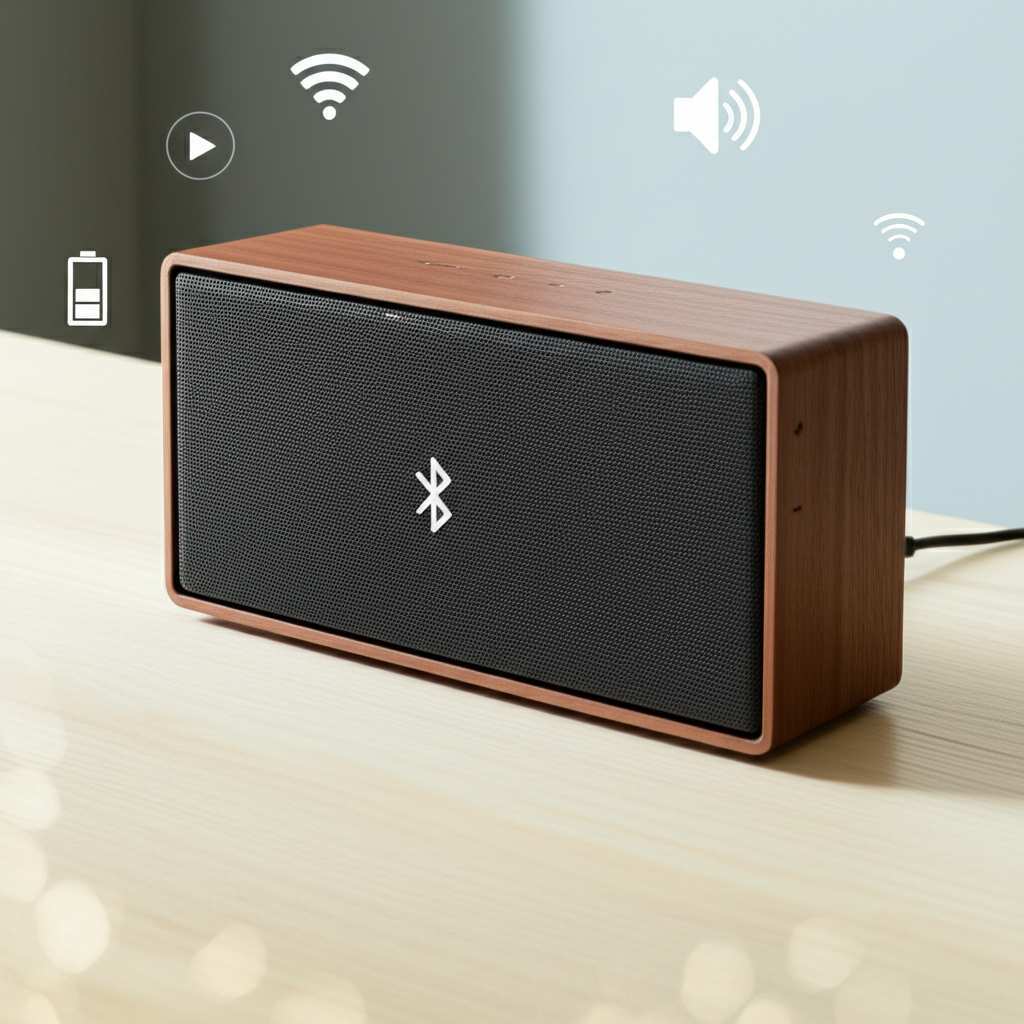
When we talk about speakers, the most important thing is how they sound. This can be tricky because everyone hears things a little differently. But there are some key things to listen for. You want a speaker that sounds good to you.
Think about the kind of music you listen to. Do you love deep bass in your hip-hop or electronic music? Or do you prefer clear highs for classical or acoustic tunes? A good speaker balances these elements well.
Understanding Speaker Power (Watts)
You’ll often see speakers listed with a wattage. This is like the speaker’s engine power. Higher wattage usually means it can get louder. For a small room, 5-10 watts might be enough. For a larger living area or if you like to party, you might want 20 watts or more.
Don’t get too hung up on just the number, though. How the speaker is designed also matters a lot for sound quality. A well-designed 10-watt speaker can sometimes sound better than a poorly designed 20-watt one.
What’s “Sound Signature” Anyway?
This is just a fancy way of saying how a speaker naturally colors the sound. Some speakers have a “warm” sound, meaning they emphasize lower tones. Others have a “bright” sound, focusing on higher frequencies. Many aim for a “flat” or “neutral” sound, trying to reproduce audio as accurately as possible.
For home use, a balanced sound that works well for various music genres is usually a safe bet. If you’re really into audiophile stuff, you might look for specific sound signatures. But for most of us, clear, full sound is the goal.
Connectivity: How Does It Talk to Your Devices?
Bluetooth is the star here, but not all Bluetooth is created equal. This is how your speaker connects wirelessly to your phone or tablet.
Bluetooth Versions
You’ll see numbers like Bluetooth 4.0, 4.2, 5.0, and even 5.1 or 5.2. Newer versions are generally better. They offer:
Better Range: You can be further away from the speaker.
Faster Pairing: Connects to your device more quickly.
More Stable Connection: Less chance of audio cutting out.
Lower Power Usage: Good for your phone’s battery.
Bluetooth 5.0 and above is pretty standard now and works great for home use.
Multi-Point Pairing
This is a super handy feature! It lets your speaker connect to two devices at once. Imagine you’re listening to music from your laptop, and your phone rings. With multi-point pairing, the speaker can switch to your phone’s call automatically. It’s a small thing that makes a big difference in daily convenience.
Auxiliary Input (Aux-in)
Some speakers still have a 3.5mm aux-in port. This is a physical jack where you can plug in a device with a cable. It’s great as a backup if Bluetooth is acting up, or if you have an older device without Bluetooth. It can also sometimes offer slightly better audio quality.
Battery Life: Freedom from the Wall Socket
One of the biggest perks of a Bluetooth speaker is its portability, and that’s thanks to its battery. For home use, you might not need it to last for days, but decent battery life is still important.
Think about how you’ll use it. Will it be mostly plugged in, or will you move it around the house a lot? If you plan to take it from your desk to the kitchen, then to the backyard, longer battery life is key.
Typical Range: Most good speakers offer anywhere from 8 to 20 hours of playtime on a single charge.
Charging Time: How long does it take to fully recharge? Some can charge in 2-3 hours, while others might take longer.
USB-C Charging: This is becoming the standard and is super convenient. It means you can likely use the same charger as your phone.
Some larger, more powerful speakers might need to be plugged in more often. If you plan to keep a speaker in one spot, like your home office or living room, a speaker that can be used while charging is perfect.
Size and Design: Does It Fit Your Space (and Style)?
Speakers come in all shapes and sizes! For home use, you have a lot of flexibility.
Compact Speakers: These are great for desks, countertops, or small shelves. They are easy to move around.
Medium-Sized Speakers: These often offer a good balance of sound quality and portability. They can fill a medium-sized room well.
Larger Speakers: If you want serious room-filling sound, a bigger speaker might be your best bet. These are less portable but can pack a serious audio punch.
Consider the aesthetics too. Do you want something sleek and modern, or something more rugged and classic? Many brands offer different colors and finishes to match your home decor.
Durability and Water Resistance: For Life’s Little Accidents
Life happens, especially in a busy home! Spills, splashes, or maybe even a little tumble can happen. If you plan to use your speaker near the kitchen sink, in the bathroom, or even outdoors, water resistance is a big plus.
You’ll see ratings like IPX4, IPX5, IPX7, and so on. Here’s a quick rundown:
IPX4: Resists splashes from any direction. Good for kitchen or bathroom use.
IPX5: Can handle low-pressure water jets. Okay for poolside.
* IPX7: Can be submerged in water up to 1 meter for 30 minutes. Great for truly wet environments.
Even if you plan to keep it indoors, a little ruggedness can add peace of mind.
Extra Features: The Cherry on Top
Beyond the core features, there are some cool extras that can make a Bluetooth speaker even better for home use.
Stereo Pairing (True Wireless Stereo – TWS)
This is awesome if you want a more immersive sound experience. It lets you connect two identical speakers together to create a true stereo sound. One speaker handles the left channel, and the other handles the right. It can really make music and movies feel more dynamic.
Built-in Microphone and Speakerphone Functionality
Many Bluetooth speakers have a built-in microphone. This means you can use them to take phone calls. The sound will come through the speaker, and your voice will be picked up by the mic. It’s handy if your phone is across the room.
Voice Assistant Integration (Google Assistant, Alexa, Siri)
Some speakers can connect to your smart home assistants. This allows you to control music playback, ask questions, or manage smart home devices using just your voice. It’s like having a mini smart speaker that also plays great audio.
App Control
Certain brands offer companion apps for their speakers. These apps can let you adjust equalizer settings, update the speaker’s firmware, manage TWS pairing, or even customize LED lighting.
Comparing Key Features for Home Use
Let’s look at how different features might stack up for common home scenarios.
| Feature | Essential for Casual Listening | Great for Movie Buffs | Ideal for Music Lovers | Useful for Parties |
| :——————- | :—————————– | :——————– | :——————— | :—————– |
| Sound Quality | Good, balanced | Rich bass, clear mids | Detailed highs, good bass | Loud, clear |
| Bluetooth Version| 4.2+ | 5.0+ | 5.0+ | 5.0+ |
| Battery Life | 8+ hours | 10+ hours | 12+ hours | 15+ hours (or can plug in) |
| Power (Watts) | 5-15W | 15-30W | 15-30W | 30W+ |
| Stereo Pairing | Nice to have | Yes | Yes | Yes |
| Water Resistance | IPX4+ | IPX4+ | IPX4+ | IPX4+ |
| Aux-in Port | Yes | Yes | Yes | Yes |
This table helps you see which features are more important depending on how you plan to use your speaker. For example, if you love feeling the bass in your favorite tracks, prioritize good bass response and potentially higher wattage. If you just want background music while you work, a smaller, more compact speaker with decent battery life might be perfect.
Real-World Examples: Picking the Right Speaker for You
Let’s say you spend most of your time in your home office. You like listening to podcasts and some chill-out music while you work. A compact speaker like the [Example Compact Speaker Name] might be ideal. It’s easy to place on your desk, sounds clear for voices, and has enough battery life to last your workday.
Now, imagine you’re a movie fan. You want to feel immersed in the action. You might look for a slightly larger speaker, or even two smaller speakers that can be paired for stereo sound. A speaker with good bass and clear dialogue reproduction, like the [Example Home Theater Speaker Name], would be a great choice. You could even connect it via aux-in if it has that option, for a super stable connection.
If you’re someone who loves hosting friends and family, you’ll want a speaker that can get loud and keep the party going. Look for something with higher wattage and extended battery life. The [Example Party Speaker Name] is known for its powerful sound and ability to keep the music playing for hours. Some even have cool LED lights to add to the ambiance!
Where to Find More Info
If you want to dive deeper into specific speaker reviews and comparisons, trusted tech sites are your best friend. Websites like CNET and TechRadar offer in-depth reviews of the latest Bluetooth speakers, often breaking down sound quality, features, and value for money. They are great resources for making an informed decision.
Frequently Asked Questions (FAQs)
Q1: Do I really need a high-wattage speaker for home use?
Not necessarily! Wattage helps with loudness. For small rooms or quiet listening, a lower-wattage speaker can be perfect. If you like loud music or have a big living space, then higher wattage is more important.
Q2: Is Bluetooth 5.0 much better than older versions?
Yes, it is! Bluetooth 5.0 offers better range, faster speeds, and a more stable connection. It also uses less power, which is great for your devices. It’s definitely worth looking for speakers with Bluetooth 5.0 or newer.
Q3: What does “waterproof” really mean for a speaker?
Waterproof ratings like IPX7 mean the speaker can be submerged in water for a short time. For home use, “water-resistant” (like IPX4 or IPX5) is often enough. This means it can handle splashes, which is great for kitchens or bathrooms.
Q4: Can I connect my speaker to my TV?
Many modern TVs have Bluetooth built-in, so you can connect wirelessly. If your TV doesn’t have Bluetooth, you might be able to use a small Bluetooth transmitter that plugs into your TV’s headphone jack. Always check your TV’s manual!
Q5: What’s the difference between a portable Bluetooth speaker and a smart speaker?
A portable Bluetooth speaker is primarily for playing audio wirelessly from your devices. A smart speaker (like Amazon Echo or Google Home) has a built-in voice assistant and can do much more, like answer questions or control smart home devices. Some Bluetooth speakers have smart assistant features built-in, blurring the lines!
Q6: How important is battery life for a speaker I’ll mostly use at home?
It’s still pretty important! Even at home, you’ll likely move it around. Good battery life means you don’t have to worry about it dying mid-song or while you’re watching a movie. Plus, it makes it easy to take outside or to another room without hunting for a charger.
Q7: What is “stereo pairing” and do I need it?
Stereo pairing lets you connect two identical speakers to create a true left and right stereo sound. It makes music and movies sound much more immersive and spacious. If you want the best possible sound experience at home, it’s a feature worth considering!
Your Sound Journey Starts Now!
So there you have it! Choosing a Bluetooth speaker for your home doesn’t have to be a headache. By focusing on what matters most to you – whether it’s booming bass, crystal-clear podcasts, or just a speaker that looks good in your living room – you can find a fantastic match.
Remember to think about sound quality, how you’ll connect it, how long you need the battery to last, and any cool extra features that will make your listening experience even better. Don’t be afraid to read reviews and compare options.
Now go forth and explore the world of amazing sound! With the right speaker, your music, movies, and calls will sound better than ever. Happy listening!

