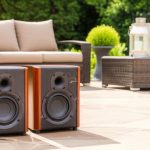
A 1000-watt sound box can be incredibly loud for a home party, but whether it’s “too loud” depends on several factors. You need to consider room size, the type of speaker, the nature of your party, and, most importantly, your guests’ comfort. Proper setup and volume control are key to a great audio experience without causing discomfort.
## Is 1000 Watt Sound Box Too Loud for Home Party? Let’s Break It Down!
So, you’re planning a home party, and the question on your mind is, “Is a 1000-watt sound box too loud for my humble abode?” It’s a fantastic question, and the answer isn’t a simple yes or no. Wattage is a big number, and it certainly implies power, but power alone doesn’t dictate the perfect party atmosphere. Think of it like this: having a sports car doesn’t automatically mean you’re going to speed everywhere. You have control over how you use that power.
We want your party to be a hit, with music that moves everyone and creates a fantastic vibe. But we also don’t want your guests wincing, covering their ears, or leaving early because the sound is overpowering. Let’s dive deep into what 1000 watts actually means in the context of a home party and how to use that power wisely. Understanding the nuances will help you create that amazing sound experience you’re aiming for, without any unwanted headaches.
## Understanding Wattage: More Than Just a Big Number
When we talk about a 1000-watt sound box, we’re referring to its power output capability. This number indicates how much electrical power the amplifier within the speaker can deliver to the speaker drivers (the actual parts that produce sound). Generally, a higher wattage means the speaker has the potential to produce sound at a higher volume and with more dynamic range. This can translate to deeper bass and clearer highs, especially at higher volumes.
### RMS vs. Peak Wattage: What’s the Real Deal?
It’s important to distinguish between different types of wattage ratings. You’ll often see two numbers: RMS (Root Mean Square) and Peak. RMS wattage is a more realistic measure of continuous power output the speaker can handle for extended periods. Peak wattage is the maximum power the speaker can produce in very short bursts. For a 1000-watt sound box, we’re usually talking about RMS wattage for a robust system. If a manufacturer only advertises peak wattage, they might be trying to make their product sound more powerful than it is. Always look for the RMS rating for a true understanding of its consistent power.
### How Does 1000 Watts Translate to Actual Sound Levels?
While 1000 watts is a significant amount of power, it doesn’t directly tell you the decibel (dB) level the speaker will produce. Decibels are the true measure of loudness. Several factors influence how loud a 1000-watt speaker will sound:
* **Speaker Efficiency:** This is a crucial factor. Some speakers are more efficient at converting electrical power into sound energy than others. A highly efficient speaker might sound much louder than a less efficient one, even if they have the same wattage.
* **Speaker Design:** The quality of the drivers, the enclosure design, and the overall acoustics of the speaker system play a huge role in how sound is projected and perceived.
* **Room Acoustics:** The way sound bounces off walls, furniture, and ceilings in your home significantly impacts loudness and clarity. A small, carpeted room will absorb more sound than a large, open space with hard surfaces.
- Wattage is a measure of power, not directly loudness: While higher wattage generally means more potential volume, other factors like speaker efficiency significantly impact the actual sound output.
- Room size matters most: A 1000-watt system in a small apartment will likely be deafening, while it might be suitable for a large, open-plan living area or basement.
- Guest comfort is paramount: The goal of party music is to enhance the atmosphere, not to cause ear fatigue or discomfort. Always be mindful of your guests’ reactions.
- Speaker design and type are crucial: A well-designed 1000-watt system with good bass management and clarity will sound better and be perceived differently than a poorly designed one, even at the same volume.
- Consider the type of party: Background music for a dinner party requires a different volume level than energetic tunes for a dance party.
- Always start low and increase gradually: This allows you to find the sweet spot for your specific environment and guests.
📑 Table of Contents
The Impact of Room Size and Layout
This is arguably the most critical factor when deciding if 1000 watts is too much. A 1000-watt sound box in a cramped studio apartment is a recipe for sonic disaster. Your neighbors will likely hear it, and your guests will probably be shouting at each other to have a conversation.
Small Spaces vs. Large Spaces
* **Small Rooms (e.g., bedrooms, small living rooms, apartments):** For these areas, even a 100-watt speaker can often be sufficient. A 1000-watt system would be grossly overpowered and would likely distort or sound harsh long before you reach enjoyable listening levels. You’d be using only a fraction of its potential, and the sound quality might suffer due to over-amplification in a confined space.
* **Medium Rooms (e.g., standard living rooms, dining rooms):** In a moderately sized room, a 1000-watt system *could* be appropriate, but you’ll need to be very careful with volume control. You’ll have more headroom for dynamic music, but you still need to ensure it doesn’t become overwhelming.
* **Large Rooms & Open Spaces (e.g., large basements, open-plan living areas, homes with high ceilings):** This is where a 1000-watt sound box starts to make more sense. These larger areas can absorb more sound, and you’ll need more power to fill the space with rich, clear audio without the sound feeling concentrated or distorted. If you’re hosting a dance party in a spacious area, 1000 watts might be just what you need to get everyone moving. For those looking to fill a large outdoor space, checking out guides on [What Is The Best Bluetooth Speaker For Outdoor Party Amazing Sound](https://afftechy.com/what-is-the-best-bluetooth-speaker-for-outdoor-party-amazing-sound) might offer some perspective.
Acoustic Considerations
Beyond sheer size, think about the acoustics of your space. Hard surfaces like bare walls, tile floors, and large windows reflect sound, making a room sound “live” and potentially louder. Soft furnishings like carpets, curtains, and upholstered furniture absorb sound, creating a more “dead” or intimate acoustic environment. If your party space has many hard surfaces, a 1000-watt system will sound louder and can become fatiguing faster than in a space with more sound-absorbing materials.
Guest Comfort and Party Vibe

Visual guide about Is 1000 Watt Sound Box Too Loud for Home Party
Image source: balisoundlighting.com
The ultimate goal of party music is to enhance the atmosphere, not to be a sonic assault. What one person considers the perfect party volume, another might find unbearable.
Finding the Sweet Spot
For most home parties, especially those where conversation is a significant part of the social interaction, you want music that is present but not dominant. This usually falls somewhere between 70-85 dB. A 1000-watt system can easily produce sound levels far exceeding this, so careful management is key.
* **Background Music:** If the party is more of a relaxed get-together, like a dinner party or a casual mingling event, you’ll want the music to be at a level where people can easily talk over it without raising their voices. This is often in the 60-70 dB range. A 1000-watt system is almost certainly overkill for this purpose unless it’s in a very large space and turned down very low.
* **Energetic Dancing:** If you’re aiming for a dance party where the music is the main focus, you can certainly crank it up. However, even then, you need to consider how long people will be exposed to those higher volumes. Sustained exposure to sound above 85 dB can lead to hearing damage. You might want the music to peak at around 90-95 dB for dancing, but then have periods of slightly lower volume. A 1000-watt speaker can achieve these levels, but again, the room size and speaker efficiency will play a big role in how it feels. For scenarios where sheer loudness is the goal for a large gathering, understanding [What Wattage Bluetooth Speaker Is Ideal Astonishing Party Sound](https://afftechy.com/what-wattage-bluetooth-speaker-is-ideal-astonishing-party-sound) can be helpful.
Reading the Room
Pay attention to your guests. If people are leaning in to talk, have their hands over their ears, or seem agitated, the volume is likely too high. If the music is so loud that you can’t even hear yourself think, it’s definitely too loud for a comfortable social gathering. It’s better to err on the side of caution and start at a lower volume. You can always increase it if the vibe calls for it.
Speaker Placement and Type

Visual guide about Is 1000 Watt Sound Box Too Loud for Home Party
Image source: 5.imimg.com
Where you put your speakers and what kind of speakers they are also makes a huge difference. A single, large 1000-watt sound box will behave differently than a system with multiple speakers totaling 1000 watts.
Single Unit vs. Multi-Speaker Systems
* **All-in-One Sound Box:** Many modern “sound boxes” are all-in-one units, often a large speaker with built-in amplification. A single 1000-watt unit can project sound in a specific direction. For even sound distribution, you might need to position it strategically.
* **System Approach:** If your 1000 watts is spread across multiple speakers (e.g., two 500-watt speakers, or a subwoofer and satellite speakers), you have more flexibility. You can place speakers in different parts of the room to achieve more even coverage and a better stereo image. This is often preferable for larger or more complex room layouts. For instance, if you’re looking for advice on arranging speakers for background music at an office party, checking out [What Is The Best Speaker Setup For Background Music In Office Party Awesome](https://afftechy.com/what-is-the-best-speaker-setup-for-background-music-in-office-party-awesome) could provide useful strategies.
Strategic Placement
* **Avoid Corners:** Placing speakers in corners can artificially boost bass frequencies, making the sound boomy and overwhelming.
* **Height Matters:** Elevating speakers slightly can help them project sound over furniture and people, leading to clearer audio.
* **Stereo Imaging:** If you have stereo speakers, position them at ear level and equidistant from your main listening area for the best sound experience.
* **Bass Considerations:** For powerful bass, consider placing your subwoofer away from walls and corners initially, and then experiment with its position to find the best balance without overpowering the mids and highs.
When 1000 Watts Might Be Just Right

Visual guide about Is 1000 Watt Sound Box Too Loud for Home Party
Image source: 5.imimg.com
Despite the warnings, there are scenarios where a 1000-watt sound box is a fantastic choice for a home party.
Specific Party Types
* **Dance Parties in Large Spaces:** If your party is all about dancing and you have a large, open area (like a finished basement or a spacious living room with minimal furniture), 1000 watts can provide the necessary power and headroom to keep the energy high.
* **Outdoor Gatherings (with caveats):** For a backyard party with a good-sized yard, a 1000-watt system can be excellent for providing music that reaches everyone. However, always be mindful of your neighbors. For truly outdoor adventures, you might explore guides on [Which Bluetooth Speaker Is Loud Enough Ultimate Beach Party Sound](https://afftechy.com/which-bluetooth-speaker-is-loud-enough-ultimate-beach-party-sound) for ideas on robust outdoor sound.
* **Home “Club” Experience:** If you love deep bass and a powerful, immersive sound, and your home layout allows for it without disturbing others, a 1000-watt system can deliver that club-like experience.
Future-Proofing and Headroom
Sometimes, people opt for higher wattage systems for “headroom.” This means the speaker can play quieter music more cleanly because it’s not working as hard. It allows for more dynamic range, meaning the difference between the quietest and loudest parts of the music is more pronounced. A 1000-watt system will likely never be pushed to its limit in a typical home setting, ensuring clean sound even at moderate volumes and providing plenty of power for those occasional moments when you want to really turn it up. This is similar to how understanding [how many watts is enough for a bluetooth speaker at home](https://afftechy.com/how-many-watts-is-enough-for-a-bluetooth-speaker-at-home-amazing-power) can help you avoid buying too little power.
Tips for Managing a Powerful Sound System
The key to using a 1000-watt sound box effectively is control and awareness.
Start Low, Go Slow
Always plug in your sound system and set the volume on your music source (phone, laptop, etc.) to its lowest setting. Then, gradually increase the volume on the sound box itself. Listen carefully as you increase the volume. Stop when the music is at a comfortable level for conversation, and then make small adjustments as needed.
Use Your Source Volume
Don’t rely solely on the speaker’s volume knob. Adjusting the volume on your music player (phone, tablet, computer) can provide finer control and often yields better sound quality. If your source device’s output is very low, the speaker might have to work harder to achieve a certain volume, potentially leading to distortion.
Consider EQ Settings
Most sound systems and music players have equalizer (EQ) settings. If the bass is too boomy, you can slightly reduce the bass frequencies. If the treble is too harsh, you can dial that back. This allows you to fine-tune the sound to your room and your preferences.
Test Before the Party
Do a sound check before your guests arrive. Play some of your party playlist at different volume levels. This will help you determine the sweet spot for your space and give you confidence in managing the system throughout the event. For a truly optimized audio experience, understanding [how to set up bluetooth speaker for best sound at home](https://afftechy.com/how-to-set-up-bluetooth-speaker-for-best-sound-at-home-amazing-tips) is a good idea.
Conclusion: Power with Responsibility
So, is a 1000-watt sound box too loud for a home party? It *can* be, but it doesn’t have to be. The 1000-watt figure represents potential power, not a guaranteed level of ear-splitting noise. When used thoughtfully, in the right environment, and with careful control, a 1000-watt sound box can elevate your home party from good to unforgettable.
The most important factors are your room size, the type of party you’re hosting, and your guests’ comfort. Always prioritize clear, enjoyable sound over sheer volume. Start with lower levels, gradually increase, and pay attention to the atmosphere. With a bit of care and common sense, you can harness the power of a 1000-watt sound box to create the perfect audio backdrop for a fantastic celebration.
Frequently Asked Questions
Is 1000 watts enough for an outdoor party?
For an outdoor party in a large backyard, 1000 watts can be quite effective for filling the space with sound. However, remember that sound dissipates faster outdoors, and you’ll need to consider your neighbors and local noise ordinances.
Will a 1000-watt speaker damage my hearing at a home party?
Potentially, yes. If the volume is consistently high (above 85 dB) for extended periods, it can lead to hearing damage. Always monitor the volume and take breaks from loud music, especially during long parties.
Can a small apartment handle 1000 watts of sound?
Absolutely not. A small apartment is far too confined for a 1000-watt system. You would likely cause discomfort for your neighbors and yourself, and the sound quality would suffer dramatically.
What’s the difference between a 1000-watt “sound box” and a professional PA system?
While both can be powerful, a “sound box” might refer to a consumer-grade all-in-one unit, whereas a professional PA system is designed for larger venues and typically offers more control and clarity at very high volumes.
How can I test if my 1000-watt speaker is too loud for my space?
Start with the volume very low and gradually increase it while being able to hold a normal conversation. If you can no longer talk comfortably without shouting, the volume is too high for that context.
Does wattage affect bass quality?
Higher wattage generally allows for more powerful bass reproduction, especially in larger speakers. However, the quality of the bass also depends heavily on the speaker’s design, the driver size, and the enclosure.