Protect your camping tunes from rain and dew! Keep your Bluetooth speaker dry with simple, effective tips to ensure your music never stops, even in damp conditions.
Hey there, fellow tech lovers! So, you’re heading out on an adventure, right? Camping is awesome. You’ve got your tent, your snacks, and of course, your trusty Bluetooth speaker to set the mood with some great tunes. But then you start thinking… what about the weather? Rain, morning dew, maybe even an accidental splash near the campfire – moisture and electronics don’t always play nice. It can feel a bit daunting, trying to keep your gadgets safe when you’re out in the wild.
I totally get it. When I first started taking my tech camping, I worried about everything. Will my phone survive a drizzle? Can my speaker handle a damp tent? It’s easy to get lost in all the technical jargon and worry about damaging your gear. But don’t sweat it! That’s exactly why I’m here. We’re going to break down exactly how to keep your Bluetooth speaker happy and dry on your next camping trip, without making it feel like rocket science.
We’ll cover everything from choosing the right speaker to simple, everyday tricks that make a big difference. Think of me as your friendly tech buddy, walking you through it all. Ready to make sure your soundtrack stays uninterrupted? Let’s dive in!
Why Keeping Your Speaker Dry Matters When Camping
Imagine this: you’ve found the perfect spot, the campfire is crackling, and you’re ready to blast your favorite camping playlist. But wait, it’s started to sprinkle. Or maybe you wake up to a very dewy morning. If your Bluetooth speaker isn’t protected, those little water droplets could sneak into the ports or speakers themselves. This can cause all sorts of problems, from crackly sound to complete failure.
Water can corrode internal components and short-circuit the electronics. Even a little bit of moisture can cause damage over time. Keeping your speaker dry isn’t just about avoiding immediate disaster; it’s about making sure your speaker lasts for many adventures to come. It’s like giving your speaker a little raincoat for the wilderness!
Choosing the Right Speaker for the Outdoors
Before we even talk about protection, let’s chat about picking a speaker that’s already built for adventure. Some speakers are just tougher than others. You’ll often see terms like “IP rating” on speaker descriptions. This is super important for outdoor gear.
An IP rating tells you how well a device is protected against dust and water. It usually looks something like “IPX7” or “IP67”. The first number is for dust, and the second is for water. For camping, you’ll want a high number for water protection.
Understanding IP Ratings: What Do They Mean?
Let’s break down those IP ratings so you know exactly what you’re looking for. It sounds technical, but it’s really straightforward once you know the numbers.
- IPX4: Protected against splashes from any direction. Good for light rain.
- IPX5: Protected against water jets from any direction. Can handle heavier rain.
- IPX6: Protected against powerful water jets. Think strong rain or hose spray.
- IPX7: Can be submerged in water up to 1 meter for 30 minutes. This is great for accidental drops in puddles or really wet conditions.
- IPX8: Can be submerged in water deeper than 1 meter. For serious water lovers!
For camping, I’d aim for at least an IPX5, but an IPX7 is even better. It gives you a lot more peace of mind when the weather turns. Brands like JBL, Ultimate Ears (UE), and Sony often make fantastic rugged, water-resistant speakers perfect for outdoor use.
Rugged vs. Standard Speakers for Camping
Think of it like this: a standard speaker is like a nice house slipper. It’s comfy for indoors, but you wouldn’t wear it on a muddy hike. A rugged speaker, on the other hand, is like a sturdy hiking boot. It’s designed to handle bumps, drops, and yes, moisture.
Rugged speakers often have a rubberized coating, reinforced corners, and sealed ports. This makes them much more resilient to the elements and accidental drops. While you can protect any speaker, starting with one designed for the outdoors gives you a huge advantage.
Essential Tips to Protect Your Bluetooth Speaker from Moisture
Okay, so you’ve got a speaker, maybe it’s super rugged, maybe it’s just your favorite one. Here are the best ways to keep it safe from rain, dew, and anything else the campsite throws at it.
1. Invest in a Waterproof Case or Bag
This is probably the easiest and most effective step. A dedicated waterproof case or dry bag is your speaker’s best friend in wet conditions.
- Dry Bags: These are often made of durable, waterproof material and seal with a roll-top closure. You can fit your speaker inside, roll the top down a few times, and clip it shut. Even if the bag gets soaked, your speaker stays dry inside.
- Waterproof Cases: Some speakers come with their own rugged cases, or you can buy universal ones. These offer more rigid protection against bumps as well as water.
Make sure the bag or case is large enough for your speaker and any charging cables you might need. It’s a small investment that can save you a lot of hassle and money in the long run.
2. Utilize Ziploc Bags (The Budget-Friendly Hack)
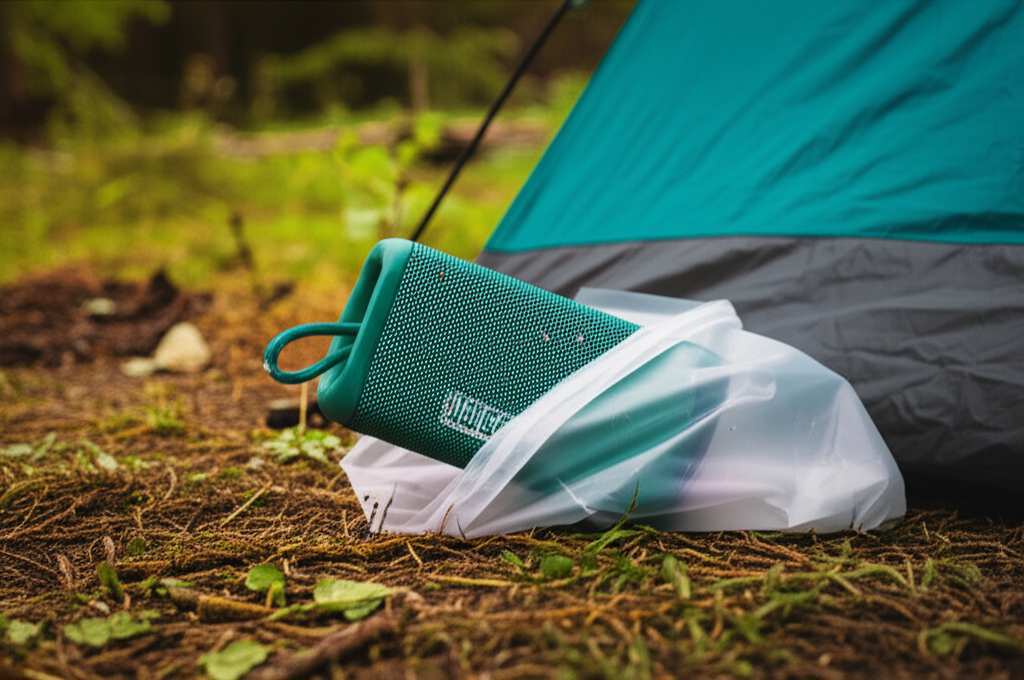
If you don’t have a fancy dry bag, a heavy-duty Ziploc bag can be a lifesaver! For smaller speakers, a large freezer Ziploc bag works wonders.
Simply place your speaker inside the bag and seal it tightly, pushing out as much air as possible. For extra protection, you can double-bag it. This is a fantastic temporary solution or a great backup if your main waterproof gear fails.
Just be mindful that Ziploc bags aren’t as durable as proper dry bags, so handle them with care. They’re best for light rain or keeping dew off your speaker overnight.
3. Keep it Off the Ground
Camping often means setting up on damp ground, especially in the morning. Placing your speaker directly on wet grass or dirt is a recipe for disaster.
- Use a small stool or folding chair: Keep your speaker elevated and away from puddles or dew-covered surfaces.
- Place it on a picnic table: If you have one, a picnic table offers a dry, stable surface.
- Use a waterproof mat or tarp: Laying down a small waterproof mat can create a dry zone for your speaker and other gear.
Think about where water tends to collect when it rains or when dew forms. Keeping your speaker above those spots is key. It’s a simple habit that makes a big difference.
4. Store it in Your Tent (Smartly!)
Your tent can be a great safe haven for your speaker when you’re not using it, but there are a few things to consider.
- Keep it away from the tent walls: Especially if your tent walls are getting damp from condensation or rain. Condensation can drip inside.
- Use a dry bag or Ziploc inside the tent: Even inside the tent, it’s best to keep your speaker in its protective bag. This guards against any stray moisture from inside the tent or condensation.
- Ensure good ventilation: If possible, maintain some airflow in your tent to reduce condensation buildup, which can settle on everything.
A dry, enclosed space is much better than leaving it exposed. Just make sure that “dry” space is truly dry!
5. Protect Charging Ports and Cables
The charging port is a common entry point for moisture. Even if your speaker is water-resistant, the ports themselves might not be fully sealed when not in use.
- Use port covers: Many rugged speakers come with rubber or silicone port covers. Make sure these are firmly in place when you’re not charging.
- Dry thoroughly before charging: If your speaker gets wet, make sure all ports and connections are completely dry before plugging in a charger.
- Store cables separately and dry: Keep your charging cables in a separate dry bag or Ziploc. Damp cables can also cause issues.
It’s the little details like these that really protect your electronics. Think of port covers as tiny little shields!
6. Be Mindful of Humidity and Condensation
Camping, especially in humid areas or near water bodies, means dealing with moisture in the air. Condensation is a silent threat.
When temperatures change, moisture in the air can condense on cooler surfaces – like your speaker. This is why keeping it in a sealed bag, even when stored in the tent, is so important. It creates a barrier against that ambient moisture.
A fun fact: condensation is the same reason your cold drink gets “sweaty” on a hot day! That moisture comes from the air around it.
7. Consider a Speaker with a Built-in Handle or Carabiner Clip
This might seem like a minor detail, but it’s surprisingly helpful for moisture protection.
A speaker with a sturdy handle or a carabiner clip allows you to hang it up. You can hang it from a tree branch (under a natural overhang, if possible!), a tent pole, or a campsite hook. This keeps it elevated and away from ground moisture, and also protects it from accidental spills from above.
Just make sure whatever you hang it from is secure and won’t let the speaker fall, especially if it’s raining heavily!
When Moisture Happens: What To Do
Accidents happen, and sometimes your speaker might get a little damp despite your best efforts. Don’t panic! Here’s how to handle it.
- Power Down Immediately: If you suspect water has gotten inside, turn the speaker off right away. This prevents short circuits.
- Dry the Exterior: Use a soft, dry cloth to wipe off as much water as possible from the outside.
- Remove Excess Water from Ports: Gently shake the speaker to let any water drain from ports. You can carefully use a cotton swab to absorb visible moisture in ports, but don’t force anything inside.
- Air Dry Thoroughly: Leave the speaker to air dry in a warm, dry place for at least 24-48 hours. Do NOT use a hairdryer or direct heat, as this can damage the components.
- Check the Manual: Some speaker manuals have specific instructions for water damage. It’s always worth a quick look.
Patience is key here. Letting it dry completely is crucial before attempting to power it on again.
Comparing Water-Resistant Speaker Features
To help you choose the right speaker, let’s look at a quick comparison of features you might find. This isn’t about specific models, but the kinds of things to look for.
| Feature | What It Means | Why It Matters for Camping |
|---|---|---|
| IP Rating (e.g., IPX7) | Protection level against dust and water. | Higher rating means better defense against rain, splashes, and submersion. Essential for outdoor use. |
| Rugged Construction | Durable materials, rubberized edges, reinforced corners. | Protects against drops and impacts, common on uneven camping terrain. |
| Floating Ability | Speaker floats if dropped in water. | Ideal if you’re camping near lakes or rivers. Prevents loss and damage. |
| Sealed Ports | Charging and auxiliary ports are covered or sealed. | Prevents water from entering the most vulnerable internal areas. |
| Long Battery Life | Speaker can play for many hours on a single charge. | Less need to charge means less exposure to potentially damp charging environments. |
When you’re looking at speakers, pay close attention to that IP rating. An IPX7 speaker, for example, can handle being dropped in a stream and still keep playing. That’s the kind of resilience you want for camping. A speaker with a long battery life is also a bonus, as it means you won’t be scrambling to find a dry spot to charge it as often.
Protecting Your Speaker from the Elements: A Quick Checklist
Here’s a handy checklist to make sure you’ve got all your bases covered before and during your camping trip.
- Choose a water-resistant speaker: Look for an IP rating of at least IPX5, preferably IPX7.
- Pack a waterproof dry bag or case: This is your primary defense.
- Bring Ziploc bags: For extra protection or smaller items.
- Consider a speaker with a handle/clip: For easy hanging and elevation.
- Pack a small, waterproof mat: To create a dry zone on the ground.
- Ensure charging ports have covers: And use them when not charging.
- Plan your speaker’s placement: Keep it elevated and away from water sources.
- Dry it immediately if it gets wet: Power off, wipe down, and air dry thoroughly.
This checklist should help you stay organized and confident about your speaker’s safety. It’s all about being prepared!
Real-World Camping Scenarios & Solutions
Let’s imagine a couple of situations you might face and how these tips help.
Scenario 1: Unexpected Downpour
You’re enjoying a beautiful sunset with music playing, and suddenly, heavy rain starts.
- Quick Action: Grab your speaker and immediately put it into its dry bag. If it’s already on a table, try to cover it with a tarp.
- Prevention: If you anticipated rain, you would have already stored it in its dry bag and kept it under shelter.
Having that dry bag ready to go makes all the difference. You can quickly seal your speaker inside and keep the music going, or at least safely store it until the rain stops.
Scenario 2: Dewy Morning Wake-Up
You wake up in your tent, and everything feels a little damp. You pull out your speaker, and there’s moisture on it.
- Quick Action: Wipe the speaker down with a dry cloth. If it was in a Ziploc bag, it should be fine. If not, put it in one now.
- Prevention: You kept your speaker in a sealed dry bag or Ziploc inside your tent overnight. You also made sure not to place it directly on the tent floor.
This is where storing it in a bag overnight really pays off. It’s like tucking your speaker into a mini, waterproof sleeping bag. For more on outdoor tech, check out this article from CNET on waterproof speakers – they have some great recommendations!
Scenario 3: Accidental Splash Near the Lake
Someone’s tossing a frisbee, it goes wide, and splashes water onto your speaker sitting nearby.
- Quick Action: If it’s an IPX7 speaker, a little splash is usually no big deal. Wipe it off. If it’s less rated, quickly get it into a protective bag.
- Prevention: You’ve kept your speaker a safe distance from the water’s edge or any high-activity areas. You’re also using a speaker that’s rated for splashes.
This highlights why knowing your speaker’s IP rating is so important. An IPX7 can handle this much better than an IPX4. Always be aware of your surroundings and how close your gear is to potential hazards.
Battery Life and Charging on the Go
Keeping your speaker charged is another aspect to consider, especially when protecting it from moisture.
Many modern Bluetooth speakers offer impressive battery life, often 10-20 hours or more on a single charge. This means you can enjoy music for a full day or even two without needing to recharge. This is great because it minimizes the need to plug in and potentially expose ports to dampness.
When you do need to charge, try to do it during the driest part of the day, perhaps midday when the sun is out. Always ensure the charging port and the cable are completely dry before connecting them. A portable power bank can be a lifesaver, but remember to keep the power bank itself protected from moisture too!
Here’s a quick look at typical battery life you might find:
| Speaker Type | Typical Battery Life (Hours) | Notes |
|---|---|---|
| Standard Portable Bluetooth Speaker | 6-12 | May vary greatly by model and volume. |
| Rugged/Waterproof Bluetooth Speaker | 10-20+ | Often designed for longer outdoor use. |
| Large Outdoor Bluetooth Speaker | 20-40+ | These are less portable but offer serious playtime. |
As you can see, rugged speakers often lead the pack in battery life, which is another reason they’re a solid choice for camping. More playtime means less worrying about charging and potential moisture exposure during the charging process.
Frequently Asked Questions (FAQ)
Q1: Can I use my regular Bluetooth speaker for camping?
A: Yes, you can! Just be extra careful to protect it from moisture using waterproof bags or cases. Speakers with higher IP ratings are naturally better suited for the outdoors.
Q2: What does “water-resistant” mean for a Bluetooth speaker?
A: Water-resistant means the speaker can handle some exposure to water without being damaged. This is usually indicated by an IP rating. It doesn’t mean it’s completely waterproof, so always check the specific rating.
Q3: How do I clean a wet Bluetooth speaker?
A: If it gets wet, turn it off immediately. Wipe it with a soft, dry cloth. Gently shake out any excess water from ports and let it air dry completely for at least 24-48 hours in a warm, dry place. Never use heat.
Q4: Is it okay to leave my speaker in a damp tent overnight?
A: It’s much safer to store your speaker in a sealed waterproof bag or Ziploc bag, even inside the tent. This protects it from condensation and any other moisture that might accumulate.
Q5: My speaker got dropped in water. Is it ruined?
A: Not necessarily! If it has a high IP rating (like IPX7 or IPX8), it might be fine. If not, power it off immediately, dry it as best you can, and let it air dry for a couple of days before trying to turn it on. Check your speaker’s manual for specific advice.
Q6: Should I buy a speaker specifically for camping?
A: If you camp often or go on adventurous trips, investing in a rugged, water-resistant speaker designed for outdoor use is a great idea. It will save you worry and likely last longer in those conditions.
Q7: How can I protect the charging cable from moisture?
A: Store your charging cable in a separate small dry bag or Ziploc. Make sure both the cable and the speaker’s port are completely dry before you plug them in to charge.
Conclusion: Keep the Beats Coming, Rain or Shine!
So there you have it! Keeping your Bluetooth speaker safe from moisture while camping doesn’t have to be a chore. By choosing the right gear, using simple protective measures like dry bags, and being mindful of where you place your speaker, you can ensure your music keeps playing through every adventure.
Remember, a little preparation goes a long way. Whether you’re rocking out by the campfire or enjoying a quiet morning with some chill tunes, a dry speaker means uninterrupted fun. Now go out there, explore, and make every moment louder and better with your perfectly protected sound system! Happy camping and happy listening!