
Don’t have a Bluetooth TV? No problem! You can still connect your favorite Bluetooth speaker with simple adapters. Get ready for awesome sound without the fuss.
Hey there, tech buddy! Ever feel like your TV is missing something? Maybe it’s that booming sound that makes movies feel like you’re at the cinema. Or perhaps it’s the clear audio that makes your favorite music playlists truly shine. We all love our gadgets, right? But sometimes, getting them to play nice together can feel like a puzzle.
You’ve got this awesome Bluetooth speaker, ready to blast some tunes or enhance your viewing. But then you look at your TV, and… no Bluetooth symbol anywhere! It can be a bit of a bummer, I know. It feels like you’re so close to upgrading your sound experience, but there’s a little roadblock.
But guess what? This isn’t a dead end! Technology is pretty clever, and there are super simple ways to get your non-Bluetooth TV and your Bluetooth speaker talking. You don’t need to be a tech wizard to make it happen.
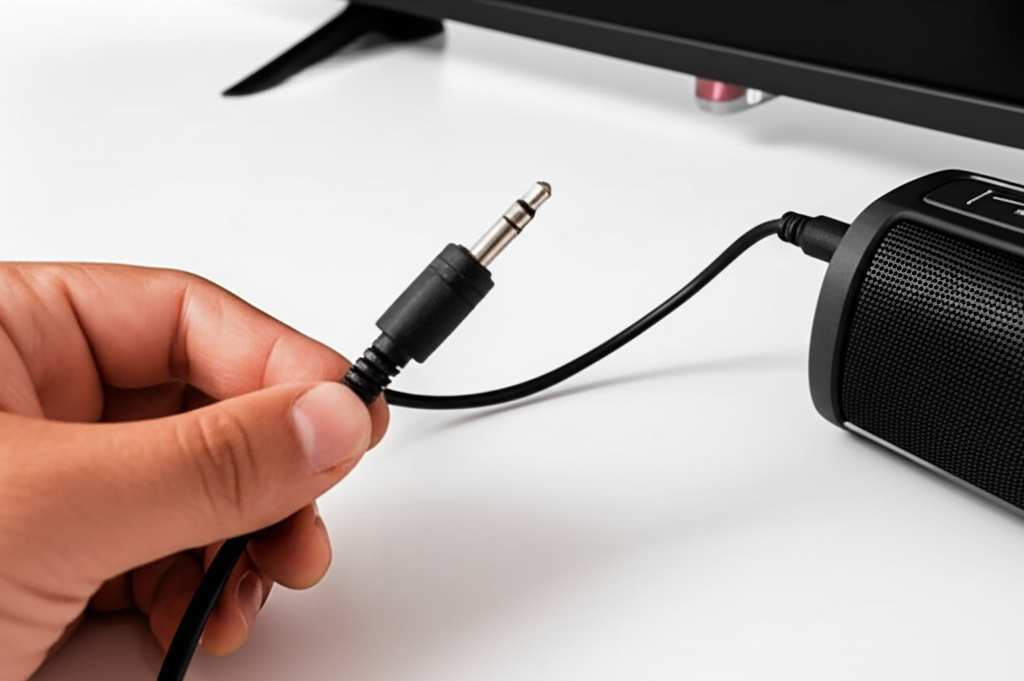
Think of me as your friendly guide on this audio adventure. We’re going to break down exactly how to bridge that gap. It’s easier than you think, and soon you’ll be enjoying fantastic sound. Let’s make this happen, step by step!
Why Upgrading Your TV Sound is a Game-Changer
There’s something magical about great sound. It pulls you into the story of a movie. It makes music feel alive, making you want to tap your feet. Even video games feel more immersive when the sounds are rich and clear. Your TV’s built-in speakers are okay, but they often lack that deep bass or crisp detail.
That’s where a good Bluetooth speaker comes in handy. They’re designed to deliver superior audio quality. Plus, they’re portable, so you can move them around your room for the best listening spot. Imagine watching a nature documentary with birds chirping all around you, or feeling the rumble of an action scene right in your living room.
But what if your TV doesn’t have that fancy Bluetooth feature built-in? It’s a common situation, especially with older or more basic TV models. It can feel a little frustrating when you see all these cool wireless speakers and think they’re out of reach.
The good news is, this problem has a simple solution. We’re going to explore how to connect your Bluetooth speaker to a TV that doesn’t have Bluetooth. It involves a little gadget, but it’s super easy to use.
Understanding the Magic: How Will This Even Work?
So, how do we get a Bluetooth speaker to connect to a TV that doesn’t speak Bluetooth? The secret is a small, clever device called a Bluetooth transmitter. Think of it as a translator. Your TV speaks one language (audio signals through cables), and your Bluetooth speaker speaks another (wireless Bluetooth signals). The transmitter is the one who understands both and helps them communicate.
This transmitter plugs into your TV’s audio output. Then, it takes that audio signal and beams it wirelessly, just like a Bluetooth speaker expects. Your speaker then picks up this signal and plays the sound. It’s like giving your old TV a brand-new superpower: wireless audio!
It’s a really neat piece of tech that can bring your older devices into the modern wireless world. You don’t need to replace your TV to get better sound. This little adapter does all the heavy lifting for you.
Choosing Your Audio Bridge: The Bluetooth Transmitter
When you’re looking for a Bluetooth transmitter, you’ll find a few different types. Most of them work in a similar way, but there are a couple of things to keep an eye on.
Types of Audio Outputs to Look For
Your TV will have different ports for audio. The most common ones you’ll use with a Bluetooth transmitter are:
3.5mm Auxiliary (AUX) Port: This is the small, round headphone jack. Many TVs and older audio devices have this. It’s usually the easiest to use.
RCA Ports: These are typically red and white (or sometimes red, white, and yellow for video). If your TV has these, you might need an adapter cable to go from RCA to 3.5mm, which most transmitters use.
Optical (Toslink) Port: This is a high-quality digital audio port. If your TV has this, it can offer the best sound. You’ll need a transmitter that supports optical input, and usually a special optical cable.
Most transmitters will come with the necessary cables for the most common connections, like a 3.5mm AUX cable. Some might include RCA adapters too. Always check what’s in the box!
Key Features to Consider
Beyond the connection types, here are a few other things to think about:
Bluetooth Version: Newer versions (like 5.0 or higher) offer better range, faster connections, and more stable audio.
Low Latency: This is super important for watching videos. Latency is a delay between the video and the audio. “Low latency” transmitters help keep the sound in sync with what’s happening on screen. Look for transmitters that specifically mention “low latency” or aptX Low Latency support.
Multi-Point Connection: Some transmitters can connect to two Bluetooth devices at once. This means you could connect two pairs of headphones or two speakers simultaneously. Handy if you and a friend want to listen!
Battery vs. Plug-in: Some transmitters have batteries and are portable. Others need to be plugged into a power outlet or a USB port on your TV. For TV use, a plug-in model is usually best so you don’t have to worry about charging.
Let’s Get This Connected: Step-by-Step Guide
Alright, ready to make some magic happen? Connecting your Bluetooth speaker to your non-Bluetooth TV is a straightforward process. We’ll go through it together.
What You’ll Need
Before we start, gather these items:
Your TV
Your Bluetooth speaker
A Bluetooth audio transmitter (make sure it has the right audio inputs for your TV!)
The cables that came with your transmitter (usually a 3.5mm AUX cable)
A power source for the transmitter (if it’s not battery-powered)
Step 1: Power Up Your Transmitter
First things first, get your Bluetooth transmitter powered up. If it plugs into a wall outlet, do that. If it uses a USB port, plug it into a spare USB port on your TV or a USB power adapter. Many TVs have USB ports that provide power, which is super convenient.
Step 2: Connect the Transmitter to Your TV
Now, let’s link the transmitter to your TV’s audio output.
Using a 3.5mm AUX Port: Find the headphone jack on your TV. It’s usually a small, round port labeled with a headphone icon or “AUDIO OUT.” Plug one end of the 3.5mm AUX cable into this port. Plug the other end into the “AUDIO IN” or “AUX IN” port on your Bluetooth transmitter.
Using RCA Ports: If your TV only has red and white RCA ports for audio output, you’ll need an RCA to 3.5mm adapter cable. Plug the red and white ends into the corresponding “AUDIO OUT” ports on your TV, and plug the 3.5mm end into the transmitter’s “AUDIO IN” port.
Using an Optical Port: If you’re using an optical connection for the best quality, plug one end of the optical cable into your TV’s “DIGITAL AUDIO OUT (OPTICAL)” port. Plug the other end into the optical input on your transmitter. You might need to go into your TV’s audio settings and select “Optical Out” as the audio output.
Make sure the cable is securely plugged into both devices. A loose connection can cause sound problems.
Step 3: Put Your Bluetooth Speaker in Pairing Mode
Turn on your Bluetooth speaker. Now, you need to put it into pairing mode. This is how it tells other devices, like our transmitter, “I’m ready to connect!”
Each speaker is a little different, but usually, there’s a dedicated Bluetooth button. You might need to press and hold it for a few seconds until a light starts blinking or you hear a specific sound. Check your speaker’s manual if you’re unsure how to do this.
Step 4: Pair the Transmitter and Speaker
Your Bluetooth transmitter should now be searching for nearby Bluetooth devices. Since your speaker is in pairing mode, the transmitter should find it.
Many transmitters will automatically pair with the first device it finds. Others might have a button you need to press to initiate pairing. Once they connect, you’ll usually see a solid light on the transmitter, and your speaker might make a confirmation sound or its blinking light will turn solid.
This part can sometimes take a minute or two. Be patient!
Step 5: Configure Your TV’s Audio Settings (If Needed)
This is an important step that many people miss. You need to tell your TV to send its sound through the port you’ve connected the transmitter to.
Go to your TV’s Settings menu.
Look for Audio or Sound settings.
Find the Audio Output or Sound Output option.
Select the type of output you used: Headphone, External Speakers, Optical, or Line Out.
If you connected to the headphone jack, selecting “Headphone” or “External Speakers” usually works. If you used optical, choose “Optical.” Your TV manual will be your best friend here if you get stuck.
Step 6: Test the Sound!
Turn up the volume on both your TV and your Bluetooth speaker. Play something on your TV – a show, a movie, or some music. You should now hear the audio coming from your Bluetooth speaker!
If you don’t hear anything, double-check all your connections. Make sure the transmitter is powered on and paired. Go back to your TV’s audio settings to ensure you’ve selected the correct output. Sometimes, you might need to unplug and replug the transmitter to reset the connection.
Troubleshooting Common Hiccups
Even with the best plans, sometimes tech throws a curveball. Here are a few common issues and how to fix them:
No Sound: Double-check all cable connections. Ensure the transmitter is powered on and paired. Verify your TV’s audio output settings are correct. Make sure the volume is up on both the TV and the speaker.
Audio Lag (Lip Sync Issues): This is usually caused by latency. If your transmitter supports “low latency” or aptX LL, make sure your speaker also supports it (though most modern speakers do). If not, try a different transmitter known for low latency. Sometimes, simply restarting both devices can help.
Speaker Won’t Pair: Make sure your speaker is in pairing mode and that the transmitter is also in discovery mode. Try turning both devices off and on again. If the transmitter has been paired to other devices before, you might need to clear its memory or put it into a fresh pairing search.
* Intermittent Connection: This could be due to distance or interference. Try moving the transmitter and speaker closer together. Ensure there are no major obstructions between them. Other wireless devices can sometimes cause interference.
A Quick Look at Transmitter Options
To give you an idea, here are a couple of popular types of Bluetooth transmitters you might find. Prices can vary, but they’re generally quite affordable!
| Feature | Model A (Budget-Friendly) | Model B (Mid-Range) | Model C (Premium) |
| :—————- | :———————— | :———————— | :———————— |
| Bluetooth Version | 4.2 | 5.0 | 5.2 |
| Audio Inputs | 3.5mm AUX | 3.5mm AUX, Optical (Toslink) | 3.5mm AUX, Optical (Toslink), RCA |
| Latency | Standard | Low Latency (aptX LL) | Ultra Low Latency (aptX Adaptive) |
| Power | USB Powered | USB Powered | USB Powered |
| Multi-Point | No | Yes (2 devices) | Yes (2 devices) |
| Typical Price | $15 – $25 | $30 – $50 | $50 – $80 |
This table just gives you a general idea. Always check the specific model you’re looking at for its exact features! For watching TV, I’d lean towards Model B or C for that low latency feature. It really makes a difference in keeping things smooth.
Frequently Asked Questions (FAQs)
Got more questions? That’s totally normal when trying out new tech! Here are some common ones.
Q1: Can I use any Bluetooth speaker with any TV using a transmitter?
A1: Yes, generally! As long as your TV has an audio output (like a headphone jack or optical out) and your speaker is a standard Bluetooth speaker, you should be able to connect them using a transmitter. The transmitter acts as the go-between.
Q2: What is “latency” and why is it important for TV audio?
A2: Latency is a delay. In audio, it’s the time it takes for sound to travel from its source to your ears. For TV, if there’s high latency, the sound will be slightly out of sync with what you see on screen. This is really distracting! Low latency transmitters minimize this delay, so the sound and picture stay matched.
Q3: Do I need to buy a special Bluetooth speaker for this?
A3: Nope! You can use any standard Bluetooth speaker you already own or plan to buy. The “special” part is the Bluetooth transmitter you plug into your TV. The speaker just needs to be able to pair with Bluetooth devices.
Q4: Can I connect my TV to my soundbar and my Bluetooth speaker at the same time?
A4: This depends on your transmitter. Some transmitters support “multi-point” connections, meaning they can connect to two devices at once. If you have a multi-point transmitter and your soundbar also has Bluetooth, you might be able to connect both. However, it’s often easier to connect your soundbar directly to the TV and use the transmitter for the Bluetooth speaker.
Q5: How far away can my Bluetooth speaker be from the TV?
A5: This varies by transmitter and speaker. Most Bluetooth connections work well within about 30 feet (10 meters) in an open space. Obstacles like walls or furniture can reduce this range. Newer Bluetooth versions (like 5.0 and up) tend to have better range and stability.
Q6: Will connecting a transmitter affect my TV’s picture quality?
A6: No, absolutely not! The Bluetooth transmitter only handles the audio signal. It doesn’t interfere with the video signal your TV is sending to the screen. You’ll only notice an improvement in sound!
Q7: Where can I find more reliable tech reviews?
A7: For in-depth reviews and comparisons of audio gear, sites like CNET and TechRadar are fantastic resources. They test a lot of products and give you honest feedback to help you choose.
Enjoying Your Upgraded Sound Experience
See? Connecting your Bluetooth speaker to a TV without Bluetooth is totally achievable and much simpler than you might have thought. That little Bluetooth transmitter is like a secret weapon for boosting your home entertainment.
You’ve learned what a transmitter is, how it works, and the key things to look for when picking one. We’ve walked through the setup process step-by-step, so you know exactly what to do. Plus, we’ve covered some common issues, just in case.
Now you can transform your viewing and listening experience. Imagine the crisp dialogue during your favorite shows or the rich soundscapes in movies, all delivered wirelessly to your preferred speaker. It’s all about making your tech work for you, and this is a fantastic way to do it without breaking the bank or needing a degree in engineering.
So go ahead, grab that transmitter, hook it up, and get ready to enjoy your audio in a whole new way. Now go enjoy amazing sound and make every moment louder and better!


