Yes, many portable Bluetooth speakers can survive drops! While some are surprisingly tough, others are more delicate. It really depends on their build quality and specific ruggedness features.
Hey there, tech adventurer! Max Donovan here from AffTechy.com, your go-to buddy for all things gadgety. We all love our portable Bluetooth speakers, right? They bring the party wherever we go, making hikes, beach days, or even just chilling in the backyard way more fun. But let’s be honest, life happens! Sometimes a speaker takes an unexpected tumble.
It’s a question many of us have wondered: can these sound-making buddies actually handle a fall? It can be super confusing to figure out what makes one speaker tougher than another. Are they all built like tiny tanks, or are some more fragile than they look? Well, you’ve come to the right place!
I’m here to spill the beans and give you the real lowdown on just how much rough handling your portable Bluetooth speakers can take. We’ll break down what makes them tough, what to look out for, and how to keep your music playing, no matter what. Let’s dive in and uncover the shocking truth!
Why Do We Worry About Speaker Drops Anyway?
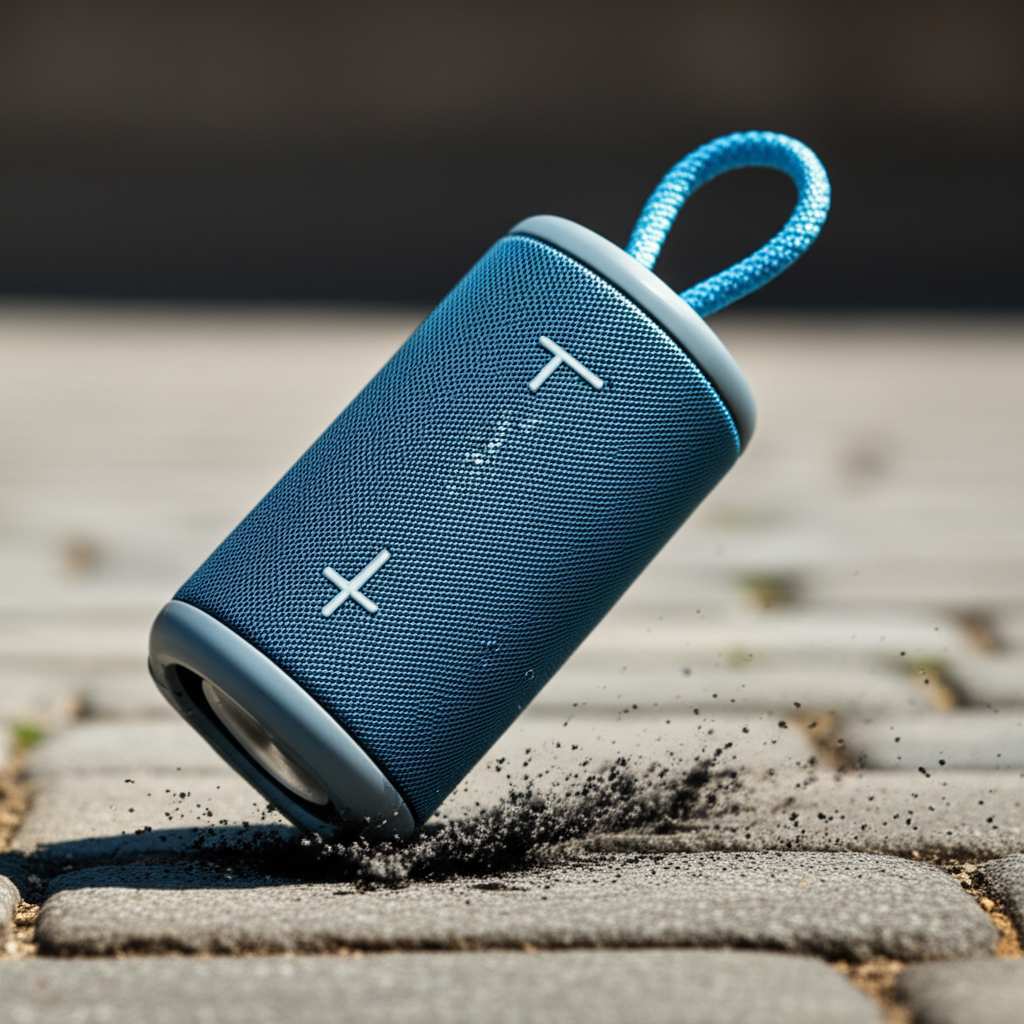
Think about it: these speakers are our trusty sidekicks for outdoor adventures. We take them camping, to the park, or even just to the garage while we’re working on a project. They’re meant to be portable, which means they’re often on the move. And when things are on the move, accidents can happen. A slip of the hand, a trip on a trail, or even a playful pet can send your speaker flying.
The last thing anyone wants is for their favorite speaker to go silent after a little tumble. It’s not just about the money you spent; it’s about losing that instant access to your favorite tunes or podcasts. So, understanding their durability is key to keeping the good times rolling.
What Makes a Speaker Tough?
Not all speakers are created equal when it comes to surviving drops. Several design choices and materials go into making a speaker more resilient. It’s like building a little fortress for your sound!
Manufacturers often use robust materials. Think hard plastics, rubberized coatings, and reinforced corners. These elements act like shock absorbers, helping to cushion the impact if the speaker hits the ground. Some speakers are even designed with a floating chassis, meaning the internal components are suspended within the speaker’s body, further protecting them from jolts.
Waterproofing and dustproofing also play a role. While not directly about drops, speakers built to withstand the elements are often also built with a sturdier overall construction. This means they are more likely to have better seals and more durable casings.
Understanding Ruggedness Ratings: IP and MIL-STD
You’ve probably seen these letters and numbers on speaker boxes or spec sheets. They’re super important for figuring out how tough a speaker really is. Let’s break them down so you know what you’re looking at.
The Famous IP Rating
IP stands for “Ingress Protection.” It’s an international standard that tells you how well a device is protected against solids (like dust) and liquids (like water). The rating usually looks like IP followed by two numbers. The first number is for solids, and the second is for liquids.
For example, an IPX4 rating means it’s protected against splashing water from any direction, but not against dust. An IP67 rating, on the other hand, is much more impressive. The ‘6’ means it’s totally dustproof. The ‘7’ means it can be submerged in water up to 1 meter for about 30 minutes. That’s pretty tough!
When it comes to drops, a higher IP rating, especially one with good dust protection (the first digit), often means the speaker has a more sealed and robust casing. This can help prevent dust and water from getting inside, which is also a common problem after a fall.
The Military Standard: MIL-STD-810G
Some ultra-rugged speakers might also boast a MIL-STD-810G rating. This is a U.S. military standard that tests equipment for durability in various harsh conditions. While it’s not specifically for consumer electronics, manufacturers who aim for this standard are building devices that can withstand a lot.
MIL-STD-810G covers things like extreme temperatures, humidity, shock, and yes, even drops. If a speaker claims this rating, it usually means it has been tested to survive drops from a certain height onto hard surfaces. This is a strong indicator of its drop resistance.
Can My Current Speaker Survive a Drop? A Quick Check
So, how do you know if the speaker you already own, or one you’re eyeing, can handle a little oopsie? Here’s how to get a clue:
- Check the Specs: Always look for an IP rating. If it’s IPX4 or higher, it’s likely got some splash protection. If you see IP67 or IP68, you’re in good shape for water and dust. For drop survival, look for specific mentions of “drop-tested” or a MIL-STD rating.
- Examine the Build: Does it have rubberized edges? Are there visible grilles that look protected? A speaker that feels heavy and solid, with no obvious weak points, is usually a better bet.
- Read Reviews: See what other users say! People often share their real-world experiences, including whether their speaker survived an accidental drop. Tech review sites are also great for this.
Drop Testing: What Happens to a Speaker?
When a speaker takes a fall, a few things can go wrong. Understanding these potential issues helps us appreciate the features that protect against them.
The most obvious risk is physical damage. The casing might crack, dent, or scratch. The internal components, like the speaker drivers or the battery, could also be affected. A hard impact can dislodge these parts or damage their delicate structures, leading to distorted sound or even a complete failure.
Another issue is the electronics. The circuit boards inside are sensitive. A sudden jolt can cause solder points to break or components to become loose. This could lead to the speaker not turning on, not connecting via Bluetooth, or producing static noises.
Let’s Talk About Materials and Design
The materials used and the way a speaker is designed are huge factors in its ability to survive drops. It’s like choosing the right armor for a knight!
Rubber and Silicone: Many rugged speakers have a soft, grippy outer layer made of rubber or silicone. This material is fantastic at absorbing shock. It deforms on impact, dissipating the energy that could otherwise damage the speaker’s inner workings.
Hard Plastics: Beneath the soft outer layer, you’ll often find a strong plastic shell. This provides structural integrity. It needs to be tough enough to resist cracking or breaking, even after being hit.
Internal Suspension: Some high-end speakers use internal suspension systems. This means the speaker cones and other delicate parts are mounted in a way that isolates them from the outer casing. Think of it like a car’s suspension system for your audio components!
Grille Protection: The speaker grille, which protects the actual speaker cones, is another vulnerable area. Robust designs often feature metal grilles or grilles made from a tough, perforated plastic that can withstand impacts without deforming.
How Manufacturers Test for Durability
When companies claim their speakers are tough, they often back it up with testing. This isn’t just a casual drop in the office! They follow specific standards to ensure their products can handle real-world abuse.
Drop Tests: This is the most direct test. Speakers are dropped from specific heights (e.g., 1 meter, 1.5 meters) onto different surfaces like concrete or wood. They test for both functional damage and cosmetic damage.
Vibration Tests: Speakers are subjected to vibrations that simulate being in a moving vehicle or exposed to loud music. This checks if internal components can withstand prolonged shaking.
Impact Tests: Beyond simple drops, some tests involve dropping objects onto the speaker or simulating impacts from various angles.
These tests help manufacturers identify weak points and improve their designs. So, when you see a speaker rated for ruggedness, it means it has likely gone through some serious trials.
Examples of Tough Speakers
Some brands have built their reputation on making super durable speakers. If you’re in the market for something that can take a beating, these are good places to start looking.
For instance, brands like JBL often have models with excellent IP ratings and robust, grippy designs. The JBL Charge or Flip series are known for being water-resistant and fairly tough. Then there are brands like Ultimate Ears (UE), whose speakers are specifically designed for adventure. Their BOOM and MEGABOOM lines are famous for being waterproof, dustproof, and often advertised as drop-proof from certain heights.
Even brands not solely focused on ruggedness are improving. Many modern portable speakers incorporate better shock absorption and durable materials as standard. It’s becoming a key feature for many consumers.
Can Portable Bluetooth Speakers Survive Drops? A Comparison Table
Let’s look at how different types of speakers might fare. This isn’t an exact science, as individual models vary, but it gives you a general idea.
| Speaker Type | Typical Drop Survival Likelihood | Common Features | Best For |
|---|---|---|---|
| Ultra-Rugged Portable Speaker | High (often advertised drop-proof from 1m+) | IP67/IP68, MIL-STD-810G, rubberized exterior, reinforced corners | Extreme outdoor activities, construction sites, adventurous lifestyles |
| Standard Water-Resistant Speaker | Medium (can likely survive minor bumps/short falls) | IPX4/IPX5/IPX7, often durable plastic or fabric exterior | Casual outdoor use, beach trips, poolside listening |
| Indoor/Lifestyle Speaker | Low (designed for gentle handling) | May have some basic scratch resistance, but no specific drop protection | Home use, office, occasional travel in protective cases |
This table shows that if you’re planning on taking your speaker on rough adventures, investing in an “Ultra-Rugged” model is your best bet. They’re built from the ground up to handle more than just a light tap. A standard water-resistant speaker might be okay for occasional accidents, but it’s not their main purpose. And if your speaker is more of a homebody, a drop could be a big problem.
What to Do If Your Speaker Does Fall
Accidents happen to the best of us. If your speaker takes a tumble, don’t panic! Here’s a quick guide on what to do next:
- Inspect for Obvious Damage: First, give it a good look. Are there any cracks in the casing? Does it look like anything is loose or broken?
- Test Basic Functions: Try turning it on. Does it power up? Can you connect to Bluetooth? Does it make any strange noises?
- Check Sound Quality: Play some music. Is the sound clear? Are there any rattles or distortions?
- Check Charging: See if it still charges properly. This can indicate if the charging port or internal battery connections are still intact.
If it seems to be working fine after a minor fall, you might have gotten lucky! If there’s damage or it stops working, it’s time to consult the manufacturer’s warranty or consider repair options. Many rugged speakers are designed so that even if the outer shell gets damaged, the internal electronics are still protected.
Tips for Keeping Your Speaker Safe
While some speakers are tough, it’s always best to prevent falls when you can. Here are some easy tips:
- Use a Carrying Strap or Handle: Many speakers come with these, or you can add one. It gives you a much better grip.
- Invest in a Protective Case: For travel or particularly rough outings, a padded case offers excellent protection.
- Be Mindful of Your Surroundings: When setting up your speaker, place it on a stable surface. Avoid edges of tables, cliffs, or anywhere it could easily be knocked off.
- Keep it Away from Pets and Kids: Little ones (human and furry) can be unpredictable! Keep speakers out of their immediate play areas if they tend to be rough.
- Use a Carabiner Clip: For hiking or camping, clip your speaker to your backpack. Just make sure it’s securely attached!
Frequently Asked Questions (FAQ)
Let’s tackle some common questions beginners might have about speaker durability.
Q1: Will my basic, non-waterproof speaker survive a drop?
Probably not very well. Basic speakers are usually not built with shock-absorbing materials or reinforced casings. A drop onto a hard surface could easily damage the speaker drivers or electronics.
Q2: What does “drop-proof” actually mean for a speaker?
“Drop-proof” usually means the manufacturer has tested the speaker to survive drops from a specific height (like 1 meter or 3 feet) onto a hard surface without breaking or stopping working. Always check the exact specifications, as it’s not a universal standard.
Q3: Is it okay if my speaker gets a little scratched after a fall?
A few scratches are usually just cosmetic and don’t affect the sound. As long as the speaker still works perfectly and there’s no internal damage, you’re good to go!
Q4: Can I take my speaker into the shower?
Only if it has a high IP rating, like IPX7 or IP67. This means it’s waterproof enough to handle submersion in water. A speaker with only splash resistance (like IPX4) is not safe for the shower.
Q5: How do I know if my speaker is truly rugged?
Look for specific features like rubberized exteriors, reinforced corners, high IP ratings (IP67/IP68), and ideally, a MIL-STD-810G rating. Reading user reviews that mention drop survival is also helpful.
Q6: What if my speaker stops working after a drop?
First, check if it’s still under warranty. If it is, contact the manufacturer. If not, you might need to look into professional repair services, though sometimes the cost of repair can be close to buying a new, more durable speaker.
The Shocking Truth: Speakers and Survival
So, can portable Bluetooth speakers survive drops? The answer is a resounding… it depends! Many modern portable speakers, especially those marketed as rugged or outdoor-ready, are designed to handle a surprising amount of abuse. They feature robust materials, smart internal design, and protective ratings like IP67 and MIL-STD-810G.
These speakers are built to be your companions on adventures, meaning they’ve been tested to withstand more than just a gentle placement on a coffee table. They can often survive those unexpected tumbles and bumps that are part of life. However, if you have a more basic, indoor-focused speaker, a drop can be its downfall. It’s all about knowing what your speaker is built for.
Understanding the specs, looking at the build quality, and reading reviews can give you a clear picture. For peace of mind on your next adventure, consider a speaker that’s specifically designed for durability. For more insights into choosing the right tech for your lifestyle, check out resources like CNET.
Now go forth and enjoy your music, knowing you’re better equipped to choose and care for your sound companions. May your beats be loud and your speakers stay steady!