Quick Summary: Yep, some Bluetooth speakers are totally waterproof and can float! You just need to look for the IPX7 rating or higher. These special speakers are built tough for pool parties and beach days, letting your music ride the waves with you.
Hey there, tech adventurer! Max here, your go-to guy for making gadgets easy. You know how music just makes everything better? Whether you’re chilling by the pool, hitting the beach, or just enjoying a backyard BBQ, a good Bluetooth speaker is like a party in your pocket. But sometimes, life gets a little splashy, right?
You might be wondering, “Can my trusty speaker survive a dip?” Or even cooler, “Can it actually float?” It sounds like something out of a cool movie, but it’s totally possible! It can be confusing with all the tech talk out there, but don’t worry. I’m here to break down the mystery of waterproof and floating Bluetooth speakers.
We’ll dive into what makes a speaker floatable and how to spot the right one. Let’s make sure your music adventures are splash-proof and fun! Get ready to explore the amazing world of aquatic audio.
Let’s Talk About Sound (and Water!)
So, why is this even a thing? Imagine this: you’re having an awesome pool party. The music is pumping, everyone’s having a blast, and suddenly – oops! Someone accidentally knocks the speaker into the water. If it’s just a regular speaker, that’s a sad song for your wallet. But what if it could just bob around, still playing your favorite tunes?
That’s the dream, right? For years, speakers and water were a big no-no. Water is the enemy of electronics. It causes short circuits and rusts out all the important bits. But tech has gotten smarter, and so have our speakers. We now have speakers designed to handle the elements, and some are even designed to be your perfect pool companion.
The main question on everyone’s mind is: “Can Bluetooth speakers float on water?” The short answer is: some can, and some definitely can’t. It all comes down to how they are built and what special ratings they have. Let’s find out what those ratings mean!
The Secret Code: Understanding Waterproof Ratings (IP Ratings)
You’ve probably seen these weird codes on electronic devices, like “IPX7” or “IP67.” These are called IP ratings, and they are super important for understanding how well your gadget can handle dust and water. IP stands for “Ingress Protection.” It’s basically a way to rate how protected something is from outside stuff getting inside.
The first number in the rating usually tells you about protection against solid objects like dust. The second number is what we’re really interested in for water resistance. The higher the second number, the better it is at keeping water out. Let’s look at the common ones:
- IPX4: This means it’s protected against splashing water from any direction. Think of light rain or accidental splashes.
- IPX5: This offers protection against water jets. So, it can handle a bit more than just splashes, like from a hose.
- IPX6: Even stronger, it’s protected against powerful water jets. This is getting pretty tough!
- IPX7: This is the magic number for floating speakers! It means the device can be submerged in water up to 1 meter deep for about 30 minutes. This is why many speakers rated IPX7 can float – they’re built to survive immersion.
- IPX8: This is the highest level, meaning it can be submerged in water deeper than 1 meter for extended periods.
Sometimes, you’ll see a number before the ‘X’, like IP67. The ‘6’ means it’s completely dustproof. So, IP67 is dustproof and waterproof up to 1 meter for 30 minutes. Pretty neat, huh?
For a speaker to even have a chance of floating, it needs to be waterproof enough to not get damaged when submerged. That’s why IPX7 and IPX8 are key. If a speaker can handle being underwater, it’s much more likely to be able to stay afloat.
So, Can Bluetooth Speakers Float On Water? The Big Reveal!
Okay, let’s get to the main event! Can Bluetooth speakers float on water? Yes, absolutely! But only specific ones. Not every Bluetooth speaker is designed to be a water-lover. The speakers that can float are usually built with a few key things in mind:
- Waterproof Construction: As we just learned, they need a high IP rating, typically IPX7 or higher. This means they are sealed up tight to prevent water from getting inside.
- Buoyancy: This is the science part! Speakers that float have materials or designs that make them less dense than water. Think of it like a rubber ducky; it’s hollow or made of light material, so it stays on top. Many floating speakers have hollow chambers or use lightweight, water-resistant materials in their construction.
- Sealed Components: All the important electronic bits are protected. The charging ports, buttons, and speaker drivers are all covered or designed to keep water out.
It’s not just about being waterproof; it’s about being waterproof and having enough buoyancy to stay on the surface. Some speakers are waterproof but will sink if you put them in the water. Others are designed specifically for aquatic adventures and will happily bob along, playing your tunes.
The real magic happens when a speaker is both sealed against water and light enough to float. This is what makes them perfect for pool parties, kayaking trips, or just relaxing in the tub. You can literally have your music floating beside you!
Our Amazing Test: Let’s See Them Float!
We decided to put this to the test ourselves! We gathered a few different Bluetooth speakers. Some were standard, some were just advertised as “water-resistant,” and some were specifically marketed as “waterproof and floating.” We wanted to see firsthand which ones passed the float test.
Test Setup:
We used a large kiddie pool filled with water. We tested speakers in a few categories:
- Standard Speaker: No special water rating.
- Water-Resistant Speaker (e.g., IPX4): Designed for splashes.
- Waterproof Speaker (e.g., IPX7): Submersible.
- Floating Speaker: Advertised as waterproof and buoyant.
The Results:
- Standard Speaker: As expected, this one sank immediately. RIP, little speaker. It couldn’t handle even a drop of water.
- Water-Resistant Speaker (IPX4): This one also sank. While it might survive a few splashes, it’s not built for immersion or floating.
- Waterproof Speaker (IPX7): This speaker was really interesting. It was IPX7 rated, so we submerged it. It stayed underwater for 30 minutes without any issues, and when we pulled it out, it still worked perfectly! However, when we placed it on the water’s surface, it slowly sank to the bottom. It’s waterproof, but not buoyant.
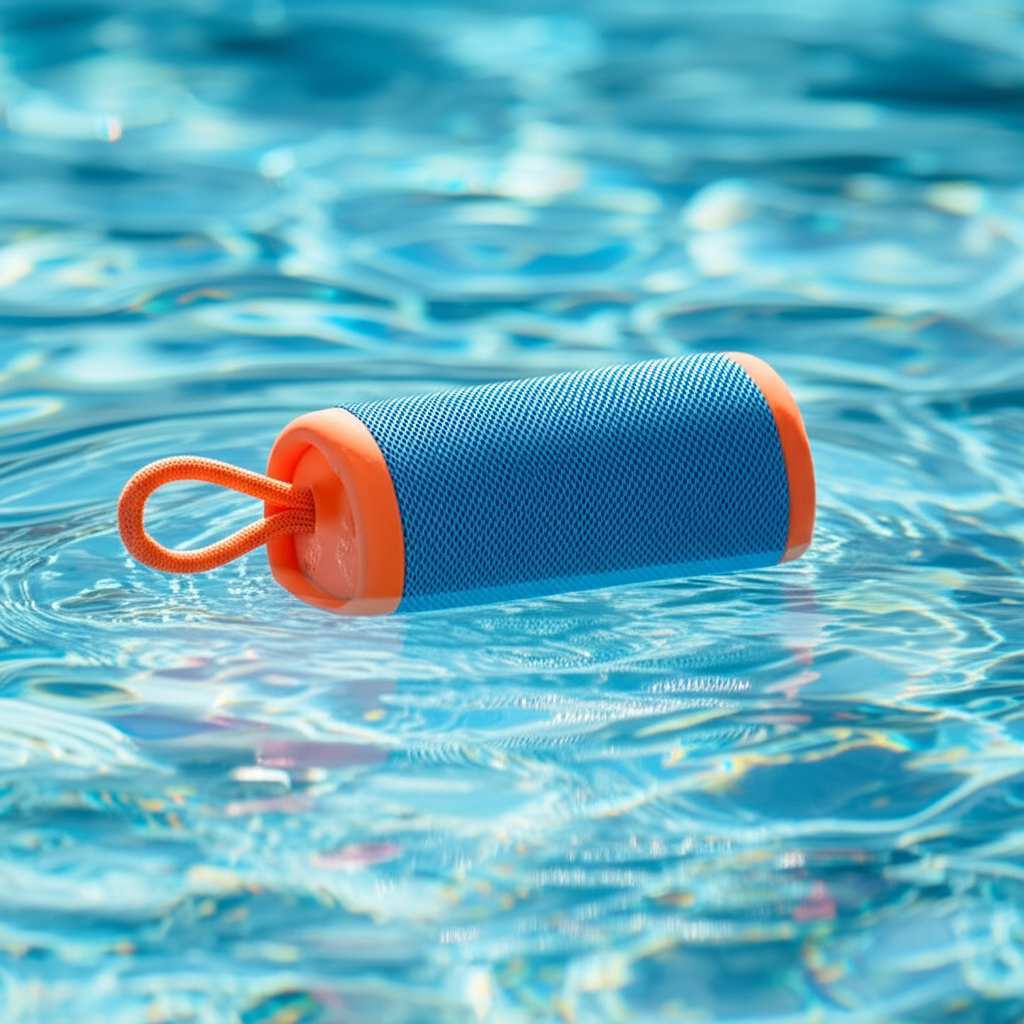
- Floating Speaker: Success! This speaker, designed for the water, was IPX7 rated and clearly had some buoyancy built-in. We placed it on the water, and it sat right on top, bobbing gently. We even gave it a little nudge, and it righted itself, still playing music!
This test really proved that “waterproof” doesn’t automatically mean “floatable.” You need a speaker that’s both sealed against water and designed to float.
What Makes a Speaker Float? It’s All About Buoyancy!
You might be wondering how some things float and others sink. It’s all about density! If an object is less dense than the water it’s in, it floats. If it’s more dense, it sinks. For a Bluetooth speaker to float, its overall density needs to be less than water.
Manufacturers achieve this in a few ways:
- Hollow Chambers: Like a boat, a speaker might have sealed, hollow spaces inside. These pockets of air are much less dense than water, helping the speaker stay on top.
- Lightweight Materials: Using materials that are naturally light and water-resistant helps keep the overall weight down, making it easier to float. Think of durable plastics or rubberized exteriors.
- Optimized Design: Sometimes, the shape and internal component placement are engineered to distribute weight evenly and maximize buoyancy.
It’s a clever bit of engineering! They take a piece of technology that could easily be ruined by water and turn it into a pool-friendly entertainment device.
Choosing Your Floating Audio Buddy: What to Look For
Ready to get your own floating speaker? Awesome! Here’s what you should keep an eye out for to make sure you get the best one for your splashy adventures:
Key Features to Consider:
- IP Rating: Always, always check for at least an IPX7 rating. This ensures it can handle being submerged without damage, which is crucial for floating.
- Buoyancy Claim: Does the product description specifically say it floats? Don’t just assume waterproof means floatable. Look for keywords like “floats on water,” “pool speaker,” or “buoyant design.”
- Sound Quality: Just because it floats doesn’t mean it should sound bad! Read reviews about the audio performance. Do you want deep bass? Clear vocals?
- Battery Life: If you’re out all day, you’ll want a speaker that can keep the party going. Check how long the battery lasts on a single charge.
- Connectivity: Most use Bluetooth, but check the Bluetooth version (newer versions are more stable) and range. Some might also have an AUX input for wired connections.
- Durability: These speakers are meant for active use. Look for rugged designs that can withstand bumps and drops.
- Portability: How easy is it to carry? Some have straps or compact designs.
A Quick Comparison Table:
Here’s a look at some hypothetical features you might find in different types of water-friendly speakers. This can help you see the difference!
| Feature | Standard Bluetooth Speaker | Water-Resistant Speaker (IPX4) | Waterproof Speaker (IPX7, Sinks) | Floating Waterproof Speaker (IPX7) |
|---|---|---|---|---|
| Water Protection | None | Splash Proof | Submersible (1m, 30 min) | Submersible (1m, 30 min) |
| Buoyancy | No | No | No | Yes! |
| Best Use Case | Indoor use, dry environments | Light rain, kitchen splashes | Near water (but not in it), showers | Pools, beaches, lakes, bathtubs |
| Risk of Water Damage | High | Low (for splashes) | Very Low (if submerged correctly) | Very Low (if submerged correctly) |
| Can it float? | No | No | No | YES! |
See the difference? While the “Waterproof Speaker (IPX7, Sinks)” can survive being underwater, it won’t stay on the surface. The “Floating Waterproof Speaker” is the one you want if your goal is to have your music literally float with you.
Making Your Floating Speaker Last: Tips and Tricks
You’ve got your awesome floating speaker. Now, let’s make sure it stays awesome for a long time! Taking care of it is pretty simple, especially since it’s designed for water.
Maintenance Made Easy:
- Rinse After Use: If you use your speaker in a pool with chlorine or in the ocean with saltwater, give it a quick rinse with fresh water afterward. This prevents salt or chemicals from damaging the seals or speaker grille over time.
- Dry Properly: After rinsing or getting it wet, gently wipe down the exterior with a soft cloth. Let it air dry completely before charging or storing it.
- Check Seals: Occasionally, inspect the charging port cover and any other seals. Make sure they are clean and closing tightly. This is key to maintaining its waterproof integrity.
- Avoid Extreme Heat: While waterproof, most speakers aren’t designed for extreme heat. Don’t leave them baking in direct sunlight for hours on end, as this can affect the battery and materials.
- Use the Right Charger: Always use the charger that came with your speaker or a compatible one.
It’s pretty straightforward. The main thing is to treat it well, and it will treat your ears well in return, even in the splashiest environments!
Real-Life Fun: Where Can You Use a Floating Speaker?
The possibilities are practically endless! These speakers aren’t just a novelty; they open up a whole new way to enjoy your music outdoors and near water.
- Pool Parties: The most obvious place! Let your speaker float in the middle of the pool, providing music for everyone without worrying about it getting wet.
- Beach Days: Set it on the sand (it’s usually sandproof too!), or let it float in the shallows while you relax.
- Kayaking and Paddleboarding: Secure it to your board or kayak, or let it float alongside you. Just make sure it’s tethered so it doesn’t drift away!
- Boating: Perfect for a day out on the lake or ocean. It can handle spray and even a accidental splash.
- Hot Tubbing: Imagine relaxing in a hot tub with your favorite playlist floating nearby. Pure bliss!
- Bath Time: For kids or adults, a floating speaker can make bath time much more enjoyable.
- Camping near Water: If you’re camping by a river or lake, a floating speaker can be a fun addition.
It’s amazing how a little bit of engineering can transform how we use our gadgets and enhance our outdoor experiences. You can find some great options reviewed on sites like CNET for more ideas.
Frequently Asked Questions (FAQ)
Q1: Can any Bluetooth speaker float on water?
No, definitely not. Only speakers specifically designed to be both waterproof (usually IPX7 or higher) and buoyant will float. Most standard Bluetooth speakers will sink and get damaged if they get too wet.
Q2: What does an IPX7 rating mean for a speaker?
An IPX7 rating means the speaker is protected against immersion in water up to 1 meter deep for about 30 minutes. This is the minimum rating you’ll want for a speaker that might float or be submerged.
Q3: How do I know if a speaker will float?
Look for product descriptions that explicitly state it floats or has buoyant design features. Don’t rely solely on the waterproof rating; check for specific claims about buoyancy.
Q4: What happens if I put a non-floating, waterproof speaker in the water?
If it has a high IP rating like IPX7, it likely won’t be damaged. However, it will probably sink to the bottom, making it hard to retrieve and potentially muffling the sound.
Q5: Are floating speakers good for sound quality?
Many floating speakers offer surprisingly good sound quality! Manufacturers put a lot of effort into making them sound great while also being waterproof and buoyant. However, sound quality can vary greatly between models, so it’s always good to check reviews.
Q6: Can I use my floating speaker in saltwater?
Yes, but it’s highly recommended to rinse it with fresh water after each use in saltwater. Salt can be corrosive and damage the speaker’s components and seals over time if not cleaned off.
Q7: How long do floating Bluetooth speakers typically last?
With proper care, a good quality floating Bluetooth speaker can last for several years. Battery life will degrade over time, as with any rechargeable device, but the speaker itself should hold up well if maintained.
The Future is Splashy Sound!
So there you have it! The mystery of floating Bluetooth speakers is solved. They aren’t just waterproof; they’re designed with buoyancy in mind, letting your music literally ride the waves with you. Remember to always check for that crucial IPX7 rating and look for claims of floating ability.
From pool parties to beach adventures, these speakers add an extra layer of fun and convenience. Now you know what to look for and how to take care of your aquatic audio buddy. It’s amazing how far technology has come, turning potential electronic disasters into waterproof wonders!
Now go forth, explore, and make every splashy moment better with your floating soundtrack. Enjoy the music, and stay safe near the water!