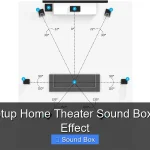
Wondering if a Dolby Atmos sound box is worth your hard-earned cash? This guide breaks down the immersive technology, its benefits, and what to consider before buying. Discover if the enhanced audio experience justifies the cost for your home entertainment setup.
Have you ever watched a movie and felt like the action was happening all around you, even above you? That’s the magic of Dolby Atmos, and the promise of a Dolby Atmos sound box is to bring that incredible, three-dimensional audio experience right into your living room. But with all the buzz around immersive sound, you might be asking yourself: is a Dolby Atmos sound box really worth it? Let’s dive in and figure this out together.
Imagine listening to rain falling in a movie. With traditional surround sound, you might hear it from the sides. With Dolby Atmos, you can hear it pattering on the roof above you, creating a much more realistic and captivating experience. This technology isn’t just about louder sound; it’s about smarter, more precise sound placement that truly surrounds you.
So, what exactly *is* a Dolby Atmos sound box, and how does it work its magic? It’s not always a physical box in the traditional sense. Sometimes it refers to a soundbar or a home theater receiver that’s equipped to decode and process Dolby Atmos signals. Other times, it might refer to specific upward-firing speakers designed to bounce sound off your ceiling to simulate height. The core idea is to elevate your audio from a flat, 2D plane to a full 3D sphere of sound.
## Understanding Dolby Atmos Technology
At its heart, Dolby Atmos is an audio technology developed by Dolby Laboratories. What sets it apart from traditional surround sound systems (like 5.1 or 7.1) is its ability to create an object-based audio experience. Instead of assigning sounds to specific channels, Dolby Atmos treats sounds as individual “objects” that can be precisely placed and moved anywhere in a three-dimensional space, including above the listener.
### Object-Based Audio Explained
Think of it like this: with traditional surround sound, you have designated spots for sounds – the front left speaker, the rear right, and so on. Dolby Atmos goes beyond this by allowing sound designers to map sounds to specific points in a 3D space. This means a helicopter can fly realistically from in front of you, directly overhead, and then disappear behind you. It’s this precision that makes the audio feel so much more alive and immersive.
### The Role of Height Channels
The key innovation for most consumer-level Dolby Atmos setups is the introduction of “height channels.” These are typically achieved in a few ways:
* **Upward-Firing Speakers:** Many Dolby Atmos soundbars and speakers have drivers that are angled upwards. These bounce sound off your ceiling, creating the illusion of sound coming from above. This is a popular and less invasive solution for many homes.
* **Dedicated Ceiling Speakers:** For the ultimate immersive experience, dedicated speakers installed in the ceiling are the best option. These provide direct sound from above, offering the most accurate Dolby Atmos effect.
* **Dolby Atmos Processors/Receivers:** If you have a traditional home theater system, a Dolby Atmos-enabled AV receiver is crucial. It interprets the Atmos signal and directs it to the appropriate speakers, including any height speakers you’ve installed.
The “sound box” itself is essentially the hardware that enables your system to process and reproduce these object-based audio cues, creating that signature overhead sound.
## What to Look For in a Dolby Atmos Sound Box
When you’re looking to invest in Dolby Atmos, the term “sound box” can be a bit of a catch-all. It’s important to understand what kind of hardware you’re actually considering. Are you looking at a soundbar, a set of satellite speakers, or a full AV receiver with Atmos capabilities?
### Soundbars with Dolby Atmos
Soundbars have become incredibly popular because they offer a compact and relatively simple way to upgrade your TV’s audio. Many modern soundbars come with built-in Dolby Atmos processing and include upward-firing speakers to simulate overhead sound.
* **Pros:** Easy to set up, space-saving, often more affordable than a full home theater system.
* **Cons:** The simulated height effect might not be as convincing as dedicated ceiling speakers, and the overall soundstage might be less expansive than a multi-speaker setup.
* **Tip:** Look for soundbars that explicitly state they support Dolby Atmos and mention upward-firing speakers. Reading reviews that discuss the effectiveness of the height channels is also very helpful.
### AV Receivers and Speaker Systems
For the true audiophile or home theater enthusiast, a Dolby Atmos-enabled AV receiver paired with a surround sound speaker system (including height speakers) offers the most comprehensive and convincing experience.
* **Pros:** Unparalleled immersion, precise sound placement, flexibility to customize your system.
* **Cons:** More complex setup, requires more space for speakers, significantly higher cost.
* **Tip:** If you’re building a system from scratch, consider a 5.1.2 or 7.1.2 setup. The numbers represent the standard surround speakers (e.g., 5.1), and the last number indicates the number of height channels.
### Dedicated Dolby Atmos Speakers
Some manufacturers also offer standalone Dolby Atmos-enabled speakers that you can integrate into an existing surround sound system. These often sit on top of your front or rear speakers and use upward-firing drivers.
* **Pros:** Can be added to an existing system to gain Atmos capabilities without a full overhaul.
* **Cons:** Effectiveness is highly dependent on ceiling height and reflectivity.
## Is the Dolby Atmos Experience Worth the Cost?
This is the million-dollar question, isn’t it? The value of a Dolby Atmos sound box (or system) is subjective and depends heavily on your priorities, budget, and current setup.
### When It Shines: Immersive Entertainment
If you’re a movie buff, gamer, or someone who simply loves being fully enveloped by sound, Dolby Atmos can be a game-changer. The added dimension of height can make action sequences more thrilling, dramatic moments more impactful, and subtle ambient sounds more realistic.
* **Example:** Watching a storm scene in a movie can go from hearing rain around you to feeling like it’s actually pouring down from the sky. In video games, the directionality of sound is crucial for immersion and competitive play; Atmos enhances this significantly.
### Content is King (and Queen!)
It’s crucial to remember that you need content that is actually mixed in Dolby Atmos to hear the difference. While more and more movies, TV shows on streaming services (like Netflix, Disney+, Apple TV+), and games are offering Dolby Atmos soundtracks, not everything is. If your primary content consumption is older films or standard TV broadcasts, you won’t be unlocking the full potential.
* **Tip:** Before investing, check if your favorite streaming services and the types of movies or games you enjoy offer Dolby Atmos content.
### The Financial Investment
Dolby Atmos-enabled hardware can range from a few hundred dollars for a basic soundbar to several thousand for a high-end AV receiver and speaker package. Add to that the cost of Dolby Atmos content (which might require premium subscriptions or purchasing specific Blu-rays), and it becomes a significant investment.
* **Consider:** Are you looking for a subtle improvement or a truly transformative audio experience? If it’s the latter, the cost might be justified. If you’re just looking for better sound than your TV speakers, a good quality soundbar might suffice without necessarily needing full Atmos.
## Alternatives to a Full Dolby Atmos Sound Box
If the cost or complexity of a full Dolby Atmos setup seems daunting, don’t despair! There are ways to get closer to an immersive sound experience without breaking the bank.
### Virtual Dolby Atmos
Many soundbars that aren’t equipped with upward-firing speakers or ceiling speakers can still offer a form of “virtual” Dolby Atmos. They use psychoacoustic processing to try and trick your brain into perceiving sound from above or around you.
* **Pros:** Often included in more affordable soundbars, simple to implement.
* **Cons:** The effect is generally less convincing than hardware-based solutions.
### High-Quality Surround Sound
Even a well-implemented traditional 7.1 surround sound system can provide a very immersive experience. The key is proper speaker placement, calibration, and quality components. Sometimes, a robust 7.1 setup can be more impactful than a poorly implemented Atmos system.
* **Tip:** Investing in good quality speakers and taking the time to set them up correctly can yield impressive results. For advice on setting up your audio, you might find articles on speaker placement and calibration useful.
### Simpler Immersive Technologies
Other sound technologies aim for immersion, though perhaps not to the same 3D degree as Atmos. Technologies like DTS:X offer similar object-based audio capabilities. While Dolby Atmos is currently the most widely adopted for consumer electronics, it’s worth being aware of alternatives.
## Setting Up Your Dolby Atmos Experience
If you decide that a Dolby Atmos sound box or system is for you, proper setup is crucial to get the most out of it. This is where a lot of the “worth it” factor comes into play – a poorly set-up system won’t sound as good as it could.
### Room Acoustics and Speaker Placement
For upward-firing speakers, your ceiling plays a huge role. A flat, reflective ceiling at a moderate height (around 8-10 feet) works best. Sloped ceilings, very high ceilings, or heavily carpeted/sound-dampened ceilings can significantly reduce the effectiveness of bounced sound.
For dedicated ceiling speakers, placement is critical. Your AV receiver’s setup guide or professional installation will be key here. Even the angle of the speakers can make a difference.
### Calibration is Key
Most Dolby Atmos-enabled AV receivers and soundbars come with an auto-calibration system (often using a microphone). Running this calibration is essential. It measures your room’s acoustics and adjusts speaker levels, distances, and EQ to optimize the sound for your specific environment. Don’t skip this step! It’s one of the most important parts of ensuring your audio setup is working optimally. If you’re experiencing issues like crackling sound, proper calibration and ensuring all connections are secure can often help resolve the problem.
### Connectivity
Ensure your devices are connected correctly. This often means using HDMI ARC (Audio Return Channel) or eARC (enhanced Audio Return Channel) ports between your TV and your soundbar or receiver. For the highest quality audio, eARC is preferred. You’ll also want to ensure your source devices (Blu-ray player, streaming stick, game console) are set to output audio in Dolby Atmos format.
## Conclusion: Is a Dolby Atmos Sound Box Worth It For You?
So, after all this, is a Dolby Atmos sound box worth the investment? The answer, as is often the case with technology, is: **it depends.**
If you’re someone who craves the most immersive home entertainment experience possible, loves movies and gaming, and has the budget and the right room setup, then yes, a Dolby Atmos sound box (or a full Atmos system) can absolutely be worth it. The sense of immersion and realism it provides is unlike anything else. It transforms passive viewing into an active, engaging experience.
However, if you’re on a tighter budget, have less-than-ideal room acoustics for upward-firing speakers, or don’t consume a lot of Dolby Atmos-enabled content, the premium might not be justifiable. In such cases, a high-quality soundbar or a well-configured traditional surround sound system might offer a better balance of cost and performance for your needs.
Ultimately, the “worth” of a Dolby Atmos sound box is measured in the enjoyment and immersion it brings to your personal entertainment. Do your research, consider your specific situation, and if you can, try to experience Dolby Atmos in person before making your decision. The future of sound is immersive, and Dolby Atmos is leading the charge!
Key Takeaways
- Dolby Atmos creates a 3D soundscape: It adds height channels, making sound feel like it’s coming from above, not just around you.
- Not all content is Atmos-enabled: You need movies, shows, or games specifically mixed for Dolby Atmos to experience its full potential.
- Hardware matters: The effectiveness of a Dolby Atmos sound box depends heavily on your existing sound system and room acoustics.
- Cost vs. Benefit: While impressive, the price of Atmos-enabled sound boxes and compatible content can be a significant investment.
- Simpler alternatives exist: For a good immersive experience without dedicated height speakers, soundbars with virtual Atmos can be a viable option.
- Consider your setup: The ideal Dolby Atmos setup can range from a soundbar to a full surround sound system with ceiling speakers.
Frequently Asked Questions
What is the main difference between Dolby Atmos and traditional surround sound?
The main difference is that Dolby Atmos is object-based and adds a height dimension, allowing sounds to be precisely placed in a 3D space, including above you. Traditional surround sound uses fixed channels, delivering sound from specific points around you.
Do I need a special TV for Dolby Atmos?
While not strictly required, a TV with HDMI ARC or eARC support is highly recommended for transmitting Dolby Atmos signals from your TV to a soundbar or AV receiver. Some newer TVs also have built-in Atmos processing.
Can I use any speakers for Dolby Atmos?
For true Dolby Atmos, you ideally need speakers specifically designed for it, such as upward-firing speakers or dedicated ceiling speakers. However, some soundbars can simulate Atmos effects with their existing drivers.
How much does a Dolby Atmos setup typically cost?
Costs vary widely. A Dolby Atmos soundbar can range from a few hundred to over a thousand dollars. A full home theater system with an AV receiver and dedicated speakers can cost several thousand dollars.
Will a Dolby Atmos sound box make all my movies sound better?
A Dolby Atmos sound box will process audio from any source, but you will only experience the full three-dimensional immersive effects if the content itself is mixed in Dolby Atmos.
Are Dolby Atmos soundbars as good as a full speaker system?
Dolby Atmos soundbars offer a convenient and often impressive immersive experience, especially those with upward-firing speakers. However, a dedicated home theater system with ceiling speakers generally provides a more accurate and impactful Dolby Atmos experience.